Facebook
 Google
 GitHub
 Linkedin
Hello everyone,
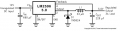
I'm currently working on a project that involves designing a DC-DC buck converter to step down a 12V battery input to a stable 5V output, capable of delivering up to 2A for a portable device. While I have a basic understanding of power electronics, this is my first attempt at designing such a converter from scratch, and I would greatly appreciate any guidance or insights from those with experience in this area.
Key Design Requirements:
Thank you in advance for your assistance!
I'm currently working on a project that involves designing a DC-DC buck converter to step down a 12V battery input to a stable 5V output, capable of delivering up to 2A for a portable device. While I have a basic understanding of power electronics, this is my first attempt at designing such a converter from scratch, and I would greatly appreciate any guidance or insights from those with experience in this area.
Key Design Requirements:
- Input Voltage: 12V (nominal) from a lithium-ion battery pack
- Output Voltage: 5V
- Output Current: Up to 2A
- Efficiency: As high as possible to maximize battery life
- Size Constraints: The design needs to be compact to fit within a portable device
- Component Selection:
- What are the critical factors to consider when selecting the switching transistor (e.g., MOSFET) and diode for this converter?
- Are there recommended integrated circuits (ICs) that simplify the design and ensure reliability?
- Inductor and Capacitor Sizing:
- How should I calculate the appropriate values for the inductor and output capacitor to ensure stable operation and minimal ripple?
- Are there preferred types of inductors and capacitors for such applications?
- Thermal Management:
- Given the power levels involved, what considerations should I take into account for heat dissipation?
- Are there design practices to minimize thermal issues in a compact layout?
- PCB Layout Tips:
- What are the best practices for PCB layout to minimize noise and ensure stable operation in a buck converter?
- How critical is the placement of components and routing of traces in such designs?
- Protection Mechanisms:
- What protection features should I incorporate to safeguard against overcurrent, short circuits, or other potential faults?
- Are there specific ICs or design strategies that include these protections inherently?
Thank you in advance for your assistance!