Facebook
 Google
 GitHub
 Linkedin
Disclaimer: I know virtually nothing about electronics. I can usually tell where the juice goes into a schematic and where it comes out, but all the gizmos in between are just black boxes to me. But, I have some "electronics-oriented" questions that I hope can be understood and answered by someone here:
1. I have a cheapo battery tester that’s supposed to determine if many commonly-used household batteries are good or bad. I understand that batteries should be tested under load to make a good determination. If I measure the resistance of the tester’s various battery type settings, eg. 9V, AA, C, etc, would that resistance be the same as that put on the battery being tested?
2. I read somewhere that a load of about 100Ω should be placed on a household battery as it’s being tested to determine if it’s good or not. I have some 100Ω 1/4 watt resistors. Would these be OK to provide a load if I test batteries with my multimeter?
Thanks,
Baffled Bill
1. I have a cheapo battery tester that’s supposed to determine if many commonly-used household batteries are good or bad. I understand that batteries should be tested under load to make a good determination. If I measure the resistance of the tester’s various battery type settings, eg. 9V, AA, C, etc, would that resistance be the same as that put on the battery being tested?
2. I read somewhere that a load of about 100Ω should be placed on a household battery as it’s being tested to determine if it’s good or not. I have some 100Ω 1/4 watt resistors. Would these be OK to provide a load if I test batteries with my multimeter?
Thanks,
Baffled Bill



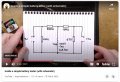


 ).
).