Facebook
 Google
 GitHub
 Linkedin
I have a PCB that is giving occasional problems.
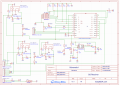
The circuit is a remote receiver, based on the Heltec Cubcell Module. Basically, it will turn up to 3 relays on, depending on the signal it receives from the transmitters.
The circuit is powered from 12VDC, supplied by a lead acid battery, which is charged by a stationary engine - similar to a rideon lawn mower setup.
2 of the 3 relays power up an electric clutch (max current draw 4.7A), while the 3rd relay powers up a small solenoid (~2A draw)
Early on, we were having issues with the DC-DC converter blowing up (suspect reverse voltage from switching of inductive load), and the occasional relay sticking on. To fix the relay issue, I added diodes across the inductive loads. To fix the DC-DC issue, I added a TVS (D9) between Vcc and GND to reduce voltage spikes, as well as a diode (D12) between Bat -ve and GND to prevent any reverse voltage. This has worked quite succesfully, with perhaps 1% of boards failing since. However, we have recently had a few boards where the TVS has short circuited after a few days of use. All of these boards have been on a machine powered by a diesel engine instead of petrol engine, so I suspect the larger starter motor is introducing larger voltage spikes that are overwhelming the TVS.
Other than using a TVS rated for more power, is there something else I should be looking at to make the circuit more robust?
Thanks
The circuit is a remote receiver, based on the Heltec Cubcell Module. Basically, it will turn up to 3 relays on, depending on the signal it receives from the transmitters.
The circuit is powered from 12VDC, supplied by a lead acid battery, which is charged by a stationary engine - similar to a rideon lawn mower setup.
2 of the 3 relays power up an electric clutch (max current draw 4.7A), while the 3rd relay powers up a small solenoid (~2A draw)
Early on, we were having issues with the DC-DC converter blowing up (suspect reverse voltage from switching of inductive load), and the occasional relay sticking on. To fix the relay issue, I added diodes across the inductive loads. To fix the DC-DC issue, I added a TVS (D9) between Vcc and GND to reduce voltage spikes, as well as a diode (D12) between Bat -ve and GND to prevent any reverse voltage. This has worked quite succesfully, with perhaps 1% of boards failing since. However, we have recently had a few boards where the TVS has short circuited after a few days of use. All of these boards have been on a machine powered by a diesel engine instead of petrol engine, so I suspect the larger starter motor is introducing larger voltage spikes that are overwhelming the TVS.
Other than using a TVS rated for more power, is there something else I should be looking at to make the circuit more robust?
Thanks
Attachments
-
 441.4 KB Views: 22