Turn on a load after a delay using individual components

Thread Starter

imalearnin

Joined Oct 7, 2022
13
I want to turn on a buzzer and LED about 20 seconds after a switch is closed. I am using this project primarily as a learning exercise and hope to use individual components such as resistors, capacitors, transistors, diodes, etc. I would also like to avoid using a 555, op amps, or microprocessor etc. My experience in electronics is quite limited and I am wanting to keep things simple so I can understand its operation even if it is not the most elegant solution.

The circuit will be powered from a 9 volt battery and I am currently using an RC pair for the delay. I tried using a transistor with the delayed voltage hooked to the base. While it does turn things on, it turns them on slowly. I am wanting to quickly turn on the load when the voltage reaches some threshold such as 4 or 5 volts. Turning the circuit off will be done separately so all I am looking for is a way to quickly turn the load on after some delay.

I read an article that I could use two transistors to accomplish this but found the article pretty confusing. I am wondering if I could use a transistor with a zener diode or something? Or if multiple transistors is a good approach is there some schematic with an explanation to help me get gong?

Can someone point me in the right direction on how to do this with simple individual components?

Thank you.
 

AnalogKid

Joined Aug 1, 2013
12,045
Please add a link to the article you mention so we can see where you are coming from.

To get a more "snappy" turn on, you will need at least two transistors. One way to get a more snappy turn-on by adding a second transistor in series with the first. Basically, the first transistor amplifies a small portion of the R-C voltage ramp, so the transition area between off and on happens more quickly. But as you have seen, there still is a voltage ramp that is slow enough to perceive. The second transistor amplifies a small portion of this ramp, so the transition region is even shorter.

To get a more "snappy" turn on, you will need at least two transistors. These can form a circuit called a "Schmitt trigger". Very basically, it is a comparator circuit where the output state of the comparator modifies the input conditions for comparison. IOW, positive feedback. The same action that makes PA systems squeal can be a good thing when properly controlled. Now, a portion of the input R-C voltage ramp that is only a few microvolts causes the output to change state. The circuit in post #2 is one example of this.

Schematics later.

https://en.wikipedia.org/wiki/Schmitt_trigger

ak
 

Thread Starter

imalearnin

Joined Oct 7, 2022
13
I want to turn on a buzzer and LED about 20 seconds after a switch is closed. I am using this project primarily as a learning exercise and hope to use individual components such as resistors, capacitors, transistors, diodes, etc. I would also like to avoid using a 555, op amps, or microprocessor etc. My experience in electronics is quite limited and I am wanting to keep things simple so I can understand its operation even if it is not the most elegant solution.

The circuit will be powered from a 9 volt battery and I am currently using an RC pair for the delay. I tried using a transistor with the delayed voltage hooked to the base. While it does turn things on, it turns them on slowly. I am wanting to quickly turn on the load when the voltage reaches some threshold such as 4 or 5 volts. Turning the circuit off will be done separately so all I am looking for is a way to quickly turn the load on after some delay.

I read an article that I could use two transistors to accomplish this but found the article pretty confusing. I am wondering if I could use a transistor with a zener diode or something? Or if multiple transistors is a good approach is there some schematic with an explanation to help me get gong?

Can someone point me in the right direction on how to do this with simple individual components?

Thank you.
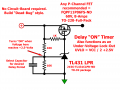
I just want to say thanks to all those that responded. This is a great site and what makes it great are the people willing to help others. I am glad to see various solutions as that helps me learn. I never even heard of a TL431 before. That is a pretty cool device.
Thanks again
 

dl324

Joined Mar 30, 2015
18,220
My experience in electronics is quite limited and I am wanting to keep things simple so I can understand its operation even if it is not the most elegant solution
Just learn how a 555 timer works; it's not that difficult.

I read an article that I could use two transistors to accomplish this but found the article pretty confusing. I am wondering if I could use a transistor with a zener diode or something?
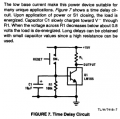
You could do a 2 transistor circuit using this circuit suggestion from National Semiconductor:
1723831232613.png
You have to invert the output because you want the opposite behavior.

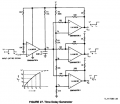
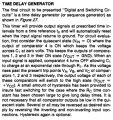
You could also use a comparator. From National Semiconductor:
1723831406821.png
1723831426278.png

It's not difficult to learn how they work either.
 

Thread Starter

imalearnin

Joined Oct 7, 2022
13
Just learn how a 555 timer works; it's not that difficult.

You could do a 2 transistor circuit using this circuit suggestion from National Semiconductor:
View attachment 329399
You have to invert the output because you want the opposite behavior.

You could also use a comparator. From National Semiconductor:
View attachment 329400
View attachment 329401

It's not difficult to learn how they work either.
Thank you for the alternative circuits. I appreciate it.
I have used a 555 Timer on multiple occasions and could have easily done that here too. When I started this I said to myself that I just wanted to use individual components, it is operationally simple so I should just be able to put something together. Well I tried it myself and got something working but poorly. Rather than go back and use a 555, I said to myself "NO, I am going to learn how I can do this." But I needed some help. And I am delighted I did get some help from several people. Although I am going to be using the delay circuit my main goal by doing it was to learn.
Thanks again.
 
Top