Facebook
 Google
 GitHub
 Linkedin

Hello. this is about the turn signals of my Honda CB250. it's got regular incandescent bulbs and recently they stopped working. the problem was the signal relay itself. i fixed it with a new one.
1) upon checking my Honda wiring diagram i've got a small question. i made this simplified diagram of my turn signals setup.
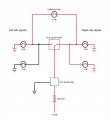
For instance let's say we turned on the right side turn signal switch. so basically +12V goes through the 10A fuse and reaches the signal relay. then it goes to the turn signal switch. after that it goes to the two right side 21W bulbs and finally grounds. so those two right side bulbs begin to flash.
at the same time power goes to that 1.7W indicator bulb. but the only ground path for that indicator bulb lies through a left side 21W bulb. so my question is, isn't that bulb going to flash too with the indicator bulb ? but as we know, practically only the indicator bulb is flashing. can some one explain the theoretical reason for not flashing that left side 21W bulb.
2) i took out the circuit board of my old relay.
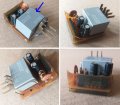
i found out that there are several types of signal relays like thermal, electromagnetic and solid state. as we see on the diagram one pin is a dedicated ground. so is this relay a solid state one ? just asked since we don't see some kind of coil on the circuit board too.
thank you so much.
Moderators note: uploaded images , external sites may dissapear.
1) upon checking my Honda wiring diagram i've got a small question. i made this simplified diagram of my turn signals setup.
For instance let's say we turned on the right side turn signal switch. so basically +12V goes through the 10A fuse and reaches the signal relay. then it goes to the turn signal switch. after that it goes to the two right side 21W bulbs and finally grounds. so those two right side bulbs begin to flash.
at the same time power goes to that 1.7W indicator bulb. but the only ground path for that indicator bulb lies through a left side 21W bulb. so my question is, isn't that bulb going to flash too with the indicator bulb ? but as we know, practically only the indicator bulb is flashing. can some one explain the theoretical reason for not flashing that left side 21W bulb.
2) i took out the circuit board of my old relay.
i found out that there are several types of signal relays like thermal, electromagnetic and solid state. as we see on the diagram one pin is a dedicated ground. so is this relay a solid state one ? just asked since we don't see some kind of coil on the circuit board too.
thank you so much.
Moderators note: uploaded images , external sites may dissapear.
Last edited by a moderator: