Trying to shock my mushrooms

Thread Starter

NikkiNix42

Joined May 3, 2023
12
Hello again,

That looks very interesting. Think it would work with chickens? (ha ha)

So it looks like you found a candidate for the high voltage pulse generation, congrats.
I cant say for sure that would work because i dont know the resistance of the stuff in the petri dish.

Since you are an electrician, maybe you can apply a smaller DC voltage from one side of the dish to the other and measure the current. You can then use Ohm's Law to calculate the approximate resistance. That would give you some idea what kind of oomph you need behind that HV pulse so it may help select something that would work right out of the box like that one you found already. I am not sure if they give the current spec though, but it would have to be somewhat small.

Hey maybe once you get this thing going you can come back and report how well it worked. That would be interesting to hear about.
Cool beans! I am going to try the resistance test. Thank you for that. I will plug away until something works and will gladly share
 

shortbus

Joined Sep 30, 2009
10,049
So I would like to introduce the shock in the Petri dish phase
As someone who grew mushrooms earlier in my life, I think your misunderstanding what they are saying about shocking the mycella. I know it shows a petri dish in the drawings, but any mushrooms I'm familiar with don't or can't fruit in agar. The agar doesn't have enough nutrients to allow fruiting. I;m pretty sure the other references in that book aren't talking agar plates when they talk of shocking the mycella. Any mushrooms I've grown don't fruit based on a shock, they are fruiting based on ecological conditions.

Some of the written mushroom stuff is kind of like Youtube, they are out to sell something and aren't very scientific. Paul Stamets books are where as a beginner I would trust.
 

shortbus

Joined Sep 30, 2009
10,049
Have you considered a cheap piezo-electric gas-lighter as a high voltage pulse source?
Or a spark plug and coil
When the mushrooms are in a petri dish they are called spawn, they then get transfered to growing medium of what ever kind they need, different mushrooms need different kinds. The spawn is very fragile so shocking spawn doesn't sound like a good idea. Spawn is like a single layer of mycella then haven't started to form really good growth yet and are very easy to kill or get an other infection on them.
 

GetDeviceInfo

Joined Jun 7, 2009
2,274
When the mushrooms are in a petri dish they are called spawn, they then get transfered to growing medium of what ever kind they need, different mushrooms need different kinds. The spawn is very fragile so shocking spawn doesn't sound like a good idea. Spawn is like a single layer of mycella then haven't started to form really good growth yet and are very easy to kill or get an other infection on them.
I’ve worked with a different terminology. Petri dish is a culuture, and inoculated substrates are ‘spawn’.
 

MrAl

Joined Jun 17, 2014
13,724
Hi,

Yes i think for dry air it is 30 kilovolts per centimeter. That would put 120kv at around 4cm.
For more humid air though it would be less than 30kv/cm which would mean it would be able to jump farther.
It could be more complicated than this though for long or short gap paths which could greatly alter the required voltage to jump the gap so it would be difficult to calculate.
 

Ya’akov

Joined Jan 27, 2019
10,261
I understand! I am a Master Electrician and safety is a priority-my wheelhouse is commercial, industrial, residential installation design/build, low voltage, etc. basically all electric systems in all structures. But that’s larger scale.
View attachment 293427
I know to keep the leads separate and wear gloves for safety. Do you think this would work?
Your sources suggest a very specific 10nS pulse. You can't make this device do that, nor is it is likely that the "50kV to 800kV" rating is in volts as we know them. Ratings on mass market products like these tend to be specified in special, discounted, "marketing volts". I wouldn't rely on the numbers.

Additionally, you probably need to be able to control both the voltage and pulse width to a fairly fine degree. This suggests that an effective power supply would be very expensive indeed.

One last note, on safety: If you are actually dealing with 100kV+, and you are not at its potential but are instead at its 0V reference potential (grounded), gloves are not going to be much insurance. While it is unlikely that the duration of the pulse you would be using would do more than hurt a bit, should something go wrong, it isn't going to take much for the current to exceed your capacity to sustain it and later enjoy the mushrooms it may have provoked.

The "one hand in pocket" strategy is probably critical here to avoid the path being across the heart, and the advice "You touch 120V but 440V touches you" obviously needs to be updated for this case to something like "440V touches you but 100kV will hit you in the face with a brick just because".

In this case, frequency is everything. High frequency AC is far less dangerous. You can get burned but you won't likely be electrocuted (to death). 10nS is 100MHz! That's very high frequency which is part of your challenge but also may be your savior should your device mistake you for a mushroom.
 

DickCappels

Joined Aug 21, 2008
10,661
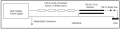
Using a large (high voltage) string of resistors charging a small (in terms of capacitance) 150 kV capacitor (you would probably have to make it) and a using a spark gap to discharge the capacitor into the dish you could get pretty close to the risetime (close to 0 picoseconds). The pulse durration could come from the capacitor design -thinking here... make the capacitor a stripline about 10 ns long with the spark gap at one end and voltage being fed in through the resistor at the other end. It is not going to be simple. If you can find a working model to copy that would make life a lot easier.

Edit: Here is the idea, feel free to comment on it.

Edit Edit: Text added.
1683279181295.png
 
Last edited:

MrAl

Joined Jun 17, 2014
13,724
Your sources suggest a very specific 10nS pulse. You can't make this device do that, nor is it is likely that the "50kV to 800kV" rating is in volts as we know them. Ratings on mass market products like these tend to be specified in special, discounted, "marketing volts". I wouldn't rely on the numbers.

Additionally, you probably need to be able to control both the voltage and pulse width to a fairly fine degree. This suggests that an effective power supply would be very expensive indeed.

One last note, on safety: If you are actually dealing with 100kV+, and you are not at its potential but are instead at its 0V reference potential (grounded), gloves are not going to be much insurance. While it is unlikely that the duration of the pulse you would be using would do more than hurt a bit, should something go wrong, it isn't going to take much for the current to exceed your capacity to sustain it and later enjoy the mushrooms it may have provoked.

The "one hand in pocket" strategy is probably critical here to avoid the path being across the heart, and the advice "You touch 120V but 440V touches you" obviously needs to be updated for this case to something like "440V touches you but 100kV will hit you in the face with a brick just because".

In this case, frequency is everything. High frequency AC is far less dangerous. You can get burned but you won't likely be electrocuted (to death). 10nS is 100MHz! That's very high frequency which is part of your challenge but also may be your savior should your device mistake you for a mushroom.
Hi,

I like the way you worded this.

First, "marketing volts" is a very good way to describe that phenomenon. I think this should become a standard way of referring to this marketing technique. We also then have derivatives: marketing amps, marketing resistance, and others including of course marketing capacitance, and marketing power rating. I think we also have "China capacitance" (ha ha). Don't get me wrong though, i've gotten a lot of good parts from China too but they were known for their cheap capacitors a while back not sure if they are like that anymore.

I also like the wording of "should your device mistake you for a mushroom". I would just add to that a little, "if your device mistakes you for a mushroom you might become a mushroom yourself" (ha ha).

As to the subject at hand, it does sound very difficult to get anything to work here. Is the requirement really 10ns, that's very hard to get let alone at high voltage like 100kv. My suggestion stands: try to find someone who actually did this and follow their advice.
I know there are fast pulse LED circuits where the LED is pulsed for a very short time in order to get a huge pulse of bright light without destroying the LED, but that's a low voltage thing. Could you imagine the energy needed to charge even a smaller capacitance up to 100kv in much less than 10ns (much less if the pulse itself is to be 10ns so we might be talking 1ns rise and fall times).
The only way to make this happen is to find an already working circuit or device and hopefully someone who actually did this already. Maybe contact the author of the book or paper and ask them some questions.

This follows the same rule as other things: in industry there are insider tricks that are not conveyed on the schematic or other drawings, you have to have worked in that industry to know what they are.

Here are some other suggestions to look into...
Pulse transformer.
Capacitive discharge (probably need more than one cap) where a cap is charged up and then discharged into the load.
Marx generator.
Laser energized spark gap, maybe best choice.
Other ideas:
A magnetic compression circuit (nanosecond resolution).
Transmission line generator.

Even with this wide range list of ideas, i still have to recommend finding a circuit that works already and/or someone who did this already as that may be the only successful and at the same time cost effective way to do this.
 
Last edited:

MrAl

Joined Jun 17, 2014
13,724
Hi,

A Tesla coil can be modulated at audio frequencies i am not sure about RF frequencies that may be too high. Maybe it can be used just to generate a high voltage, then switched.
The laser energized gap sounds best to me, or the magnetic compression idea. I think those are the fastest but i dont propose t know every single technique.
 
Top