Discrete FET is better for low noise preamp because the individual FET can be tested and selected from a batch.
Low distortion is achieved by circuit configuration, design and negative feedback. Choose FET op amp for low distortion.
The 2N4392 (from original circuit) has a noise of 1.2 nV/√Hz, similar to the 2SJ3557. TL07x says 18 nV/√Hz typ at 1khz. So the FET transistor could be better in that way.
Not forgetting that a 100k resistor produces 40nV/√Hz. However, the impedance of the pickup will reduce that, maybe not at all frequencies, depending on its inductance. I suspect for acoustic guitar you are not using something that is more like a microphone than an electric guitar pickup.
There's Distortion in the ~10% to ~90% range, meant to create a very noticeable effect,
and then there is distortion in the ~0.5% to almost un-measurable range,
which can not be detected by any person in blind A-B testing.
Any person who "claims" that they can hear the difference
will be proven delusional by blind A-B testing.
The only practical reason for using anything other than a modern high-performance Op-Amp
is because of a rather heavy amount of Distortion introduced by the non-Linear response of
a particular odd Component used in the Circuit.
If no "tone-enhancing" "Effect" is desired from the Circuit, ( such as a simple level-Booster ),
then there is absolutely zero to be gained by using "special" discrete Components.
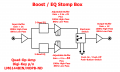
For a very versatile "Boost-Box"
add in a pair of ~3 or ~5-Band EQs, like shown in the block-diagram below .............
.
.
.
.
OK, so expanding on the above simplified input using an op amp instead of transistors. The below has a gain pot at the end, but uses 3 op amps. Is it possible to do input buffer, HPF and gain knob using only 2 op amps? Can the HPF be the input buffer? or gain knob be input buffer?
OK, so expanding on the above simplified input using an op amp instead of transistors. The below has a gain pot at the end, but uses 3 op amps. Is it possible to do input buffer, HPF and gain knob using only 2 op amps? Can the HPF be the input buffer? or gain knob be input buffer?
That’s exactly the same problem I came across, and why I used a JFET source-follower as an input buffer. I didn’t use the elaborate two-transistor current source, I just used a J113 and a 4.7k resistor.
It’s also a very convenient way of level-shifting the input voltage when you only have a single supply for the op-amp.
So I used 220k on the input followed by the J113 (no C1) with a 4.7k resistor in the source. That puts the DC level on the source at about 4V, which is very convenient for the rest of the circuitry running off 9V.
That’s cool. I can see how a discreet FET is convenient for single sided supplies. But I want 30v differential on the rails for all the EQ stuff downstream.
More Op-Amps can be a distinct advantage,
You get the opportunity to have additional Low and High-Frequency-Cuts
plus an opportunity to spread-out any needed gain between more stages
which generally decreases Noise, and increases Stability.
.
.
.
The internet and I believe that an acoustic guitar is played close to a microphone that is amplified and played through a sound system or is recorded. Usually no distortion or other effects are used.
Some acoustic guitars have the microphone or a piezo transducer attached to the body of the guitar.
Some acoustic guitars use nylon strings.
Then an electric guitar has an inductive and magnetic pickup and many distortion effects are controlled by pedals.
All electric guitars use metallic and magnetical strings.
Does your guitar use an electric magnetic pickup or a microphone? The Jfet circuits posted in this thread are for an electric magnetic pickup.
Most (vast majority) acoustic guitar pickups are piezo based: soundboard transducers (SBTs) and under saddle pickups (USTs). A small percentage have mics inside and mix them in with another pickup. Another small group use sound hole magnetic pickups. There may be other types but those are the main ones.
But regardless, all acoustic players want as close to a mic’d guitar as possible, even magnetic sound hole - rarely does one want distortion with an acoustic… if they want that then an electric is way easier to play and better for a lot of reasons. They all have their pros/cons. Magnetics have great articulation and feedback resistance, but look ugly. SBTs feel the vibration of the top, sound natural and pick up percussiveness (this can be good or bad depending on the player), but are more prone to feedback. USTs are extremely feedback resistant and the most common pickup for beginners and cheaper guitars, but less natural sounding. Mics are obviously the most realistic but also very feedback prone and difficult to work with on stage due to mic placement.
the original post using the JFET on +/-14v rails is from a very popular acoustic guitar amp.
Do you have any specs on the piezo pickups (dBV/Pa, Capacitance, for instance)?
Has anyone used a strain-gauge? It might be a tiny signal at ridiculously low impedance, but you know, we like a challenge!
(If we didn't why would anyone have invented moving coil cartridges?)
I’ll answer some of those questions later when I’m at my computer. But here’s a great primer on acoustic guitar pickups. The preamp I’m designing has very similar functionality to the Grace ALiX mentioned in the article. I’ve only mentioned the input section in this thread, but there’s a lot of EQ options after that.
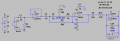
This circuit is from a Catalinbread CB30, a guitar pedal that approximates a VOX AC30 amp, a tone made famous by Queens Brian May. Yes electric guitar.
You can get decent performance from a JFET.
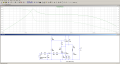
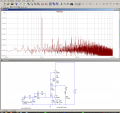
I modified the Catalinbread CB30 to make it a mu-follower. It achieves 0.02% THD.
And I bet the noise floor isn't much below -100dB. I think -140dB is a bit optimistic!
You can get decent performance from a JFET.
I modified the Catalinbread CB30 to make it a mu-follower. It achieves 0.02% THD.
And I bet the noise floor isn't much below -100dB. I think -140dB is a bit optimistic!View attachment 311284

 Facebook
 Google
 GitHub
 Linkedin