The Math Crisis

ElectricSpidey

Joined Dec 2, 2017
3,335
I suck at math, but I'll give #2 a try...

Flip both timers.
Flip the 4-minute timer at the end of its time.
Flip the 4-minute timer at the end of the 7-minute timer.
 

cmartinez

Joined Jan 17, 2007
8,762
I suck at math, but I'll give #2 a try...

Flip both timers.
Flip the 4-minute timer at the end of its time.
Flip the 4-minute timer at the end of the 7-minute timer.

  1. Start both timers at the same time
  2. When the 4 minute timer rings, put the pie in the oven
  3. Wait for the remaining 3 minutes of the 7 minute timer to ring
  4. Restart the 7 minute timer as soon as it rings
  5. Voilá! ... the pie's been in the oven for exactly 10 minutes when the 7 minute timer rings ...
 

davehoug

Joined Jul 5, 2025
15
I was also bullied in high school for being nerdy. Being a nerd wasn’t and still isn’t “cool”. Nerds didn’t get the pretty girls. Nerds were always loners.
The cool guys were and still are the “I don’t know $h!t and proud of it” guys, best epitomized by the character Sean Penn played in the movie: High times at Ridgemont high. Stupidity is romanticized in Hollywood by characters like Beavis and Butthead.
Since High School is such an important developmental period, whatever biases you acquire then, will remain with you for the rest of your life. Even today I know successful people ($$$) who brag about their complete ignorance about math and science.
Nerds didn’t get the pretty girls. = = = Change that and you can change anything. Pretty girl views on who to hang out with IS THEE path to acceptance or admiration....any subject.
 

davehoug

Joined Jul 5, 2025
15
The guy is echoing many of the points I have been harping on -- and there's plenty of my posts on these boards that attest to that -- for thirty-five years (1990 was when I was first exposed to the huge drop in math skills that was pretty much across the board and in students that were only four years younger than me). Last year I had two computer science majors that literally had to count out loud on their fingers to add five and seven (and one of them got it wrong). I've had graduate students that couldn't tell me what nine times seven was.

Having said that, I'm getting a bit tired of always blaming everything on COVID, especially when the decline was glaringly apparent for decades before that. Part of me thinks that the rush to blame it on COVID is driven by a degree of scapegoating by people that would otherwise have to acknowledge that it is much more a result of policy and cultural factors at play. I think this is particularly a tendency for people in the education community, since they can wring their hands and blame their failure to educate their students on something that was beyond their control.

There are undoubtedly many factors, some more subtle and than others, that have combined (and continue to combine) to drive this national travesty (a travesty that is being experienced in quite a few "developed" countries, not just the U.S.). But I see two factors that I think are the major drivers. First, overuse of technology resulting in the atrophying of mental skills. We use the calculator when we should use our brains. I experienced this my freshman year in college when I had no restrictions on calculator use (in high school, we could use them in science classes, but not in math classes). In the spring semester I found myself digging out my calculator to multiply a couple of two-digit numbers and realized that I was doing it because I didn't feel comfortable just doing it manually. I actually remember saying out loud, "This is insane!" So I put it away and forced myself to do it with pen and paper and was shocked at how difficult it was compared to what it always had been. Ever since, I have made a point of doing as much math manually as I can, including some things that I normally would use a calculator for. I'm certainly not averse to using a calculator, but I try very hard to make sure that I exercise my brain on a regular basis, which has me doing pen/paper arithmetic multiple times on any given day. So this is a case of us being lazy and taking the easy way out because it is physically possible for us to do it. The second factor is more pernicious and subtle, and that is the cultural shift that leads people to actively avoid learning and developing (let along retaining) math skills because the message from society is that not only are they not needed (I'll always have a calculator/computer/cell phone handy) but to actually be proud of having poor math skills (we shouldn't waste time learning useless things). I have heard both of those repeatedly over the years, usually in situations where the person asserting them can't do something simple because the lack the skills and don't have a calculator/computer/cell phone handy. This attitude is not only fostered by the general public, but also by many of the same people that are tasked with teaching these skills. While certainly anecdotal, I have talked to math professors at five different universities and in each case they've said that their worst performing math majors were those that were in the education program working toward their teaching credentials as math teachers. It's not surprising that students don't learn math very well when the people teaching them have lousy math skills themselves. To be sure, this same trend is evident in other areas, at least technical areas such as computer science and engineering -- I can't really say one way or the other about fuzzy subjects, but I would be surprised if it wasn't a trend there, too.
Being able to estimate the SIZE of an answer lets me know if I have punched my digits wrong on a calculator.

As a bookkeeper we were taught to add a column of numbers from the top down and then check it by adding it again from the bottom up. The mental mind will often make the very same mistake when just repeating the operation again.
 

WBahn

Joined Mar 31, 2012
32,847
Being able to estimate the SIZE of an answer lets me know if I have punched my digits wrong on a calculator.

As a bookkeeper we were taught to add a column of numbers from the top down and then check it by adding it again from the bottom up. The mental mind will often make the very same mistake when just repeating the operation again.
Yep -- this is why it is so common to proofread something that we have typed, such as an e-mail or forum post or journal article, and look it over again and again. Then print it out and immediately spot half a dozen errors because the context in which we are seeing it is different. This is why I tell people that it is important to verify the validity of the results from the results themselves whenever possible or, if not, to use a different approach. Don't just look back over the approach you used to get your results, because if you missed the mistake the first time, it's highly likely that you will miss it again simply because you are seeing what you thought was and expect to be correct, whether it is or not.
 

Thread Starter

nsaspook

Joined Aug 27, 2009
16,325
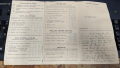
I found this on the side of my house when they started cleaning out the old guys place that was sold next door.
1771131335148.png
https://www.usnews.com/education/k12/oregon/lent-elementary-school-232884

Test Scores at Lent Elementary School
At Lent Elementary School, 22% of students scored at or above the proficient level for math, and 22% scored at or above that level for reading.Compared with the district, the school did worse in math and worse in reading, according to this metric. In Portland Public Schools, 54% of students tested at or above the proficient level for reading, and 47% tested at or above that level for math.Lent Elementary School did worse in math and worse in reading in this metric compared with students across the state. In Oregon, 44% of students tested at or above the proficient level for reading, and 33% tested at or above that level for math.

1771131499478.png
1771131523091.png
 
The guy is echoing many of the points I have been harping on -- and there's plenty of my posts on these boards that attest to that -- for thirty-five years (1990 was when I was first exposed to the huge drop in math skills that was pretty much across the board and in students that were only four years younger than me). Last year I had two computer science majors that literally had to count out loud on their fingers to add five and seven (and one of them got it wrong). I've had graduate students that couldn't tell me what nine times seven was.

Having said that, I'm getting a bit tired of always blaming everything on COVID, especially when the decline was glaringly apparent for decades before that. Part of me thinks that the rush to blame it on COVID is driven by a degree of scapegoating by people that would otherwise have to acknowledge that it is much more a result of policy and cultural factors at play. I think this is particularly a tendency for people in the education community, since they can wring their hands and blame their failure to educate their students on something that was beyond their control.

There are undoubtedly many factors, some more subtle and than others, that have combined (and continue to combine) to drive this national travesty (a travesty that is being experienced in quite a few "developed" countries, not just the U.S.). But I see two factors that I think are the major drivers. First, overuse of technology resulting in the atrophying of mental skills. We use the calculator when we should use our brains. I experienced this my freshman year in college when I had no restrictions on calculator use (in high school, we could use them in science classes, but not in math classes). In the spring semester I found myself digging out my calculator to multiply a couple of two-digit numbers and realized that I was doing it because I didn't feel comfortable just doing it manually. I actually remember saying out loud, "This is insane!" So I put it away and forced myself to do it with pen and paper and was shocked at how difficult it was compared to what it always had been. Ever since, I have made a point of doing as much math manually as I can, including some things that I normally would use a calculator for. I'm certainly not averse to using a calculator, but I try very hard to make sure that I exercise my brain on a regular basis, which has me doing pen/paper arithmetic multiple times on any given day. So this is a case of us being lazy and taking the easy way out because it is physically possible for us to do it. The second factor is more pernicious and subtle, and that is the cultural shift that leads people to actively avoid learning and developing (let along retaining) math skills because the message from society is that not only are they not needed (I'll always have a calculator/computer/cell phone handy) but to actually be proud of having poor math skills (we shouldn't waste time learning useless things). I have heard both of those repeatedly over the years, usually in situations where the person asserting them can't do something simple because the lack the skills and don't have a calculator/computer/cell phone handy. This attitude is not only fostered by the general public, but also by many of the same people that are tasked with teaching these skills. While certainly anecdotal, I have talked to math professors at five different universities and in each case they've said that their worst performing math majors were those that were in the education program working toward their teaching credentials as math teachers. It's not surprising that students don't learn math very well when the people teaching them have lousy math skills themselves. To be sure, this same trend is evident in other areas, at least technical areas such as computer science and engineering -- I can't really say one way or the other about fuzzy subjects, but I would be surprised if it wasn't a trend there, too.
Your sentence on why students don't learn math well because their instructors have lousy math skills is poignant. I would add to that, the additional fact, that even for teachers that do have the math skills and are solid in their math ability, too often lack certain teaching skill to make clear what they already know. You may know something complex very well but not have to ability to convey it in a way that allows a student to fully grasp it.
 

davehoug

Joined Jul 5, 2025
15
There should a simple 1 or 2 page sheet of questions for parents to ask their children at the end of every grade. A quick check on what a student should know. Something parents & relatives should also know simply as adults in the USA. From history to proper grammar to spelling to writing to STEM.

What are the 3 branches of government? What are the 3 levels of government types of questions.

What is the difference between a propeller powered plane, a jet engine powered plane and a rocket?

Name 3 consequences of Revolutionary, Civil War, WW1, WW2, Vietnam war.

Describe the metric system.

Nobody who hires will care about how your team did or how you were treated. They care WHAT YOU CAN DO FOR THEM.
 

WBahn

Joined Mar 31, 2012
32,847
There should a simple 1 or 2 page sheet of questions for parents to ask their children at the end of every grade. A quick check on what a student should know. Something parents & relatives should also know simply as adults in the USA. From history to proper grammar to spelling to writing to STEM.

What are the 3 branches of government? What are the 3 levels of government types of questions.

What is the difference between a propeller powered plane, a jet engine powered plane and a rocket?

Name 3 consequences of Revolutionary, Civil War, WW1, WW2, Vietnam war.

Describe the metric system.

Nobody who hires will care about how your team did or how you were treated. They care WHAT YOU CAN DO FOR THEM.
Good luck getting any kind of agreement on what questions should be on those one or two sheets of paper. Plus, even if you did get agreement (or delegated it to some body and just accepted what they came up with), all that would happen is that the schools would teach to that particular set of questions, not carrying even whether the students understood the "accepted" answers, but merely that they could regurgitate them close enough for the parents to declare it a match (keep in mind, many of the parents would likely be unable to answer many of the questions, with the excuse being how long it's been since they were in school).

I've described elsewhere the experience I had with the "open school" concept in the 1970s and how I was fortunate enough to have gone through the only path in my school district that was the traditional closed concept from K-12 (well, half of kindergarten, since we moved midway through the year specifically to get away from the open-concept craziness). Most of the honor graduates in my class went through the same path I did. The glaring exception was our class valedictorian who had gone to an open-concept elementary. In talking to her parents, they said that they had realized and decided very early on that every day when their kids got home from school, they would have to teach them the things that their school should have been teaching them that day. They were basically home-schooling them at a time when home-schooling was almost unheard of and very difficult to do officially.
 

WBahn

Joined Mar 31, 2012
32,847
Your sentence on why students don't learn math well because their instructors have lousy math skills is poignant. I would add to that, the additional fact, that even for teachers that do have the math skills and are solid in their math ability, too often lack certain teaching skill to make clear what they already know. You may know something complex very well but not have to ability to convey it in a way that allows a student to fully grasp it.
That's pretty much a given in any field and at any level. People that really know the subject but that can't teach it effectively and people that can teach effectively but don't know the subject sufficiently well. Then there's the group that neither know the subject nor can teach it effectively. You are a bit on the lucky side (and definitely on the fortunate side) when you have an instructor that knows the material well and can relay it effectively. Even far more rare is the teacher that can adapt to the learning style and the level at which their students are at. But that's a reality that isn't likely to change much any time soon. If I have to settle for one of the two "middle" groups (people that have one but not the other), I would generally rather have the person that knows the material but is a poor teacher -- it puts the onus on me to drag what I need out of them, but at least it's there to be dragged out.
 

WBahn

Joined Mar 31, 2012
32,847
Yesterday I had my latest run-in with an innumerate person.

Picked up something at Taco Bell on the way to Denver and the order came to $7.88. Also, as part of the order, she asked what sauce I wanted and I stated, "Two Fire," which showed up on the screen and the receipt. I pulled up to the window and handed her a $10 bill and $0.88 in change. She gives me $2.12 back (meaning that she just put the $10 into the register as the cash tendered and gave me back whatever it told her. I told her, "I gave your $10.88." To which she goes, "But the ten was enough, so you didn't need to give me any change." To which I replied, "But I still gave it to you. I gave you $10.88 and the bill is $7.88, so I'm due back $3." To which she looked confused and called for the manager. The manager just unlocked the drawer and said, "Give him what he says he's owed." So she gives be a $1 bill and thinks that that's all there is to it and closes the window. I had to know on the window to give her the $0.12 that she had erroneously given me, to which she shrugged and told me to have a nice day. Upon pulling into the parking lot to put the sauce on my burrito (which had beans, even though I had request no beans), I discovered that she hadn't given me any Fire sauce -- but she had given me fifteen packets of Hot sauce.

I don't know about the numeracy of the manager, but he was stuck in a tight spot because, like most cashiers any more, she immediately put everything into the drawer instead of on top until the transaction was final and agreed upon. So he had no way of knowing what I had actually given him. My guess is that he is so used to his staff screwing up the money handling that his only viable option (aside from hiring numerate employees, of course) that he just accepts any loss from abiding by the customer's claims in exchange from having a confrontation.
 

Futurist

Joined Apr 8, 2025
755
Yesterday I had my latest run-in with an innumerate person.

Picked up something at Taco Bell on the way to Denver and the order came to $7.88. Also, as part of the order, she asked what sauce I wanted and I stated, "Two Fire," which showed up on the screen and the receipt. I pulled up to the window and handed her a $10 bill and $0.88 in change. She gives me $2.12 back (meaning that she just put the $10 into the register as the cash tendered and gave me back whatever it told her. I told her, "I gave your $10.88." To which she goes, "But the ten was enough, so you didn't need to give me any change." To which I replied, "But I still gave it to you. I gave you $10.88 and the bill is $7.88, so I'm due back $3." To which she looked confused and called for the manager. The manager just unlocked the drawer and said, "Give him what he says he's owed." So she gives be a $1 bill and thinks that that's all there is to it and closes the window. I had to know on the window to give her the $0.12 that she had erroneously given me, to which she shrugged and told me to have a nice day. Upon pulling into the parking lot to put the sauce on my burrito (which had beans, even though I had request no beans), I discovered that she hadn't given me any Fire sauce -- but she had given me fifteen packets of Hot sauce.

I don't know about the numeracy of the manager, but he was stuck in a tight spot because, like most cashiers any more, she immediately put everything into the drawer instead of on top until the transaction was final and agreed upon. So he had no way of knowing what I had actually given him. My guess is that he is so used to his staff screwing up the money handling that his only viable option (aside from hiring numerate employees, of course) that he just accepts any loss from abiding by the customer's claims in exchange from having a confrontation.
I must admit, that's pretty bad, I guess these people have their minds on other stuff, I bet her phone wasn't far away, and that preoccupies her mind like so many young people these days.
 

WBahn

Joined Mar 31, 2012
32,847
I must admit, that's pretty bad, I guess these people have their minds on other stuff, I bet her phone wasn't far away, and that preoccupies her mind like so many young people these days.
Possible, but very unlikely. I've interacted with enough of these folks, at sufficient depth, to know that in the vast majority of cases their numeracy skills really are that bad. I had a class of engineering student (about twenty) and none of them could tell me what 314 divided by 100 was. Half were reaching for their calculators and the other half were just zoned out not paying attention at all (it's possible of them might have been able to get the answer -- no way to know). When I wouldn't let them use their calculators by to use what we had just been talking about (which was how multiplication or division by integer powers of the number base move the radix point to the left or right) and which I has already worked examples, on the board, of each case, there was a long pause and the first guess was 3140, to which I said, "Right concept, wrong direction." The second was 31.4, to which I said, "Right direction, not far enough." Third, which was very hesitantly and skittishly offered, was 3.14, to which I said, "Bingo!" out loud, but in my mind I was saying, "My god, what have I gotten myself into?" That was nearly thirty years ago and I assure you things have gotten significantly worse since then.
 

WBahn

Joined Mar 31, 2012
32,847
I couldn't do this. I'd just hand them advertising flyers for the nearest trade school.
Back in 1985 I enrolled in an Airframe and Powerplant Mechanics school (one that was one of the top ranked ones in the country at the time -- it's not any more).

The first block started with worksheets on basic math, including an entire page of adding and subtracting two single-digit numbers, I was shocked by how many of the students really struggled with it. I don't recall all the variations, but I think there were a few multiplying two three-digit numbers on there and that was about is hard as it got. There were actually students that bailed out of the program entirely right then. I'd love to see what it is like today -- although my guess is that it hasn't gotten a lot worse there, since once you are the bottom of the pit, there's only so much deeper you can go.
 

Futurist

Joined Apr 8, 2025
755
Possible, but very unlikely. I've interacted with enough of these folks, at sufficient depth, to know that in the vast majority of cases their numeracy skills really are that bad. I had a class of engineering student (about twenty) and none of them could tell me what 314 divided by 100 was.
That's very bad, may I ask, how old were these students?

Half were reaching for their calculators and the other half were just zoned out not paying attention at all (it's possible of them might have been able to get the answer -- no way to know). When I wouldn't let them use their calculators by to use what we had just been talking about (which was how multiplication or division by integer powers of the number base move the radix point to the left or right) and which I has already worked examples, on the board, of each case, there was a long pause and the first guess was 3140, to which I said, "Right concept, wrong direction."
How demotivating for a teacher.

The second was 31.4, to which I said, "Right direction, not far enough." Third, which was very hesitantly and skittishly offered, was 3.14, to which I said, "Bingo!" out loud, but in my mind I was saying, "My god, what have I gotten myself into?" That was nearly thirty years ago and I assure you things have gotten significantly worse since then.
I had a great English teacher in may mid teens, he was active in theater also too. He taught literature because he wanted to teach kids how to think not what to think, he used literature to get kids to consider challenging situations as well as just learning English.

He also had a cutting sarcastic wit, so any backchat was soon crushed. One day I was in class and he'd started talking about something, for a several minutes then he stopped dead and looked at a kid a Chinese class mate of mine.

He said "Mr. Chow, you must find today's lesson incredibly uninteresting when the alternative you choose is to read a blank sheet of paper".

We all cracked up because that's exactly what he was holding and seemingly reading.
 

davehoug

Joined Jul 5, 2025
15
Yesterday I had my latest run-in with an innumerate person.

Picked up something at Taco Bell on the way to Denver and the order came to $7.88. Also, as part of the order, she asked what sauce I wanted and I stated, "Two Fire," which showed up on the screen and the receipt. I pulled up to the window and handed her a $10 bill and $0.88 in change. She gives me $2.12 back (meaning that she just put the $10 into the register as the cash tendered and gave me back whatever it told her. I told her, "I gave your $10.88." To which she goes, "But the ten was enough, so you didn't need to give me any change." To which I replied, "But I still gave it to you. I gave you $10.88 and the bill is $7.88, so I'm due back $3." To which she looked confused and called for the manager. The manager just unlocked the drawer and said, "Give him what he says he's owed." So she gives be a $1 bill and thinks that that's all there is to it and closes the window. I had to know on the window to give her the $0.12 that she had erroneously given me, to which she shrugged and told me to have a nice day. Upon pulling into the parking lot to put the sauce on my burrito (which had beans, even though I had request no beans), I discovered that she hadn't given me any Fire sauce -- but she had given me fifteen packets of Hot sauce.

I don't know about the numeracy of the manager, but he was stuck in a tight spot because, like most cashiers any more, she immediately put everything into the drawer instead of on top until the transaction was final and agreed upon. So he had no way of knowing what I had actually given him. My guess is that he is so used to his staff screwing up the money handling that his only viable option (aside from hiring numerate employees, of course) that he just accepts any loss from abiding by the customer's claims in exchange from having a confrontation.
YESSSSS, counting change (adding rather than subtracting), putting the tender on top of the register shelf, even knowing a $2 bill is legitimate is to no longer be expected.
 
Top