Facebook
 Google
 GitHub
 Linkedin
The Math Crisis
- Thread starter nsaspook
- Start date

Scroll to continue with content

The guy is echoing many of the points I have been harping on -- and there's plenty of my posts on these boards that attest to that -- for thirty-five years (1990 was when I was first exposed to the huge drop in math skills that was pretty much across the board and in students that were only four years younger than me). Last year I had two computer science majors that literally had to count out loud on their fingers to add five and seven (and one of them got it wrong). I've had graduate students that couldn't tell me what nine times seven was.I'm guessing this is a common problem today.
Having said that, I'm getting a bit tired of always blaming everything on COVID, especially when the decline was glaringly apparent for decades before that. Part of me thinks that the rush to blame it on COVID is driven by a degree of scapegoating by people that would otherwise have to acknowledge that it is much more a result of policy and cultural factors at play. I think this is particularly a tendency for people in the education community, since they can wring their hands and blame their failure to educate their students on something that was beyond their control.
There are undoubtedly many factors, some more subtle and than others, that have combined (and continue to combine) to drive this national travesty (a travesty that is being experienced in quite a few "developed" countries, not just the U.S.). But I see two factors that I think are the major drivers. First, overuse of technology resulting in the atrophying of mental skills. We use the calculator when we should use our brains. I experienced this my freshman year in college when I had no restrictions on calculator use (in high school, we could use them in science classes, but not in math classes). In the spring semester I found myself digging out my calculator to multiply a couple of two-digit numbers and realized that I was doing it because I didn't feel comfortable just doing it manually. I actually remember saying out loud, "This is insane!" So I put it away and forced myself to do it with pen and paper and was shocked at how difficult it was compared to what it always had been. Ever since, I have made a point of doing as much math manually as I can, including some things that I normally would use a calculator for. I'm certainly not averse to using a calculator, but I try very hard to make sure that I exercise my brain on a regular basis, which has me doing pen/paper arithmetic multiple times on any given day. So this is a case of us being lazy and taking the easy way out because it is physically possible for us to do it. The second factor is more pernicious and subtle, and that is the cultural shift that leads people to actively avoid learning and developing (let along retaining) math skills because the message from society is that not only are they not needed (I'll always have a calculator/computer/cell phone handy) but to actually be proud of having poor math skills (we shouldn't waste time learning useless things). I have heard both of those repeatedly over the years, usually in situations where the person asserting them can't do something simple because the lack the skills and don't have a calculator/computer/cell phone handy. This attitude is not only fostered by the general public, but also by many of the same people that are tasked with teaching these skills. While certainly anecdotal, I have talked to math professors at five different universities and in each case they've said that their worst performing math majors were those that were in the education program working toward their teaching credentials as math teachers. It's not surprising that students don't learn math very well when the people teaching them have lousy math skills themselves. To be sure, this same trend is evident in other areas, at least technical areas such as computer science and engineering -- I can't really say one way or the other about fuzzy subjects, but I would be surprised if it wasn't a trend there, too.

A while ago, certainly before COVID, it became socially acceptable to be rubbish at maths. Some people even seemed proud of their inability to add up. My thoughts were "If you can't do the sums, you're going to get ripped off". And just look at all the adverts we are bombarded with every day - how many of them only work because the potential buyers can't add up?

That was true when I was in grade school 60+ years ago. I was often ridiculed for being smart.A while ago, certainly before COVID, it became socially acceptable to be rubbish at maths. Some people even seemed proud of their inability to add up. My thoughts were "If you can't do the sums, you're going to get ripped off". And just look at all the adverts we are bombarded with every day - how many of them only work because the potential buyers can't add up?

While I certainly remember how being considered "smart" or a "nerd" was the bane of being popular and made you a target for all kinds of negative attention, up to and including bullying, I don't recall ever seeing the people doing the ridiculing as being actively and vocally proud of being dumb. I didn't start seeing that until the late '90s.That was true when I was in grade school 60+ years ago. I was often ridiculed for being smart.

schmitt trigger
- Joined Jul 12, 2010
- 2,256
I was also bullied in high school for being nerdy. Being a nerd wasn’t and still isn’t “cool”. Nerds didn’t get the pretty girls. Nerds were always loners.
The cool guys were and still are the “I don’t know $h!t and proud of it” guys, best epitomized by the character Sean Penn played in the movie: High times at Ridgemont high. Stupidity is romanticized in Hollywood by characters like Beavis and Butthead.
Since High School is such an important developmental period, whatever biases you acquire then, will remain with you for the rest of your life. Even today I know successful people ($$$) who brag about their complete ignorance about math and science.
The cool guys were and still are the “I don’t know $h!t and proud of it” guys, best epitomized by the character Sean Penn played in the movie: High times at Ridgemont high. Stupidity is romanticized in Hollywood by characters like Beavis and Butthead.
Since High School is such an important developmental period, whatever biases you acquire then, will remain with you for the rest of your life. Even today I know successful people ($$$) who brag about their complete ignorance about math and science.
I still see a qualitative difference that's hard for me to describe. Before, the claim that, "I'm not good at math" was more of an admission that allowed the person to excuse a deficiency, or perhaps claim that they are just "normal" and to distance themselves from any risk of being considered a nerd. Today, it is used as if it were the actual end goal and an achievement to be proud of if attained.
Thinking more about it, I think the big difference isn't that the people that historically haven't been "good at math" have changed that much, but it's more that the people that historically were proud of their math skills now go out of the way to find ways to claim (and often be in reality) bad at math. If an engineering student in the '80s couldn't take a derivative, they were embarrased. If an engineering student today can't multiply two single digit numbers together without a calculator, they see it as a badge of honor.
Thinking more about it, I think the big difference isn't that the people that historically haven't been "good at math" have changed that much, but it's more that the people that historically were proud of their math skills now go out of the way to find ways to claim (and often be in reality) bad at math. If an engineering student in the '80s couldn't take a derivative, they were embarrased. If an engineering student today can't multiply two single digit numbers together without a calculator, they see it as a badge of honor.
Here's a personal story.
As a kid I was always fiddling with junk and "making" things (in the very crude sense of the term). I had an interest in science and rockets and machines, but that's common for kids.
At school my math skills were very poor, I had no grasp of even basic stuff and even less interest in spouting off my 12 times tables.
I was content to read about machines, I often found dumped old radios (there were lots of old bomb sites in my area, left over from WW2) during the 60s and people who wanted to dump junk would dump it in these places.
I had no idea what radio was, I barely knew one end of a battery from the other, but I still found these things fascinating and mysterious, we're talking tube radios from the 30s, 40s and 50s all long gone now.
I knew that these glass tubes glowed when the radios (working one's not the dumped ones I found) were on, and in my child's mind I visualized a mysterious community of beings living in that tube lit world.
Then something very very profound happened to me.
My mother bought me a Guinness Book of Records for Christmas, I don't think I still have it but recall the cover, let me see if I can find an image...
OK here it is, it was the 1973 edition, so I was likely 13/14.

Most kids love trawling through this book, full of amazing facts and extremes.
Then one day I was thumbing through the pages and was stopped dead in my tracks, I froze and just stared, unable to make any sense of what was written on the page. I don't have a copy so can't recall or photograph the page, but the words went something like this:
I was utterly shocked, I asked my mother was this real, she said she didn't know but Einstein was very famous for his theories about time and space so it is probably true.
But really? "time slows down on a moving system"? Why had I NEVER been told this before? why did people NEVER talk about it, even the science TV programs made no mention of this, but why? surely something as astounding as this would be talked about?
I didn't know what to do, who else to ask (I grew up without a father or any male relatives at all) and there was that frightening "equation" sitting on the page like some Egyptian hieroglyphics. I could not put it out of my mind, the effect on me was intense, I felt fear and excitement but also helpless.
Thus began a personal journey, I visited my local library, found basic books that explained the mysterious square root, symbol, I learned the rules of arithmetic from the ground up. A male friend of my mother, gave me some old books he had, one was called "College Algebra". I read it and became very proficient at algebra, I learned terms like "polynomial" and "rational".
How many here remember the term "surd"? I learned it from these old library books.
At 15 or 16 I started to buy paperback books on mathematics (most of which I still have). I borrowed advanced university level books from libraries, most of the content was a struggle but I always learned something from these books, I was always able to pick up a new term like "integral" or "tensor" and even though I did not understand the terms, I was able to recognize them when I looked at other books, I was able to discern some meaning despite the gaps in my understanding.
At 17 I taught myself trig, calculus and then the basics of non-Euclidean geometry (after I became aware, this was also something Einstein worked with).
I eventually understood the mysterious "Lorentz transformation" (I was able to derive it) and although I never attended university (I did attend two years full time electronics/communications at college, equivalent to at least the first year of an EE degree) developed a profound affection for mathematics.
I'm rusty now, keep thinking of digging out some old books and refreshing my skills.
So what's the moral of the story? Get young minds excited, get them amazed, encourage them to improve, just because a kid is near the bottom of the class in mathematics at school does not mean there's no potential. Most of the mathematics I know was not learned in school, that's a shame because it could have been had the system tried to excite young minds.
As a kid I was always fiddling with junk and "making" things (in the very crude sense of the term). I had an interest in science and rockets and machines, but that's common for kids.
At school my math skills were very poor, I had no grasp of even basic stuff and even less interest in spouting off my 12 times tables.
I was content to read about machines, I often found dumped old radios (there were lots of old bomb sites in my area, left over from WW2) during the 60s and people who wanted to dump junk would dump it in these places.
I had no idea what radio was, I barely knew one end of a battery from the other, but I still found these things fascinating and mysterious, we're talking tube radios from the 30s, 40s and 50s all long gone now.
I knew that these glass tubes glowed when the radios (working one's not the dumped ones I found) were on, and in my child's mind I visualized a mysterious community of beings living in that tube lit world.
Then something very very profound happened to me.
My mother bought me a Guinness Book of Records for Christmas, I don't think I still have it but recall the cover, let me see if I can find an image...
OK here it is, it was the 1973 edition, so I was likely 13/14.
Most kids love trawling through this book, full of amazing facts and extremes.
Then one day I was thumbing through the pages and was stopped dead in my tracks, I froze and just stared, unable to make any sense of what was written on the page. I don't have a copy so can't recall or photograph the page, but the words went something like this:
There was the equation too, with a few definitions.As described by Albert Einstein, time on a moving system slows down according to the Lorentz Transformation...
I was utterly shocked, I asked my mother was this real, she said she didn't know but Einstein was very famous for his theories about time and space so it is probably true.
But really? "time slows down on a moving system"? Why had I NEVER been told this before? why did people NEVER talk about it, even the science TV programs made no mention of this, but why? surely something as astounding as this would be talked about?
I didn't know what to do, who else to ask (I grew up without a father or any male relatives at all) and there was that frightening "equation" sitting on the page like some Egyptian hieroglyphics. I could not put it out of my mind, the effect on me was intense, I felt fear and excitement but also helpless.
Thus began a personal journey, I visited my local library, found basic books that explained the mysterious square root, symbol, I learned the rules of arithmetic from the ground up. A male friend of my mother, gave me some old books he had, one was called "College Algebra". I read it and became very proficient at algebra, I learned terms like "polynomial" and "rational".
How many here remember the term "surd"? I learned it from these old library books.
At 15 or 16 I started to buy paperback books on mathematics (most of which I still have). I borrowed advanced university level books from libraries, most of the content was a struggle but I always learned something from these books, I was always able to pick up a new term like "integral" or "tensor" and even though I did not understand the terms, I was able to recognize them when I looked at other books, I was able to discern some meaning despite the gaps in my understanding.
At 17 I taught myself trig, calculus and then the basics of non-Euclidean geometry (after I became aware, this was also something Einstein worked with).
I eventually understood the mysterious "Lorentz transformation" (I was able to derive it) and although I never attended university (I did attend two years full time electronics/communications at college, equivalent to at least the first year of an EE degree) developed a profound affection for mathematics.
I'm rusty now, keep thinking of digging out some old books and refreshing my skills.
So what's the moral of the story? Get young minds excited, get them amazed, encourage them to improve, just because a kid is near the bottom of the class in mathematics at school does not mean there's no potential. Most of the mathematics I know was not learned in school, that's a shame because it could have been had the system tried to excite young minds.
Last edited:
From their front page:
Despite broad consensus in educational research communities, contemporary science education remains:
- Overly-dependent upon sanitized resources (textbooks, simulations, cookie-cutter labs)
- Convinced that quality education requires sophisticated and expensive materials
- Primarily teacher-led, failing to sufficiently engage students in authentic science practices
I don't know too much about the situation with K-12 education today. Certainly I've seen the disastrous drop in the results of whatever they are or are not doing as I worked with college students, but I've largely lost the insight into what is going on behind the scenes to make it this way that I used to enjoy when I worked routinely with middle- and high-school students as part of volunteer organizations, which I haven't done too much of in the last two decades. I can't use my daughter's journey as much of a bellwether for a couple of reasons -- first, she is an incredibly exceptional student, so her journey has been very atypical. But, on top of that, she has always been so self-disciplined and on top of things that we have never had to ride her about doing homework or worry about what she is or isn't taking -- and pulling information out of her is harder than pulling teeth. I go to her student teacher conferences every semester primarily just to get any kind of a sense of what she is doing -- and her teachers only have glowing things to say about her but also wonder why I'm there, since they usually only see the parents of students that are struggling or in trouble. It's nice, but it also makes me feel disconnected and out of the loop with her.
So my observations here might well be out of date, but back in the 9/11 time frame one of the organizations I was a leader in got kicked off the military base (they didn't want us to go, but the new security posture made it impossible for us to stay for a couple of years) and a church very graciously let us meet there. The church also ran a school, primarily to provide classes for otherwise homeschooled kids to fill in some gaps, though they did have some full-time students as well. Their tuition was $1600 a year, which was about one-sixth of the per-student funding of the local school districts. It was interesting to see how they managed it and it went directly to that second point above. Where high school chemistry classes used Bunsen burners purchased from places like Edmund Scientific, this place used donated Coleman camp stoves. It was like that all over the place -- they found ways to make do with cheap/donated stuff and use them to still do most of the same labs and demonstrations that the public school kids got. No one could claim that the quality wasn't there, as demonstrated by the colleges that these kids got accepted to (and where they did extremely well). My guess is that, out of necessity more than by design, they managed to avoid all three of those complaints because they had to find alternate ways to do things and that invariably got the students involved in that process.

Maybe not if you state it that way. They couldn’t exactly make the case for dumb being an asset. But they were clearly proud to not be different from the herd in the way that smart people are. Maybe I imagined it but I always felt any ridicule was half-hearted and forced, as if they had to pick on any perceived non-conformity but knew deep down that the passage of time would not go in their favor.I don't recall ever seeing the people doing the ridiculing as being actively and vocally proud of being dumb.
Hello Ian0. Pleased to see you use the word "Maths". Unlike the people on the other side of the pond who apparently study Mathematic not Mathematics.A while ago, certainly before COVID, it became socially acceptable to be rubbish at maths. Some people even seemed proud of their inability to add up. My thoughts were "If you can't do the sums, you're going to get ripped off". And just look at all the adverts we are bombarded with every day - how many of them only work because the potential buyers can't add up?

The type of short term memory train-the-brain for rapid, shallow attention, does not replace sustained focus. Reading comprehension is related it also requires the opposite: slow, sustained, linear attention. Shallow memory is review without understanding, this has been in decline long before the school at home episode made it stand out.
A quality homework session plagued with constant notifications from cell phones text messages with tik toks, browser pop ups, is'nt this technology wonderful.
Study time at a click saves time mentality is not working very well. Never mind thinking just click on the hyper link. The test in the morning is a piece of cake and
when college arrives they all forgot because real homework will give you the recall.
Here is a small sample of a 3rd grade homework assignment, will times tables drill help?
Fill in the missing numbers:
1. 3×5=__
2. 2×7=__
3. 4×4=__
Doing this well helps division, arrays, fractions, word problems and much more. Pin pointing where the problem is.
The California CAASPP statewide testing are one of the check points used.
A quality homework session plagued with constant notifications from cell phones text messages with tik toks, browser pop ups, is'nt this technology wonderful.
Study time at a click saves time mentality is not working very well. Never mind thinking just click on the hyper link. The test in the morning is a piece of cake and
when college arrives they all forgot because real homework will give you the recall.
Here is a small sample of a 3rd grade homework assignment, will times tables drill help?
Fill in the missing numbers:
1. 3×5=__
2. 2×7=__
3. 4×4=__
Doing this well helps division, arrays, fractions, word problems and much more. Pin pointing where the problem is.
The California CAASPP statewide testing are one of the check points used.
Last edited:
schmitt trigger
- Joined Jul 12, 2010
- 2,256
This is a Sesame Street video: “I can only count to four.”
Although it is somewhat hilarious, I illustrates my point about demonstrating a lack of math abilities appears to be cool.
Although it is somewhat hilarious, I illustrates my point about demonstrating a lack of math abilities appears to be cool.
OK I found it!!!
As I mentioned in this post above the Guinness Book of Records blew my mind when I was a kid. I managed to track down an old copy of the book, and here is that segment, it just appears in the book unannounced and unconnected with any records or anything, when I read those words it stunned me:
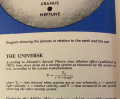
As I mentioned in this post above the Guinness Book of Records blew my mind when I was a kid. I managed to track down an old copy of the book, and here is that segment, it just appears in the book unannounced and unconnected with any records or anything, when I read those words it stunned me:
Last edited:

I doubt that is an official Sesame Street video.This is a Sesame Street video: “I can only count to four.”
Although it is somewhat hilarious, I illustrates my point about demonstrating a lack of math abilities appears to be cool.
In any case, I could only watch it 4 times.
The mention of "College Algebra" caught my eye because when I first saw this as the name of a college course I had to scratch my head, as I had taken two years of algebra in junior high (8th and 9th grade) and never anything else (as a specific "algebra" course). So, what was the difference between "college algebra" and "junior high" algebra? For years, it just sat as as unanswered question that I thought of every time I heard the term "college algebra". Another one was "pre-calculus". I had never heard of, let alone taken, a pre-calc course before I took calculus my senior year in high school (now THAT was an eye-opening course for me -- what beauty and elegance!). Tenth grade was geometry, which was almost exclusively formal proofs (the typical "geometry" classes kids take today have almost zero proofs and I haven't been able to find out where, if anywhere, students get exposed to doing formal proofs), Eleventh grade was trigonometry, and senior year was calculus. But my calc teacher did thing differently and the first semester was analytic geometry and the second was calculus. We were not happy about this because our sister high school got a full year of calculus, and the thought of us being behind them did not sit well with us. But our teacher nailed it and when the AP test results came out, we absolutely blew them away. Part was because we had the analytic geometry background, but a huge part was because all of the math teachers at my high school (at least the ones that taught the honors-track courses) believed in emphasizing why things worked, where they came from, and deriving each thing from the things that came before it before we were allowed to use it.Thus began a personal journey, I visited my local library, found basic books that explained the mysterious square root, symbol, I learned the rules of arithmetic from the ground up. A male friend of my mother, gave me some old books he had, one was called "College Algebra". I read it and became very proficient at algebra, I learned terms like "polynomial" and "rational".
About ten years ago I mentioned this to a math professor where I was working and he got curious, too, so we went down to the math office and pulled out the College Algebra and Pre-Calculus books they had in their library and spent some time pouring over them and came to the conclusion that, nope, they didn't cover anything that the middle-school algebra, (followed by geometry and trig, plus some analytic geometry, in the case of pre-calc). Our conclusion was that the name "college" primarily served to ease the bitter pill of having to take in college a course covering things you should have learned in middle school or early high school.
Journeys of self-learning are often the most fruitful, if generally slower and more erratic because there is no one there to guide you along a coherent path. But the desire makes up for a lot!At 15 or 16 I started to buy paperback books on mathematics (most of which I still have). I borrowed advanced university level books from libraries, most of the content was a struggle but I always learned something from these books, I was always able to pick up a new term like "integral" or "tensor" and even though I did not understand the terms, I was able to recognize them when I looked at other books, I was able to discern some meaning despite the gaps in my understanding.
At 17 I taught myself trig, calculus and then the basics of non-Euclidean geometry (after I became aware, this was also something Einstein worked with).
For people that have seen the movie "October Sky" but have not read the book "Rocket Boys" that it was based on, the impression would be that Homer Hickam's dad was of the strong opinion that any education beyond what was needed to balance a check book and know which end of a coal shovel had the handle was superfluous. But this is the case were the movie (which, overall, was an excellent movie) needlessly played to stereotypes of poor coal mining communities. When Homer took the initiative to get a calculus class formed at his high school for the four "rocket boys" but came in fifth in the entrance test (a girl took the test and beat him), his dad offered to go down to the school and press for him to be admitted. When Homer turned down the offer, acknowledging that he had been excluded fair and square, his dad gave him the book that he had used to teach himself calculus years before because he found that it was something that was useful for him to know as the mine supervisor so that he could engage in meaningful conversations with the mining engineers (which is what he wanted Homer to become).
I agree, but the problem is that you can't just take a kid and set out to get them excited and amazed about something random. What will excite and amaze them is an intensely personal thing that seldom gives any hints as to what it is, even to the kid, ahead of time (like your moment with the Guinness book).So what's the moral of the story? Get young minds excited, get them amazed, encourage them to improve, just because a kid is near the bottom of the class in mathematics at school does not mean there's no potential. Most of the mathematics I know was not learned in school, that's a shame because it could have been had the system tried to excite young minds.
What we can do instead is set out to expose them to as many different things as we can, hoping that at least one of those things will intersect with their nescient passions. We tried that with my daugther, which was no easy task because she has always been resistant -- to the point of throwing a temper tantrum, which fortunately were a very rare thing for her -- to trying new things. We did home science experiments (she liked them, but no spark). She did some wilderness (in a park on the edge of town) skills training (she liked, but no spark). I tried to get her to join Civil Air Patrol to get exposed to the military and aviation and technology, zero chance of that happening. At one point she wanted to be a veterinarian, so we looked for opportunities for her to work as a volunteer (she was too young at the time, and by the time she was old enough, she was shifting focus). We enrolled her in an out-of-school coding program about a year before Covid. She enjoyed that and did very well, but no spark. We enrolled her in ballet in first grade. She enjoyed it, did okay, but no spark at all and she hated being on stage. Her mom forced her to take a year's worth of violin lessons in third grade. She was really resistant and finally relented when we realized her mom wasn't going to give in. It didn't happen immediately, but that's were the spark came. To my utter shock, she had no problem getting up in front of an audience at her first recital (at a senior living home) and squeaking out whatever version of Twinkle Twinkle Little Star she had learned. At the end of that year she wasn't passionate about music or violin -- that took several years -- but she had enough interest to keep going and slowly gravitated into the world of music. She is now, as a high school senior, a semi-professional soloist and ensemblist that has placed second in international competitions and has performed in the Sydney Opera House. Never, in those early years of her violin journey, would her mother or I have foreseen any of this.
The book "College Algebra" was so good, it was just what I need, just the right pace, just the right level and excellent problems with answers at the back. I would love to get it again (and refresh my rusty math) but alas there are hundreds of books with that title and I doubt I will ever find it again.The mention of "College Algebra" caught my eye because when I first saw this as the name of a college course I had to scratch my head, as I had taken two years of algebra in junior high (8th and 9th grade) and never anything else (as a specific "algebra" course). So, what was the difference between "college algebra" and "junior high" algebra? For years, it just sat as as unanswered question that I thought of every time I heard the term "college algebra". Another one was "pre-calculus". I had never heard of, let alone taken, a pre-calc course before I took calculus my senior year in high school (now THAT was an eye-opening course for me -- what beauty and elegance!). Tenth grade was geometry, which was almost exclusively formal proofs (the typical "geometry" classes kids take today have almost zero proofs and I haven't been able to find out where, if anywhere, students get exposed to doing formal proofs), Eleventh grade was trigonometry, and senior year was calculus. But my calc teacher did thing differently and the first semester was analytic geometry and the second was calculus. We were not happy about this because our sister high school got a full year of calculus, and the thought of us being behind them did not sit well with us. But our teacher nailed it and when the AP test results came out, we absolutely blew them away. Part was because we had the analytic geometry background, but a huge part was because all of the math teachers at my high school (at least the ones that taught the honors-track courses) believed in emphasizing why things worked, where they came from, and deriving each thing from the things that came before it before we were allowed to use it.
About ten years ago I mentioned this to a math professor where I was working and he got curious, too, so we went down to the math office and pulled out the College Algebra and Pre-Calculus books they had in their library and spent some time pouring over them and came to the conclusion that, nope, they didn't cover anything that the middle-school algebra, (followed by geometry and trig, plus some analytic geometry, in the case of pre-calc). Our conclusion was that the name "college" primarily served to ease the bitter pill of having to take in college a course covering things you should have learned in middle school or early high school.
Journeys of self-learning are often the most fruitful, if generally slower and more erratic because there is no one there to guide you along a coherent path. But the desire makes up for a lot!
For people that have seen the movie "October Sky" but have not read the book "Rocket Boys" that it was based on, the impression would be that Homer Hickam's dad was of the strong opinion that any education beyond what was needed to balance a check book and know which end of a coal shovel had the handle was superfluous. But this is the case were the movie (which, overall, was an excellent movie) needlessly played to stereotypes of poor coal mining communities. When Homer took the initiative to get a calculus class formed at his high school for the four "rocket boys" but came in fifth in the entrance test (a girl took the test and beat him), his dad offered to go down to the school and press for him to be admitted. When Homer turned down the offer, acknowledging that he had been excluded fair and square, his dad gave him the book that he had used to teach himself calculus years before because he found that it was something that was useful for him to know as the mine supervisor so that he could engage in meaningful conversations with the mining engineers (which is what he wanted Homer to become).
I agree, but the problem is that you can't just take a kid and set out to get them excited and amazed about something random. What will excite and amaze them is an intensely personal thing that seldom gives any hints as to what it is, even to the kid, ahead of time (like your moment with the Guinness book).
What we can do instead is set out to expose them to as many different things as we can, hoping that at least one of those things will intersect with their nescient passions. We tried that with my daugther, which was no easy task because she has always been resistant -- to the point of throwing a temper tantrum, which fortunately were a very rare thing for her -- to trying new things. We did home science experiments (she liked them, but no spark). She did some wilderness (in a park on the edge of town) skills training (she liked, but no spark). I tried to get her to join Civil Air Patrol to get exposed to the military and aviation and technology, zero chance of that happening. At one point she wanted to be a veterinarian, so we looked for opportunities for her to work as a volunteer (she was too young at the time, and by the time she was old enough, she was shifting focus). We enrolled her in an out-of-school coding program about a year before Covid. She enjoyed that and did very well, but no spark. We enrolled her in ballet in first grade. She enjoyed it, did okay, but no spark at all and she hated being on stage. Her mom forced her to take a year's worth of violin lessons in third grade. She was really resistant and finally relented when we realized her mom wasn't going to give in. It didn't happen immediately, but that's were the spark came. To my utter shock, she had no problem getting up in front of an audience at her first recital (at a senior living home) and squeaking out whatever version of Twinkle Twinkle Little Star she had learned. At the end of that year she wasn't passionate about music or violin -- that took several years -- but she had enough interest to keep going and slowly gravitated into the world of music. She is now, as a high school senior, a semi-professional soloist and ensemblist that has placed second in international competitions and has performed in the Sydney Opera House. Never, in those early years of her violin journey, would her mother or I have foreseen any of this.
What a heart warming story about your daughter, it was impossible to foresee to, how strangely things work out sometimes.
Here are two things that spring to mind as I read you very interesting post, hope you enjoy.
This guy is just a superb teacher, I'd never seen this problem before and would have loved to have it taught when I was a kid.
This is a round table discussion with three professors of mathematics, on the subject of Godel's incompleteness theorems, very stimulating stuff (you will likely need to download the audio file, but its small, the discussion lasts about 45 mins)
Last edited:
I first saw the disappearing square puzzle in high school -- I don't recall who showed it to me. But I remember sitting with my best friend outside the library before math class arguing at length about it. We usually had about twenty minutes before class after coming over from the other campus and we figured out in that time. It was definitely subtle. What finally broke it open -- and which is something that has stuck with me ever since and paid huge dividends throughout my life, was to take a step back and start from what we absolutely knew had to be correct and work from there forward. At that point, the flaw became glaringly obvious.

So, start with a right triangle that is 13 x 5 on the sides as our given. This is a triangle -- no ifs, ands, or buts about it.
Now place a vertical line on the 8 units in from the acute angle on the 13 unit side. This creates two similar triangles -- no ifs, ands, or buts about it.
What is the height of this inner triangle?
Simple, using similar triangles:
\(
\frac{x}{8} \; = \; \frac{5}{13} \\
x \; = \; \frac{8 \cdot 5}{13} \; = \; \frac{40}{13} \; = \; 3 \; \frac{1}{13}
\)
So the assertion that the height of the left side of the "square" is 3 units is wrong! Either the actual height is a bit higher, or, if the height of three is considered a given, the line is not 8 units from the vertex, or, if the dimensions are taken as all being givens, the overall shape is not a triangle. The important point being that not all three can be correct simultaneously.
The next challenge is to calculate the mismatch in size of the two and exactly account for the "missing" one unit, preferably without using trig.
So, start with a right triangle that is 13 x 5 on the sides as our given. This is a triangle -- no ifs, ands, or buts about it.
Now place a vertical line on the 8 units in from the acute angle on the 13 unit side. This creates two similar triangles -- no ifs, ands, or buts about it.
What is the height of this inner triangle?
Simple, using similar triangles:
\(
\frac{x}{8} \; = \; \frac{5}{13} \\
x \; = \; \frac{8 \cdot 5}{13} \; = \; \frac{40}{13} \; = \; 3 \; \frac{1}{13}
\)
So the assertion that the height of the left side of the "square" is 3 units is wrong! Either the actual height is a bit higher, or, if the height of three is considered a given, the line is not 8 units from the vertex, or, if the dimensions are taken as all being givens, the overall shape is not a triangle. The important point being that not all three can be correct simultaneously.
The next challenge is to calculate the mismatch in size of the two and exactly account for the "missing" one unit, preferably without using trig.

And speaking of school-level challenges: