Facebook
 Google
 GitHub
 Linkedin

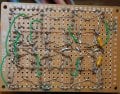
You could have mounted the LEDs on the other side, or use multiple boards so you could keep the "display" board as flat as possible.is in some degree flat enough. That is why i can not permit to insert IC sockets
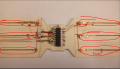
A trick to make the wires straight is to stretch them. You need to develop a feel for how much you can stretch before the wire breaks. I just stretch a piece of wire that's as long as I can handle and cut it down to size, so I don't care if I lose a few inches.strongest fight i had was with the long wires. And for them i spent like 3 weeks... probably, or more. I failed a ton with them. I wanted them as thin as i could have them and played with 0.12mm on diverse mediums. The problem is they are undulating/springing and is impossible for me to keep them straight. I spent a ton of time to make them straight. I failed every time.
I used this technique when I was soldering a 4x4x4 LED cube using 3mm through hole LEDs.
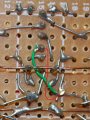
EDIT: here's a picture of a corner of the cube:
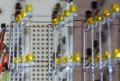
The wire was 24 AWG from a CAT5 cable. When I make the real cube, which will be 8x8x8, I'll use 22 AWG tinned wire so it will blend in better with the LED leads.
Sorry about the poor focus. It never occurred to me to use a large f-stop for better depth of field.
Plexiglass would be more durable than cardboard. There's a store 30 miles away from me called Tap Plastics that cuts sheets to size and they have a bin with inexpensive remnants. At least they used to.i am working on a cardboard surface and not a textolite/Fiberglass surface. It is cheaper (for me) and is an old trick i learned a long time ago.
EDIT: This guy sells clad and unclad fiberglass:

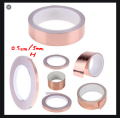
I bought this when I was thinking about making some SOT-23 to DIP adapters using adhesive backed copper foil. It worked out to just over $0.03 per square inch. Don't think he'll ship for free outside of the US.
You can buy copper clad scraps for around $0.10 per square inch on eBay. If you have any PCB houses nearby, you might be able to get scraps from them. The shop closest to me wouldn't sell any scraps...I think the short name is PCB. But that is very expensive for my budget that is not renewable
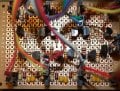
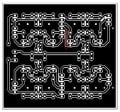
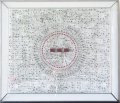
This is a one off for a dual tracking power supply board I designed for someone on AAC:Everything that i do, i think of it as prototype and not a final board.
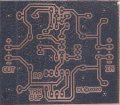
EDIT: clearer image.
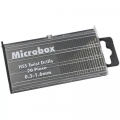
The board is 0.0325" thick and 2.5"x2.0". I only plan to make one, but I'm going to make two boards. The process I use is called toner transfer. For this project, I used some special purpose paper designed for toner transfer. I still need to etch the copper and drill.
I could have done point to point wiring, but I decided to make a PCB instead.
Last edited:

 But i work with what i can permit. I dont particularly like the cardboard option since its more work to make it especially if is bigger and with many contacts/tracks. But for small circuits is more than fine and is dirt cheap, actually is FREE, the word we like the most. I can not permit the luxury of PCB's until i make it "officially". I rarely do.