Switch Mode Power supplies, My experience

bwilliams60

Joined Nov 18, 2012
1,450
I am watching a video tutorial (Youtube) on SMPS by Donkey Learning and the man starts from the beginning and takes you throughthe whole operation. It is very easy to watch and if I understand it, I am sure mkst people on here will as well. All the contributions on this thread are great and I hope you keep on going through the supply as well recklessrog. You are doing a good job and I can say from experience that the safety part of it is paramount to teaching this. When I started tearing into these, I wasnt sure where to hook my leads or anything and it is nice to see some good training on smps here on the forum. I have been lucky and luck should not be a factor.
 

Thread Starter

recklessrog

Joined May 23, 2013
985
Thanks to everyone for the positive input, and I cannot overstate the safety precautions that MUST be used to work on any live to mains equipment, I totally agree with bwilliams60 that "luck should not be a factor" when it comes to working practices.
A Risk assessment is all well and good once you have the knowledge, training and experience to be able to correctly determine the "Risks" We seem to go through life in general in blissful ignorance of so many things that have the potential to harm us, but once pointed out, we then wonder how we managed to survive thus far :).... "Luck"? well in everyday circumstances, I guess it plays it's part, but when dealing with electricity, explosives, firearms and a host of other scenarios, Luck really has no place. Be vigilant, Do read the safety tips provided not only by me but on the excellent links that have been posted by other members.
Electronics as a hobby is exciting and great fun and as a profession can be greatly rewarding, not only financially but mentally as well.
Stay safe, and remember if you are not sure about something, ask on here first, this is an excellent forum with many very highly experienced members all willing to help those starting out or at whatever level of expertise you possess.
 

bwilliams60

Joined Nov 18, 2012
1,450
Hey Recklessrog, I am not sure where you are headed with this but I will ask a question if you don'tmind. When I first started, I wasnt sure where to start with my diagnosis or where to put my test leads or what section did what. Perhaps you could lead us through some starter diagnostics or component identification as to what can cause what so that we have a starting point. I think someone earlier mentioned a flowchart style of diagnostic tree. Is that possible?
 

Thread Starter

recklessrog

Joined May 23, 2013
985
Hey Recklessrog, I am not sure where you are headed with this but I will ask a question if you don'tmind. When I first started, I wasnt sure where to start with my diagnosis or where to put my test leads or what section did what. Perhaps you could lead us through some starter diagnostics or component identification as to what can cause what so that we have a starting point. I think someone earlier mentioned a flowchart style of diagnostic tree. Is that possible?
Hi, That would be a challenge time wise for me at the moment, but is a great idea. I will see what I can come up with. in the meantime, have a look at the two Excellent references from Bertus.
http://www.repairfaq.org/sam/safety.htm
[URL]http://www.repairfaq.org/sam/smpsfaq.htm
[/URL]

They contain links to other relevant info. What I am currently doing is to focus on safety and the equipment required to diagnose quickly the sort of general faults that crop up. A little like working on cars, all have a means of propulsion, wheels, suspension, brakes, steering etc, but there are thousands of different ones out there, each with there own foibles and designs to do basically the same job. i.e, provide a means of transport.
The same applies for smp's, Prime purpose is to take the incoming mains supply and then provide outputs suitable to power whatever the equipment they are designed for. There is a considerable difference between say an early 1990's cheap atx psu and a current top of the range high power gaming pc supply, then compare that to a smp used to power and charge a mobile phone. I have a digital camera charger that not only powers the camera, but monitors the battery and logs the charge/discharge cycles and conditions the battery when it senses it needs too. Very clever when it works, but has failed. The main difficulty for me with this one is the very small size and compactness of the circuit board, and the several strangely coded i.c's. Nonetheless I will give it a shot. Knowing when to declare something is B.E.R (beyond economical repair) is important too if doing it for a living.
 

Jony130

Joined Feb 17, 2009
5,598

Thread Starter

recklessrog

Joined May 23, 2013
985
Can you name one important difference?

I know very little about SMPs. I'm just curious.
In addition to Johnny130's reply..............
One important difference? ok, active power factor correction! Improve the efficiency greatly. (it is like pre-regulation)There are so many minor and major improvements in the overall development, including the actual physical construction, better regulation, more reliable, specially developed control i.c's and switching components, capacitors types that are selected more for suitability than cost of manufacture. So many early faults were due to capacitors failing, usually taking out other parts with them. The best now actually exuded quality.
Top end computer manufacturers now regard the design/selection of the power supply as important as the chipset etc. wasn't always the case in days of yore!
We used to have a saying, "The life of a piece of electronic equipment is related to the number of electrolytic capacitors it contains."
 
Last edited:

Thread Starter

recklessrog

Joined May 23, 2013
985
In a previous post, I outlined using a small 15 watt bulb to act as a safety warning if the "hot" ground plane became live.
Now this also can become a hazard when making some measurements with a single ended "earthed" oscilloscope.
In a near future post I will outline how and when it is preferable to make "differential" measurements, and how to avoid the hazard of a "live" earth.
I say Live earth because at least here in the U.K, the neutral and supply earth are bonded together at the consumer unit. This allows for RCD safety device to be able to trip should a leak be detected.
So, by bringing this "earth" though to your nicely and expensively isolated supply, you have actually UN-isolated it for reasons my post will reveal.


Notice that the isolation transformer does NOT have earth pass through, this gives me the option to add one if required from a separate lead.
 
Last edited:

Thread Starter

recklessrog

Joined May 23, 2013
985
The internet/Google have transformed the ease with which we can access information on nearly anything you need to know (and some things you don't :) ha ha ) I spent years picking up information, ordering books etc. to gain the necessary knowledge to become proficient in the techniques for repairing electronic equipment. This on top of having a degree and other qualifications in electronics. Servicing faulty equipment needs a different mind set and approach to that for design, It is all well and good to look at a circuit and understand the function of components and how to determine their appropriate values. But when presented with something that Should work, but is not, requires the same approach that a detective uses when solving a crime.
Probably like trying to become a musician, You could learn everything there is to know about music theory yet still have no proficiency in actually playing any instrument and maybe never will.
The same seems to go with servicing, to be successful, you need to have an analytical approach with good intuition and an ability to think outside the box.
However, without knowing how when and where to use the right method of testing that will give you correct clues as to the problem, rather than "ad hock" testing that leads you up the garden path, Is another very important factor in successful servicing.
So, going back to the use of the internet. I started to write a post regarding oscilloscope measurements and when to use the "differential" method.
I thought I would have a quick look online to see what equipment is currently available to use, and PRESTO!.. I found two excellent articles by manufactures that give all the information you could need so here they are. Study them in detail then apply this to how you would use them in repairing smp's.
 

Attachments

Last edited:

Thread Starter

recklessrog

Joined May 23, 2013
985
To help with this thread, I shall be posting some more practical advice based on my experience very soon. File I have uploaded will cover in more detail some of the work and you may find it very helpful in gaining a deeper knowledge of Smp's and I will make reference to it where useful.
Because of it's size I had to zip it, so just download and unzip it :)
 

Attachments

Last edited:

Thread Starter

recklessrog

Joined May 23, 2013
985
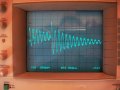
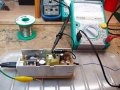
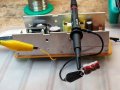
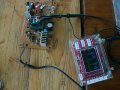
P1010014.JPG Some switch mode power supplies have more than one oscillator and drive circuit to provide auxiliary supplies for things like standby, etc. The quick way I determine what is and what's not working is by a "non contact" scope method.
By using a small choke connected to the scope probe, I can quickly hold it over the various transformers and get a representation of what is going on inside. This method save hours of clipping on leads, turning the board over, turning on and off whilst changing connections.
Some engineers say to touch the tip of the probe onto the top of the transformers, but you tend to get a lot of hash that is being radiated from other parts plus a large amount of mains hum. The little inductor trick isolates the pickup to the transformer it is close to.
Here are a few pictures showing how its done, the pick up choke i'm using is just an odd one I took from a scrap smp. P1010003.JPG P1010009.JPG View attachment 134307 View attachment 134307 P1010020.JPG
 
Last edited:

cmartinez

Joined Jan 17, 2007
8,768
View attachment 134309 Some switch mode power supplies have more than one oscillator and drive circuit to provide auxiliary supplies for things like standby, etc. The quick way I determine what's and what's not is by a "non contact" scope method.
By using a small choke connected to the scope probe, I can quickly hold it over the various transformers and get a representation of what is going on inside. This method save hours of clipping on leads, turning the board over, turning on and off whilst changing connections.
Some engineers say to touch the tip of the probe onto the top of the transformers, but you tend to get a lot of hash that is being radiated from other parts plus a large amount of mains hum. The little inductor trick isolates the pickup to the transformer it is close to.
Here are a few pictures showing how its done, the pick up choke i'm using is just an odd one I took from a scrap smp. View attachment 134305 View attachment 134306 View attachment 134307 View attachment 134307 View attachment 134308
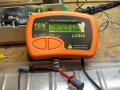
Wow... I didn't know about that LCR instrument meter! Now I want one. Thanks for posting.
 

debe

Joined Sep 21, 2010
1,419
I like your idea of checking the wave form on a SMPS. Tried it out on a couple of Gopher battery chargers.( I was using an Isolating transformer).SMPS.1.JPG SMPS.a.JPG
 

Thread Starter

recklessrog

Joined May 23, 2013
985
I like your idea of checking the wave form on a SMPS. Tried it out on a couple of Gopher battery chargers.( I was using an Isolating transformer).View attachment 134394 View attachment 134395
Hi, yes it is a really useful Go-no go method. Don't use it for making measurements though. The little choke I used in the pictures can even pick up the signal in the driver transformers used in some psu's.
I had intended to make a proper magnetic pick-up probe but never got round to doing it. I mistakenly thought that now I'm retired I would have more time to do things like that. Boy, was I wrong! lol.
 

Thread Starter

recklessrog

Joined May 23, 2013
985
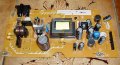
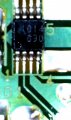
P1010003.JPG P1010004.JPG P1010001.JPG Ic.jpg

The power supply shown here would run for several hours then shut down. This is where the freezer spray I showed in an earlier post located the faulty i.c.
With no circuit diagram I could not tell what the i.c part number is, and being so small, even with a magnifying glass, I could not make out any details.
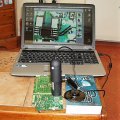
Using the usb microscope and adjusting the angle of the light and careful adjustment of the focus, I was able to read some numbers that may enable me to find a replacement.
 

Thread Starter

recklessrog

Joined May 23, 2013
985
How exactly, is that freezer spray supposed to be used, and in what circumstances? I've already re-read the post you've mentioned, but it's still not clear to me what the indicators one should be looking for are and how to perform the said procedure.
When a piece of equipment runs for a while before the fault shows up, 99 times out of a hundred it will be because something has heated up and gone into fault condition.Known as a "thermal fault" It could be that in warming up and expanding, an internal connection goes o/c or the leakage in a semiconductor becomes excessive etc.
Dry joint are often "thermal" Grundig t.v's (and many others) in particular used to have major problems due to large inductors only being held onto the pcb by the soldered pins. Expansion and contraction + vibration from line-frame frequencies would eventually weaken the joints. 99% of these bad joints were easily visible, but some were not. We adopted a policy of removing them, applying some epoxy resin to glue them to the board and resolder every joint on every transformer. That way we didn't get them back under warranty repair.
Sometimes though, dry joints were not visible so this is where the Freezer spray comes in.
Let's suppose a tv is brought in that goes off after an hour. Now I don't really want to sit and twiddle my thumbs whilst waiting for it to go off, so, out with the heat gun and direct the hot air over the power supply for a few mins, not close enough to melt anything, but to bring it quickly up to temperature. Hopefully we are in the right area and soon it goes off.
Now with the freezer spray, a tiny burst on each semiconductor one at a time(wait 20-30 secs before moving to a different one) and then onto other components. If it pops back into life, repeat the process and direct the heat more accurately at the individual component, same with the freezer spray.
My de-solderer blows as well as sucks so I could pin point the part or joint very accurately.
This is just one scenario where freezer spray and heat can be as useful as a multimeter or oscilloscope.
Hope this gives you the insight you were asking for :)
 
Top