Facebook
 Google
 GitHub
 Linkedin
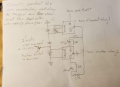
I may change bleeder resistors from 2k to 1k to speed up the transition.
Atoto needs maybe about couple hundred milliseconds voltage drop to lock in a status change and execute a function.
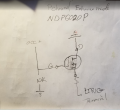
Discharged 220uf cap looks like a dead short for a small amount of time, creating the voltage drop on the SWC wire.
When cap charges up all current flow stops, and the command event is finished.
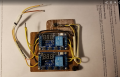
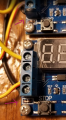
To program SWC (steering wheel control function of live rear view and back), short caps 220uf leads together.
Then run the SWC function assignment in Atoto on screen display SWC programming.
SWC circuits use voltage drop measurements on a wire that the Android Atoto head unit then fire off an android program or function.
220uf caps bleed down so when SWC 5v+ power enters the relays, the caps quick charge up and Atoto sees a voltage drop and executes the function.
This circuit uses a continuous 12v+ source to turn it into a momentary trigger. Resistance values 1K and 2K create voltage drop on Atoto SWC wire.
What this does for me, I can select rear or side cam on my rocker swtich, Atoto will load live rear view app and sho the camera stream without parking grid lines. Put rocker back to center, power shuts off , and the back function is run on Atoto displaying the prior screen.
Also when I select right turn signal, same idea happens, live rear view shows side camera, turn off right turn signal, atoto executes the back command.
The 100uf cap is a keep alive cap for relay 1 to continue to send SWC power to second relay long enough for relay 2 to allow the status change.
SWC relay 1 completely disconnects SWC wire when 12v+ goes away, otherwise there would be a continual voltage drop on the SWC wire.
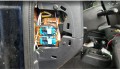
Eventually I plan to wire this up, do you think it will work.