Super Accurate Resistor Fun

Status
Not open for further replies.

Ian0

Joined Aug 7, 2020
13,132
1+1/2+1/3+1/4 is the same as 24/24+12/24+8/24+4/24=
(24/24 + 12/24 + 8/24 + 4/24) or (24+12+8+4)/24= 48/24 mhos

which converts to 24/48 ohms or just 0.5

Another look at it:

Consider
1+1/2
That is (1+1)/2 or 3/2

Consider:
1+1/2+3/2
That is 3/2+3/2=2
Now two is the mhos
And the reciprocal of 2 is 1/2 ohms.

Like I have been saying.
You're still wrong.
1/4 does NOT equal 4/24
1/4 equals 6/24
 

Thread Starter

dcbingaman

Joined Jun 30, 2021
1,065
You're still wrong.
1/4 does NOT equal 4/24
1/4 equals 6/24
1/4 is one fourth and yes it is not 4/24 but it reduces to 1/6
1/4 = 6/24
24/4=6
which reduces to
12/2
which reduces to
6=6

so yes you are correct on that, that is simple.
 

panic mode

Joined Oct 10, 2011
4,995
and that will show that result for four level scheme results in 0.48 Ohm. even at just 4 branches equivalent value is less than 0.5 Ohm. adding more branches will lower the circuit resistance even further.
 

WBahn

Joined Mar 31, 2012
32,870
Absolutely! He did his homework and did it well.
So you agree that his results -- which agree with mine, and BobTPH's, panic mode;s and Ian0's and everyone EXCEPT you, is correct, meaning that you agree that you were wrong.

But then you immediately continue to insist that you are still correct, even though your results disagree with his work that you absolutely agree with.

It is simple fractions and if you take 1/1 + 1/2 + 1/4 + 1/8 that is the same as 64/64+32/64+16/64+8/64 the sum is then 122/64 which is 1.90625 mhos

Now I just take the reciprocal because ohms is the reciprocal of mhos which is 1/1.90625 =
0.52459016393442622950819672131148. Now that is very close to 0.5 ohms which is close to
the answer on the bench where I have found through experimentation and the answer I also is in accord with the calculation. Thus the resistance is approaching 0.5 ohms. That is it is converging on 0.5 ohms.
It doesn't matter what 1/1 + 1/2 + 1/4 + 1/8 works out to be, because that series has NO meaning for the circuit you proposed and have been raving about as having this insane accuracy that converges to half of the value of one resistor, even though you originally touted how it was insanely accurate with the resistance of the original resistor values.

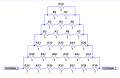
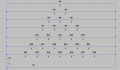
1698788315704.png

Do you not see that the resistance of Row #n is n Ω. It is NOT 2^n Ω.

For YOUR circuit, the resistance between Terminal1 and Terminal2 is

\(
R_{eq} \; = \; \frac{1}{\sum_{n=1}^{N} \frac{1}{nR_0} } \\
R_{eq} \; = \; R_o\frac{1}{\sum_{n=1}^{N} \frac{1}{n} }
\)

You are, with ZERO validity, arbitrarily setting this equal to

\(
R_{eq} \; = \; R_0\frac{1}{\sum_{n=1}^{N} \left( {\frac{1}{2}} \right)^n }
\)

It just, simply, is not so.

This last equation would be for the circuit in which each row has TWICE as many resistors in series as the row above it. That is NOT the circuit you have EVER proposed.

If THAT's the circuit you want to propose, the propose it. In that case, yes, the equivalent resistance of the network converges to half the resistance of one of the single resistors. But so what? It still is not insanely accurate -- the accuracy is still completely dominated by the error in the very top resistor. The power is till concentrated in that very top resistor -- in fact, at least half of the power is dissipated by that top resistor.

But please stop insisting on using one series of fractions to find the equivalent resistance of a circuit to which it does not apply.
 

Jon Chandler

Joined Jun 12, 2008
1,597
The premise of this thread seems to change all over the map. Going back to the beginning post, where the claim is that a resistor tree of R||2R||3R||4R||5R||6R|| ...... somehow provides a precise converging resistance is flawed.

Going back to the equation for parallel resistors:

Reqv = 1 / (1/R1 + 1/R2)

It's a given that the equivalent resistance will always be less than the lower resistance value.

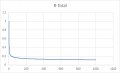
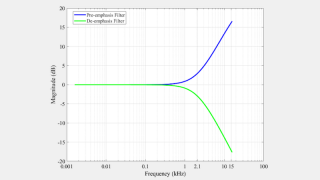
This curve, based on the drawing in the original post, shows the value for 1,000 steps. The curve gets very flat, but at each step, the equivalent resistance is reduced. This is based on 1 ohm resistors.

Resistr Ladder.jpg
 

WBahn

Joined Mar 31, 2012
32,870
1/4=4/24
Divide the right hand side by 4:
1/4=1/6 Which of course proves they don't I already know that, what is your point?.
The point is that YOU are the one that have repeatedly relied on them somehow being the same in order to arrive that the (incorrect) result that you keep insisting on.

No that is not what I am trying to say. Don't you understand how to add a set of fractions?

1+1/2+1/3+1/4 is the same as 24/24+12/24+8/24+4/24 which is

(24+12+8+4)/(24) which is 48/24 mhos and the reciprocal of 24/48 ohms which is divisible by 24 leaving you with 0.5 the final convergence number.
YOU said that 1/4 is the same as 4/24.

YOU needed them to be equal in order to come up with the result that the "final convergence number" is 0.5.

When this was pointed out, you then doubled down on it again:

1+1/2+1/3+1/4 is the same as 24/24+12/24+8/24+4/24=
(24/24 + 12/24 + 8/24 + 4/24) or (24+12+8+4)/24= 48/24 mhos

which converts to 24/48 ohms or just 0.5

We can verify this by reducing (24/24+12/24+8/24+4/24)

The first term is divisible by 24 thus:

1

the next term is divisible by 12 thus

1/2

the next term is divisible by 4

that is 1/3

the the final term is divisible by 1/6

Now we just sum these number 1+1/2+1/3+1/6 = 3/2+1/3+1/6 = 3/2 + 2/6 + 1/6= 3/2 + 3/6 or 3/2 + 1/3 = 6/3 + 2/6 which reduces to 1/2 + 1/3 = 2/6 + 3/6 which reduces to 1/3+2/3 which is 1 approaching the 1/2 limit, but you have to take it out further.

Like I have been saying.
Instead of recognizing that the error you made resulted in 1/4 somehow magically transforming into 1/6, you just went ahead and blindly accepted it as fact and replaced 1/4 with 1/6.

And that last line is a string of things that you claim are equal that, in several places, are not. 3/2 + 3/6 is NOT the same as 3/2 + 1/3. Then you claim that 6/3 + 2/6 reduces to 1/2 + 1/3.

Your work is littered with mistakes and errors.

Then, after all of that, you claim that 1 is somehow approaching the 1/2 limit. In what universe? But you make the assertion because you seem bound and determined that, no matter what the result you come up, that it is somehow going to be proof that everything is like you have been saying.

You need to start over from scratch and very carefully ensure that you are doing things correctly at each and every step.
 

Thread Starter

dcbingaman

Joined Jun 30, 2021
1,065
The point is that YOU are the one that have repeatedly relied on them somehow being the same in order to arrive that the (incorrect) result that you keep insisting on.


YOU said that 1/4 is the same as 4/24.

YOU needed them to be equal in order to come up with the result that the "final convergence number" is 0.5.

When this was pointed out, you then doubled down on it again:


Instead of recognizing that the error you made resulted in 1/4 somehow magically transforming into 1/6, you just went ahead and blindly accepted it as fact and replaced 1/4 with 1/6.

And that last line is a string of things that you claim are equal that, in several places, are not. 3/2 + 3/6 is NOT the same as 3/2 + 1/3. Then you claim that 6/3 + 2/6 reduces to 1/2 + 1/3.

Your work is littered with mistakes and errors.

Then, after all of that, you claim that 1 is somehow approaching the 1/2 limit. In what universe? But you make the assertion because you seem bound and determined that, no matter what the result you come up, that it is somehow going to be proof that everything is like you have been saying.

You need to start over from scratch and very carefully ensure that you are doing things correctly at each and every step.
I do not disagree with you, what I found is the network converges on 0.5 ohms. Which I learned via simulation and LTSpice models. Did you read all of the information I provided? That is multiple simulations and multiple pdf documents documenting my results? I have to assume you did it. So it comes down to one question which is either yes, or no. So is it yes or is it no?
 

AnalogKid

Joined Aug 1, 2013
12,141
1/4=1/6 Which of course proves they don't I already know that, what is your point?.
I think his point - not at all well or clearly stated - is that several of your posts have typos in the numeric strings which you do not acknowledge or correct. What you know and what you are presenting are not the same thing.

ak
 

Thread Starter

dcbingaman

Joined Jun 30, 2021
1,065
I think his point - not at all well or clearly stated - is that several of your posts have typos in the numeric strings which you do not acknowledge or correct. What you know and what you are presenting are not the same thing.

ak
I understand that, it just proves that I am a human being who like anyone else makes mistakes. But the fact that the network will converge on 0.5 ohm if you start with all 1 ohm resistors stands.
 

WBahn

Joined Mar 31, 2012
32,870
I do not disagree with you, what I found is the network converges on 0.5 ohms. Which I learned via simulation and LTSpice models. Did you read all of the information I provided? That is multiple simulations and multiple pdf documents documenting my results? I have to assume you did it. So it comes down to one question which is either yes, or no. So is it yes or is it no?
It is no.

You simulations do NOT show that -- it is not simulating the equivalent resistance at all.

Your spreadsheet does NOT show that -- it is doing a completely unrelated calculation.

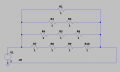
Here is an LTSpice simulation of your four-layer network:

1698797132136.png

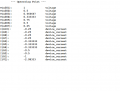
Here is the operating point of this circuit:

1698797177167.png

You can see the the current into the supply is -2.08333 A (which means that the current is actually out of the supply).

The voltage of the supply, which is also the voltage across the network, is 1 V.

What does that make the resistance of the network?

Req = 1 V / 2.08333 A = 0.480000768... Ω

Or, in other words, the 0.48 Ω that everyone has been telling you and NOT converging on the 0.5 Ω that you continue to insist on.

If we add more layers, the resistance will only go down further. It is NOT going to somehow come back UP and converge on your 0.5 Ω.

Not....going....to....happen!
 

Thread Starter

dcbingaman

Joined Jun 30, 2021
1,065
It is no.

You simulations do NOT show that -- it is not simulating the equivalent resistance at all.

Your spreadsheet does NOT show that -- it is doing a completely unrelated calculation.

Here is an LTSpice simulation of your four-layer network:

View attachment 306377

Here is the operating point of this circuit:

View attachment 306378

You can see the the current into the supply is -2.08333 A (which means that the current is actually out of the supply).

The voltage of the supply, which is also the voltage across the network, is 1 V.

What does that make the resistance of the network?

Req = 1 V / 2.08333 A = 0.480000768... Ω

Or, in other words, the 0.48 Ω that everyone has been telling you and NOT converging on the 0.5 Ω that you continue to insist on.

If we add more layers, the resistance will only go down further. It is NOT going to somehow come back UP and converge on your 0.5 Ω.

Not....going....to....happen!
The question has a yes or no answer, you are telling me the answer is no you did not look at ALL of the information I presented. Like in a court of law the answer is either yes or no and if it is no, you lost your own argument. I was interested in a yes or no answer and all you provided was a feverish attempt to justify your incorrect answer of no.
So again I ask did you read ALL of the information in the entire thread "Every single bit of it"?
Again the answer is either yes or no.
 

WBahn

Joined Mar 31, 2012
32,870
Here's the simulation for seven layers:

1698798375889.png
1698798405584.png

Here you can see that the current has increased, as expected. It is now 2.5926 A, making the effective resistance 0.385675 Ω.

What did Ian0 say that it would be? 0.38567 Ω

What did I say that it would be? 0.385675 Ω

What did Strantor say that it would be? 0.38567493112947665 Ω
 

djsfantasi

Joined Apr 11, 2010
9,237
The question has a yes or no answer, you are telling me the answer is no you did not look at ALL of the information I presented. Like in a court of law the answer is either yes or no and if it is no, you lost your own argument. I was interested in a yes or no answer and all you provided was a feverish attempt to justify your incorrect answer of no.
So again I ask did you read ALL of the information in the entire thread "Every single bit of it"?
Again the answer is either yes or no.
May I answer from my perspective?

I have read every single bit of information in the thread. Several times.

Not your question, but after reading every single bit of information, I can say you are wrong.
 

WBahn

Joined Mar 31, 2012
32,870
The question has a yes or no answer, you are telling me the answer is no you did not look at ALL of the information I presented. Like in a court of law the answer is either yes or no and if it is no, you lost your own argument. I was interested in a yes or no answer and all you provided was a feverish attempt to justify your incorrect answer of no.
So again I ask did you read ALL of the information in the entire thread "Every single bit of it"?
Again the answer is either yes or no.
I thought the "question" you were referring to was whether your network converged to 0.5 Ω.

If the question is whether I looked at all of the "evidence" you provided, the answer is yes, I did.

I have addressed the issues with the information you have provided.

Much of the "evidence" is completely irrelevant. Such as your graphs showing ill-defined temperature plots.
 

Thread Starter

dcbingaman

Joined Jun 30, 2021
1,065
You are avoiding the question, did you read All of the information I provided or not. Again I an not interested in anything but a yes or no answer so answer the question!
 

WBahn

Joined Mar 31, 2012
32,870
You are avoiding the question, did you read All of the information I provided or not. Again I an not interested in anything but a yes or no answer so answer the question!
I gave you a yes or no answer!

I thought the "question" you were referring to was whether your network converged to 0.5 Ω.

If the question is whether I looked at all of the "evidence" you provided, the answer is yes, I did.

I have addressed the issues with the information you have provided.

Much of the "evidence" is completely irrelevant. Such as your graphs showing ill-defined temperature plots.
Since you seem to be insisting that the answer must be one single isolated word, I will answer you again in another post.
 
Status
Not open for further replies.
Top