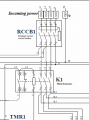
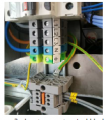
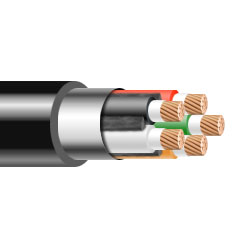
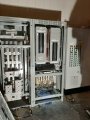
Here are the drawings provided by the manufacturer. So the advice I have is #8 wire 40 amp breaker and nothing on the recommended plug. Guys you have no idea how much I appreciate your input.
Regards
That is all well and good, but first, you need to find out if the N of your supply is actually bonded to earth ground.
Second, what is the reason for an outlet (plug)?
Is this equipment intended to be portable?
For large fitted in-place equipment, it is customary to hard wire in. As shown by the manuf. DWG.
Are you qualified to install it?
Max.
That is all well and good, but first, you need to find out if the N of your supply is actually bonded to earth ground.
Second, what is the reason for an outlet (plug)?
Is this equipment intended to be portable?
For large fitted in-place equipment, it is customary to hard wire in. As shown by the manuf. DWG.
Are you qualified to install it?
Max.
I have installed several so far and that is why the question came up because I need to install several units on a military base and they must be able to be unplugged.
Thanks
I have installed several so far and that is why the question came up because I need to install several units on a military base and they must be able to be unplugged.
Thanks
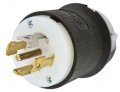
Visit a local electrical supplier and explain you need 5 pin 208v 3ph 30a-40a disconnect plug and socket they should be able to supply you with the suitable fittings, if at all reputable.
Max.
NOTHING is permanent! And at least in my area things need to be able to be disconnected and moved away from where they are used. Both gas appliances and electrical appliances. From deep fryers to ice-cream machines. That is my restaurant business client's situation. And it saves having to have a service cut-off switch as well. Just unplug the machine and keep the plug in sight while you work.
There are plenty of examples where equipment is wired in place with just a switched disconnect.
It is done all the time in the Industrial area I work in.
So, your designing for 41.25 A, then a 3% drop over the distance to the breaker panel to select minimum wire size. You then might want to design the wiring for 80% of 50A at the distance required. 80% of 50 is 40A, so it does fit the bill. 33 i less than 40A. Size the wiring for 40A, possibly 50, I think.
Sizing the wiring for a 3% maximum voltage drop at 80% capacity is correct for a continuous load. Commercial equipment in a restauraunt is considered continuous.
I could be wrong, but I should be close. On another forum which I was a moderator on, I did pretty well, but 3 phase didn;t show up.
Hard wiring can save you money, but can bite you when you upgrade.
We had equipment which was about 50 A 3 phase and used a non-twist lock receptacle. At 90 A 3 phase we used a local disconnect and hardwired and at 200 A 3 phase, the equipment had it's own disconnect. The 50 and 90 A equipment needed a key to turn on.
So, your designing for 41.25 A, then a 3% drop over the distance to the breaker panel to select minimum wire size. You then might want to design the wiring for 80% of 50A at the distance required. 80% of 50 is 40A, so it does fit the bill. 33 i less than 40A. Size the wiring for 40A, possibly 50, I think.
Sizing the wiring for a 3% maximum voltage drop at 80% capacity is correct for a continuous load. Commercial equipment in a restauraunt is considered continuous.
I could be wrong, but I should be close. On another forum which I was a moderator on, I did pretty well, but 3 phase didn;t show up.
Hard wiring can save you money, but can bite you when you upgrade.
We had equipment which was about 50 A 3 phase and used a non-twist lock receptacle. At 90 A 3 phase we used a local disconnect and hardwired and at 200 A 3 phase, the equipment had it's own disconnect. The 50 and 90 A equipment needed a key to turn on.

 Facebook
 Google
 GitHub
 Linkedin