Facebook
 Google
 GitHub
 Linkedin

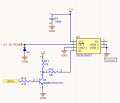
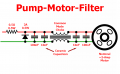
I would skip the version with the Enable-Pin because the
Quiescent-Current will probably be below ~1mA,
which the Battery can probably supply for weeks or more,
and I can't think of a good reason to add the extra complexity.
There will also be no programming necessary for insuring that
the EN-Pin has an adequate delay to insure that the En-Pin does not go Low before the Motor stops.
Although, I see that You have included a Freewheeling-Diode, so this issue is no-longer important.
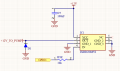
Don't forget the bypass Capacitor on the Vcc-Pin, very close to the Chip.
The GPIO-Outputs can directly drive the IN-Pin,
but not the En-Pin,
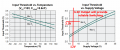
because the En-Pin requires roughly ~9-Volts to turn-on the Chip.
Otherwise, go for it !!!
.
.
.
Quiescent-Current will probably be below ~1mA,
which the Battery can probably supply for weeks or more,
and I can't think of a good reason to add the extra complexity.
There will also be no programming necessary for insuring that
the EN-Pin has an adequate delay to insure that the En-Pin does not go Low before the Motor stops.
Although, I see that You have included a Freewheeling-Diode, so this issue is no-longer important.
Don't forget the bypass Capacitor on the Vcc-Pin, very close to the Chip.
The GPIO-Outputs can directly drive the IN-Pin,
but not the En-Pin,
because the En-Pin requires roughly ~9-Volts to turn-on the Chip.
Otherwise, go for it !!!
.
.
.
Last edited: