[SOLVED] Tips on Breadboard Wiring

Thread Starter

Embededd

Joined Jun 4, 2025
158
When you get more experience, it won't make a significant difference.

Something like this looks like it would be a nightmare to troubleshoot.
I think of it in three stages: breadboard setup, prototype board, and PCB board. I use a breadboard when I’m still experimenting, testing ideas, or learning it’s quick to change and perfect for trying different connections. A prototype board comes next when the circuit is mostly finalized but I want something sturdier and less likely to have loose connections; it’s also good for longer-term testing. A PCB board is for the final stage, when the design is confirmed and I want a permanent, reliable solution
 

Thread Starter

Embededd

Joined Jun 4, 2025
158
Today, I suppose that I would use C instead of ASM.
For programming, I use the Atmel Studio 7 and AVR Pocket programmer.
I’m using Microchip Studio along with a USBasp programmer to load code into the AVR, and I’ll be working in C. For now, I’m keeping the hardware on a breadboard, so I’d be happy to work under your guidance and learn from your experience. I’ve already received the suggestions I was looking for from experienced members in this thread, so my next step is to focus on coding which is my main goal from the start.
 

ericgibbs

Joined Jan 29, 2010
21,460
Hi Emb,
I would repeat what has been posted earlier, the boards must have power rail decoupling capacitors.
eg: 100nF and 100uF

Adding an LED and series resistor across the power rails is a simple way of indicating the board is being powered.

E
 

Thread Starter

Embededd

Joined Jun 4, 2025
158
I would repeat what has been posted earlier, the boards must have power rail decoupling capacitors.
eg: 100nF and 100uF
Perhaps you missed my posts #9 and #11

I already have two decoupling capacitors in my setup: a 0.1 µF ceramic placed close to the MCU’s VCC and GND pins.
 
Last edited:

panic mode

Joined Oct 10, 2011
5,014
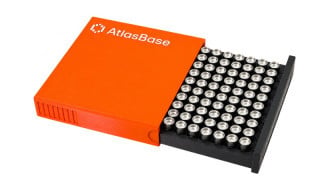
i don't recall last time i touched breadboard but wouldn't it be nice to have power rail through the middle? i mean breadboards have been around for half a century and nothing has changed. and all digital logic from that era used to be on PCBs where power rails run under the ICs. someone else must have thought of it already:

1755478863782.png
 
Last edited by a moderator:
Top