Soldering button diodes

SamR

Joined Mar 19, 2019
5,491
Bit of a side issue but I've had good results soldering to aluminum plate. I use an old Wen/Weller soldering gun. I removed the soldering element and use a piece of solid 12AWG copper wire for the element. As short as possible and a 90° bend in each end for mounting and securing it (put the drilled-out acorn bolts on the wire first) and lots of paste solder on the aluminum plate. Scratch/sand the point on plate to be soldered first! Clean it nice and bright! The gun gets hot enough on HI heat and the short wire transfers and keeps the heat on the spot to make a nice solder puddle. Yes, the copper wire burns out after a few uses but is easily replaced. Also easily removed to use the standard heating element if needed.
 

Tonyr1084

Joined Sep 24, 2015
9,744
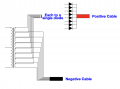
We all need to keep in mind that all the negative leads are bundled together to form the negative connection. The diodes go on the positive side (I know - AC doesn't have a "Positive" side, that's what the diodes are for). The (um) Positive leads go to the individual anodes of the diodes. The cathodes are all common on the plate.
Screenshot 2024-11-28 at 12.45.56 PM.png
To use a Bridge Rectifier, since all the negative leads are bundled the TS will have to unbundle them then determine which two sets of wires represent a single secondary output. Then the full wave rectification can occur. But if you're using a BR with all the negative leads bundled then you're able to use two of the diodes, leaving the other two unused. I'll bang a picture.
 

panic mode

Joined Oct 10, 2011
5,003
each bridge rectifier has 2 ac inputs and 2 dc out puts.
that is correct... at least for discussed DC bridge rectifiers. there are others.
one of reasons i brought this one up because it is isolated and therefore much less likely to bite you if you are unsure of what you are doing. for example using single rectifiers like mentioned in post #20 is fine too. but... they are not isolated. and diodes are polarized devices (polarity matters). so mere mounting of such devices onto a common metal body such as heatsink can cause shorts.

I understand one of the metal lines would go into 1 bridge rectifiers ac input and the dc+ would go to the charger positive lead. However what would go on the 2nd ac input on each bridge rectifier and what would go to the dc negative output on each bridge rectifier in your scenario?
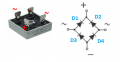
typical bridge rectifier will have a pinpit something like this, tab that is oriented differently is the +.

1733096538853.png

if the product is rated for 50A, each of the four internal diodes is rated for 50A.

while this does have 4 terminals. it can be used as a 2 terminal diode. and there are different ways to go about it...

case 1:
you can connect only two wires to use any individual diode (D1 or D2 or D3 or D4).
but this wastes other three diodes.

case 2:
you can use "-" terminal as anode and "+" terminal as cathode. this way all 4 diodes are used and share current. this also increases rated voltage when reverse biased. but when forward biased this increases forward voltage drop and increases dissipated heat (lowers efficiency). so for obvious reasons this is normally not desirable.

case 3
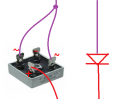
you can connect AC terminals together. this way D1 and D2 are in parallel. also D3 and D4 are in parallel. then you can use either of the two pairs of diodes (either D1 and D2.... OR ... D3 and D4). what i suggested before is to use D1 and D2 (leave D3 and D4 unused by not using "-" terminal). it does not really matter if you use D1+D2 or D3+D4 but i think most of people out there would get less confused if they see D1+D2 used.

1733097448291.png

again... i do not know anything about your actual device.
you should show how things are(were) really connected.

to give you the best possible recommendation or decipher what this thing really did, it would be essential to see the schematics. i would suggest testing transformer without the rectifiers.

1. check continuity of all secondaries and mark the leads in order. this is done offline using DMM.
2. connect primary to AC and measure AC voltage across all secondaries.
3. post results...
 

Tonyr1084

Joined Sep 24, 2015
9,744
Panic Mode beat me to the punch. Anyway, here's the idea: Remember, all secondaries are tied together on the negative lead (or what will become the negative). I'm only showing two of the 8 secondaries.
Screenshot 2024-12-01 at 5.03.06 PM.png
Since there are 8 secondaries, you can tie two of them together with a BR. But you're wasting two diodes. Still, if you want to go this route - just apply this principal to all the outputs that are equal in voltage.

Just to make sure, you should measure the voltage of each of the 8 wires in reference to the negative lead where all the secondaries are tied together. a.k.a the Black wire.
 

panic mode

Joined Oct 10, 2011
5,003
To use a Bridge Rectifier, since all the negative leads are bundled the TS will have to unbundle them then determine which two sets of wires represent a single secondary output. Then the full wave rectification can occur. But if you're using a BR with all the negative leads bundled then you're able to use two of the diodes, leaving the other two unused. I'll bang a picture.
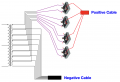
if that is the case, all secondaries wires from transformers got to AC terminals of the bridge rectifiers. the negative terminal on each rectifier remains unused. since max output is 200A and there are 8 secondaries. each diode only handles 200A/8 = 25A. so four bridges rated 35A or more will do just fine... or 8 single diodes...

1733098308050.png
 
Last edited:

Thread Starter

stryped

Joined Sep 17, 2023
136
that is correct... at least for discussed DC bridge rectifiers. there are others.
one of reasons i brought this one up because it is isolated and therefore much less likely to bite you if you are unsure of what you are doing. for example using single rectifiers like mentioned in post #20 is fine too. but... they are not isolated. and diodes are polarized devices (polarity matters). so mere mounting of such devices onto a common metal body such as heatsink can cause shorts.


typical bridge rectifier will have a pinpit something like this, tab that is oriented differently is the +.

View attachment 337139

if the product is rated for 50A, each of the four internal diodes is rated for 50A.

while this does have 4 terminals. it can be used as a 2 terminal diode. and there are different ways to go about it...

case 1:
you can connect only two wires to use any individual diode (D1 or D2 or D3 or D4).
but this wastes other three diodes.

case 2:
you can use "-" terminal as anode and "+" terminal as cathode. this way all 4 diodes are used and share current. this also increases rated voltage when reverse biased. but when forward biased this increases forward voltage drop and increases dissipated heat (lowers efficiency). so for obvious reasons this is normally not desirable.

case 3
you can connect AC terminals together. this way D1 and D2 are in parallel. also D3 and D4 are in parallel. then you can use either of the two pairs of diodes (either D1 and D2.... OR ... D3 and D4). what i suggested before is to use D1 and D2 (leave D3 and D4 unused by not using "-" terminal). it does not really matter if you use D1+D2 or D3+D4 but i think most of people out there would get less confused if they see D1+D2 used.

View attachment 337142

again... i do not know anything about your actual device.
you should show how things are(were) really connected.

to give you the best possible recommendation or decipher what this thing really did, it would be essential to see the schematics. i would suggest testing transformer without the rectifiers.

1. check continuity of all secondaries and mark the leads in order. this is done offline using DMM.
2. connect primary to AC and measure AC voltage across all secondaries.
3. post results...
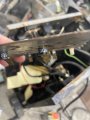
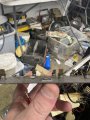
Already did this in a previous thread. All 8 have continuity with each other. All also have continuity ‘em with the ground cable that comes out of the transformer. 4 to the left of the transformer have zero voltage. The four lines on the right have all the same voltage but varies with the input of the amperage selector switch.
Could I do this with 1, 200 amp bridge rectifier? I have one.
 

panic mode

Joined Oct 10, 2011
5,003
sure, if the secondaries are matched they can be paralleled.
otherwise there will be internal losses and that means heat.
when using separate diodes/bridges there is no need for matching secondaries.

don't know much about previous thread but ...i am lazy, and my attention span is short...
i may lookup one or two posts back, or follow link, but i am not willing to find the other topics and read many pages.
people asking for help should spend their own time compiling relevant info and making it accessible.
 

LesJones

Joined Jan 8, 2017
4,511
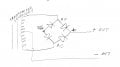
This is how you would connect one of the 4 bridge rectifiers
Bridge connections001.jpgWhen you do the voltage tests requested in your other thread we will be able to tell you which of the wires to each of the bridge rectifiers, you need to pick a pair of the secondary connections that are out of phase with each other.
Les.
 

Thread Starter

stryped

Joined Sep 17, 2023
136
This is how you would connect one of the 4 bridge rectifiers
View attachment 337155When you do the voltage tests requested in your other thread we will be able to tell you which of the wires to each of the bridge rectifiers, you need to pick a pair of the secondary connections that are out of phase with each other.
Les.
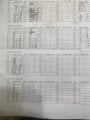
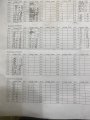
Here is a picture of a chart I partially filled out. There seemed to be a patter so I did not complete all the possible 250 combinations.
Also, as mentioned earlier, all 8 lines have continuity to the ground wire coming out of the transformer.
 

Attachments

Thread Starter

stryped

Joined Sep 17, 2023
136
This is how you would connect one of the 4 bridge rectifiers
View attachment 337155When you do the voltage tests requested in your other thread we will be able to tell you which of the wires to each of the bridge rectifiers, you need to pick a pair of the secondary connections that are out of phase with each other.
Les.
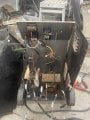
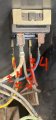
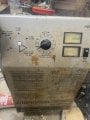
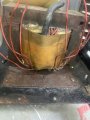
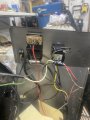
Here are several more pictures:
 

Attachments

LesJones

Joined Jan 8, 2017
4,511
Do what I suggested in post#73 of your other thread. That will confirm or disprove that the transformer has 4 centre tapped secondary windings. Also having two threads running on the same subject causes confusion.

Les.
 

Tonyr1084

Joined Sep 24, 2015
9,744
This is how you would connect one of the 4 bridge rectifiers
Bridge connections001.jpg
Same thing, only not with a full wave bridge rectifier. Left side no center tap, right side, center tapped.
Left side is FWBR output with a non-center tapped transformer.
Right side is FWR (not Bridged) output but only using two diodes.
Screenshot 2024-12-02 at 9.03.53 AM.png
The main difference between center tapped and non-center tapped is the voltage. A non-center tapped voltage may be (for instance) 12 volts whereas a center tapped transformer would have to be 24 volts from end to end with the tap in the center creating the necessary (for instance) 12 volts. Both achieve the same full wave pulsed DC but the non-center tapped secondary is in full use all the time whereas the center tapped transformer only half of the secondary is used for one half cycle and the other half of the secondary is used for the opposite half cycle.
 

Thread Starter

stryped

Joined Sep 17, 2023
136
Do what I suggested in post#73 of your other thread. That will confirm or disprove that the transformer has 4 centre tapped secondary windings. Also having two threads running on the same subject causes confusion.

Les.
Checking each of the 8 wires compared to the heavy black ground wire, each has 7.6 volts ac. Interestingly, when I attach the negative lead to that ground and do not connect the positive lead of the volt meter I get 3.6 volts roughlyThose are with the yellow wire attached to the switch.
With the red wire connected have 13.2 volts ac.
Withe the blue wire connected at the switch, all 8 wires have 9.8 v ac.
With the brown/ black wire connected, all 8 wires have 10.7
 

Thread Starter

stryped

Joined Sep 17, 2023
136
One more thing, would it me a good or bad idea to put one or more 4700uf, 25 volt capacitors across the negative/positive dc out put to clean up the ripple of the charger output?
 

Tonyr1084

Joined Sep 24, 2015
9,744
One more thing, would it me a good or bad idea to put one or more 4700uf, 25 volt capacitors across the negative/positive dc out put to clean up the ripple of the charger output?
With a battery charger you don't need to worry about ripple. In fact, the battery under charge will act like a capacitor.

WAY back when I was a kid I got a hold of a 12 volt car radio and wired it up to a 12 volt battery charger. The thing had a HORRIBLE hum. But when I put a battery on it the hum was completely gone.

No, you don't need a cap. Nor would you benefit from it.
 

Tonyr1084

Joined Sep 24, 2015
9,744
Something to keep in mind with AC and rectified to DC; AC is 0.7071 times lower than the DC value. Looking at it the other way around DC is 1.4142 times higher. The AC voltage is read as an RMS value. So 10.7VAC is going to be (10.7 x 1.4142) 15.132VDC when charging a battery. Same voltage rule would apply to using a capacitor instead of a battery.

Both the battery and caps do essentially the same thing. They take a charge and give it back. One does it chemically and over a longer period of time whereas a cap can take a charge very fast and can deliver it back in an almost avalanche of energy. Charge then short a cap and you get a snap and that's the end of it. Charge a battery then short it you get a whole lot of heat and excitement.
 

LesJones

Joined Jan 8, 2017
4,511
Re post #33 of this thread. Thst post is NOT what I wanted you to do. You need TO READ post #73 of the other thread again and do what is says.
Les.
 
Last edited:

MisterBill2

Joined Jan 23, 2018
27,591
I have, within the past year, soldered wire leads to several of those button diodes. It is quite tedious indeed, but after the diode is tinned the rest will work out. The big issue is that heat passes thru the diode and tends to unsolder the other side.
You would be able to solder them to the plate, AFTER first tinning the button and then tinning the plate.But as soon as the solder melts, don't heat it any hotter. At that point solder the tabs from the broken diodes to the replacement diodes, and then let it cool naturally, no blowing on it or anything to speed the process and possibly damage the ceramic part of the diodes. AND, be sure that the polarity of the replacements is right.

I suggest DO NOT USE AN ALUMINUM PLATE, because that aluminum flux is really nasty stuff, and probably corrosive to electrical items.
 
Top