Need recommendation for putty to use when soldering

Thread Starter

ballsystemlord

Joined Nov 19, 2018
253
Hello,
When soldering, like many other people, I've had the problem of trying to hold the component in place while soldering. Recently, I saw IMSAIGuy, an EE YT-er, using what looked like play-dough or modeling clay, to hold a through-hole switch in place. He literally flipped the board upside-down while the clay/dough held the part in place. "Eureka!" I said to myself, "This would work so well for me!"

Now I have just one problem, what type of clay or dough is compatible with soldering?

I was thinking that an oil based clay/dough would be best, because it's non-drying, but I have no idea how that would affect the cleaning process of the board. Would it leave conductive residue or residue which could become conductive?

Thanks!
 

nsaspook

Joined Aug 27, 2009
16,275
Hello,
When soldering, like many other people, I've had the problem of trying to hold the component in place while soldering. Recently, I saw IMSAIGuy, an EE YT-er, using what looked like play-dough or modeling clay, to hold a through-hole switch in place. He literally flipped the board upside-down while the clay/dough held the part in place. "Eureka!" I said to myself, "This would work so well for me!"

Now I have just one problem, what type of clay or dough is compatible with soldering?

I was thinking that an oil based clay/dough would be best, because it's non-drying, but I have no idea how that would affect the cleaning process of the board. Would it leave conductive residue or residue which could become conductive?

Thanks!
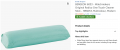
Use FUN-TAK/BLU-TACK


MisterBill2

Joined Jan 23, 2018
27,360
When stuffing PC boards for prototype short production runs our process was to bend the leads a bit after they were pushed thru. Of course the specification for the assembly was that all parts had to be secure independent of the solder, since the PCBs were used in a high vibration area on an I.C. engine.
 

MisterBill2

Joined Jan 23, 2018
27,360
Now with surface mount components that is different. They get stuck down with a drop of "blue glue" and stay in place until soldered. When I install a smt componet I hold it in place with a wooen toothpick .
 

bassbindevil

Joined Jan 23, 2014
922
I often use green painter's masking tape; it can be reused many times and doesn't leave residue. With something awkward like a switch, I'd solder one pin anyhow then re-melt that terminal and seat it properly, then do the rest of the terminals.
 

Thread Starter

ballsystemlord

Joined Nov 19, 2018
253
Now with surface mount components that is different. They get stuck down with a drop of "blue glue" and stay in place until soldered. When I install a smt componet I hold it in place with a wooen toothpick .
Yeah, what kind of epoxy/glue do the manufacturers use? I've read about it, in datasheets of parts, but no one has ever said what type of stuff it is nor given any part numbers.
 

B-JoJo-S

Joined Jan 3, 2026
250
I've seen both red and blue dots (but I can't tell you what they are) holding components on the solder side of the board. When in the oven the chips don't fall off and the solder melts and adheres to the board and component. On the component side there is no need for holding chips in place. When going through the reflow oven the solder melts and capillary action draws the chip into place with perfect alignment.

At home use of a hot air pencil will do as long as you don't have the air flow set to hurricane force. All you want to do is flow the solder. The chip (resistor, capacitor, diode or IC) will self align.
 

MisterBill2

Joined Jan 23, 2018
27,360
The "self alignment" is real BUT it demands that the device leads be in the exactly right shape for it to happen as desired. That is fine for production machines but not so great for hobby-class builders. Back , prior to SMT, parts were supposed to be mechanicaly securely fixed in place prior to soldering. Thus the adhesive use for SMT components. AND, how does one remove one of those parts without damaging either part or board??
 

drjohsmith

Joined Dec 13, 2021
1,584
for through hole, we used to have a lump of thick foam, we clamped that on top once components placed, turn over and solder.
Im guessing nowdays it would be anti static foam !
 

B-JoJo-S

Joined Jan 3, 2026
250
I just soldered some connectors to a board. In order to get the through hole connectors to stay in place while I turned the board over was to use some gooey solder flux. Held long enough to turn it over and let gravity hold the board on the connector. Soldering was then an easy task. Started with the center lead (#2) and soldered that in place. Then making sure the connector was straight I soldered pins 1 & 3.
I've had the problem of trying to hold the component in place while soldering.
I saw IMSAIGuy• • • using what looked like play-dough or modeling clay, to hold a through-hole switch in place.
If I had to solder a through hole switch in place, if I can just tack one lead on the component side I could then flip it over and solder the other leads. Then reflow and, if necessary, add solder to the tacked joint. It only has to stay there long enough to be flipped over and fully soldered.
 
Top