Resistor change

Thread Starter

KaiF76

Joined Feb 9, 2020
4
1.PNG

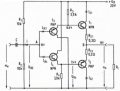
If R3 and R4 get bigger the current and the voltage over R3 and R4 drops right? But what about basic potential of T1? Its still 10,6V? And ua increases?
 

AlbertHall

Joined Jun 4, 2014
12,625
The voltage across R3 and R4 will increase very slightly so, as their value has increased the currents through those resistors will decrease.
 

MrChips

Joined Oct 2, 2009
34,812
The effect is very small. The voltage is determined by the base-emitter forward voltage of T3 and T4. Hence the emitter of T3 is about 0.6 V above 10V (½ supply voltage) and the emitter of T4 is about 0.6V below 10V.
 

WBahn

Joined Mar 31, 2012
32,836
If R3 and R4 get bigger the current and the voltage over R3 and R4 drops right?
Not necessarily. Imagine a resistor connected across a battery. If you increase the resistance, does the voltage across the resistor drop? Now imagine it connected across a current source. If you increase the resistance, does the current through the resistor drop?

What happens depends on the interaction between the increased resistance and the circuit it is connected to.

But what about basic potential of T1? Its still 10,6V? And ua increases?

What is the "basic potential" of a transistor? What does that mean or refer to? You need to use proper terminology and descriptions.
 

WBahn

Joined Mar 31, 2012
32,836
with basic potential i mean the 10,6V of T1, does it increase or decrease if the voltage over R4 decrease.
That would be the base potential or base voltage, not basic potential.

What determines, at least to a good first approximation, the voltage on the base of T1?

Start with considering why it's 10.6 V in the original diagram.
 

WBahn

Joined Mar 31, 2012
32,836
its 10V + 0,6V,because the transistor only conducts from 0.6V. The base potential is increasing i think?
If it's increasing, then that means that either the 10 V is increasing or the 0.6 V is increasing?

What determines the 10 V? How would increasing the resistance of either of those resistors increase that voltage?

What determines the 0.6 V? How would increasing the resistance of either of those resistors increase that voltage?
 
Top