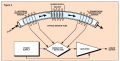
Remote detection of water flow through a pipe

drc_567

Joined Dec 29, 2008
1,156
One serious problem that occurs to homeowners is that a leak in the main water supply line will develop and not be detected. This occurs due to pipe corrosion, abrasion from long term vibration, construction activities, and a number of other reasons. The only way that this leak will show up is to monitor the monthly water bill or physically inspect the property. If the leak is enclosed inside a crawlspace or a concrete foundation, it may go undetected for some time, and may accumulate, causing damage to wood floors or health problems from microbial growth.

A leak detection signal could be Wi-Fi-ed to the resident computer network and prevent major expenses and repairs. A free standing monitor would be another option.

Sometimes it takes many years for this scenario to occur, but statistically, most everybody will have this experience sooner or later.
 
Flow rate is not the same as volume.

==

The homeowner leak is a reality. My stories involve:

1. Hot water line broke somewhere underground while on vacation. The water goes underground to get from one side of the house to the other, No visible sign of a leak, but you could definitely hear it.

2. One of these http://www.truevalue.com/product/La...-Hose-Connector/pc/10/c/146/sc/2395/13561.uts snapped in half, Fortunately, the water ran for about an hour.

3. It's amazing just how easy it is for a toilet to leak and how much water it uses. Fluidmaster makes a leak sentry valve that works most of the time. If it detects a leak in the flapper, it will shut off the water. It failed on me. The plastic chain caught on a tab on a screw on the valve. A very freakish accident. Putting cut pieces of straws on the plastic chain will prevent the failure. Even if it does fail, it should not cause a flood. In my case it did. The Vortens Vienna toilet won't accept a constant fill, so it leaked out the tank in the back. AND, since the seal on the toilet flange (professionally installed) needs help, it flooded upstairs and downstairs.

4. A neighbor that can't easily go downstairs had a $400.00 water bill because of a flapper leak.

5. Knock on wood. There are the flex hoses on the washer.

6. The water heater could spring a leak which would mostly be pumped out by the sump pump.

7. You have to test the sump pump by physically making the sump pump pump water. I had one that turned on, but the base fell off. Our sump pump barely runs.

8. I'd really like a decent water/(freezer door prop) alarm system.
 

DNA Robotics

Joined Jun 13, 2014
670
Can you do something with a focused IR LED / detector to signal when that little triangle moves? Both in thin tubes to detect a reflected make & break?
 

GopherT

Joined Nov 23, 2012
8,009
Inexpensively detecting "on or off" water flow through a pipe is not an easy matter. There are sophisticated, very costly devices for doing same, but prohibitive by nature. Needed is an inexpensive device for non-invasively determining yes, water is flowing, or no, water is not flowing. Even a diy system is acceptable but its design escapes me. Any thoughts.....referrences?

Bob Hewlett
If a passive device is possible, what benefit does it bring/why would it be used (needed). How many people would find a $50-dollar device like this interesting?
 

wayneh

Joined Sep 9, 2010
18,127
This sort of leak would be easy to detect in my house, because I have a well pump. If I hear the pump cycling, I know my reserve tank is not holding pressure and that's because water is going somewhere. Garden hose left on, run-on toilet, water softener running, that sort of thing.

Folks on city water don't have this, but they could add a main shutoff valve. I mean a good one that's easy to use, not some POS gate valve that leaks every time you turn the knob.
 

cmartinez

Joined Jan 17, 2007
8,795
This sort of leak would be easy to detect in my house, because I have a well pump. If I hear the pump cycling, I know my reserve tank is not holding pressure and that's because water is going somewhere. Garden hose left on, run-on toilet, water softener running, that sort of thing.

Folks on city water don't have this, but they could add a main shutoff valve. I mean a good one that's easy to use, not some POS gate valve that leaks every time you turn the knob.
That's not a bad idea... install a check valve at your installation's water entry point, then install a small "booster-pump" right after it. That type of pump has a small pressure tank with a gauge that detects the drop in pressure caused when water is being consumed down the line, starting the pump when that happens.

If you were to set up that system (and you'd only need an increase of a couple of psi between the water intake and the pump, to keep the check valve well shut) you'd be able to detect the smallest trickle by measuring the frequency at which the pump starts and stops.
 
Working in heavy industry I've used a lot of different flow sensors. One of the better lower cost ones out there right now is the non-mechanical heated wire type. The flow detector has a heater and a temperature sensor. The unit is placed directly in the pipe with the temperature sensor downstream from the heater. When water flows the sensor cools making a switch or gives an analog output. Seen these work where rotating or vain types fail from crap in the water or scale buildup. Also can detect pretty low flow rates.
Not going to fit your budget but lower cost than mechanical or Coriolis types. Might could build one your self.
 

Thread Starter

Ferdmonster

Joined Apr 22, 2017
13
Working in heavy industry I've used a lot of different flow sensors. One of the better lower cost ones out there right now is the non-mechanical heated wire type. The flow detector has a heater and a temperature sensor. The unit is placed directly in the pipe with the temperature sensor downstream from the heater. When water flows the sensor cools making a switch or gives an analog output. Seen these work where rotating or vain types fail from crap in the water or scale buildup. Also can detect pretty low flow rates.
Not going to fit your budget but lower cost than mechanical or Coriolis types. Might could build one your self.
I'll certainly check into that. Thanks!
 

crutschow

Joined Mar 14, 2008
38,573
........One of the better lower cost ones out there right now is the non-mechanical heated wire type. The flow detector has a heater and a temperature sensor. The unit is placed directly in the pipe with the temperature sensor downstream from the heater. When water flows the sensor cools making a switch or gives an analog output.
Interesting approach but I wonder how much energy that would require?
 

cmartinez

Joined Jan 17, 2007
8,795
Interesting approach but I wonder how much energy that would require?
The problem I see with it, is I don't think that that sort of technique would be capable of detecting a "trickle", as the OP wants. And if one were to build it sensitive enough, then sonic vibrations in the fluid could affect it as well.
 

AlbertHall

Joined Jun 4, 2014
12,636
The problem I see with it, is I don't think that that sort of technique would be capable of detecting a "trickle", as the OP wants. And if one were to build it sensitive enough, then sonic vibrations in the fluid could affect it as well.
You could have a temperature sensor above and below the heater. With no flow the heat would spread equally to both sensors but even a trickle would carry the heat away from one sensor toward the other. However it would consume significant power all the time.
 

cmartinez

Joined Jan 17, 2007
8,795
Actually it would be more sensitive to a trickle than a high flow rate, because, for a given amount of heat added to the pipe, the downstream liquid would be heated to a higher temperature.
It could... it's just that it bothers me that there would be othe factors involved in maintaining temperature stability when there is zero flow in the pipe. Such as the one I already mentioned and others external to the pipe itself ... is it buried, or exposed to the elements, such as wind and rain? etc...
An external temp sensor would come in handy, for instance. And a smart algorithm would have to be implemented to discriminate all these factors...

But maybe I'm getting ahead of things here. I'd recommend building a prototype and test it thoroughly. It's definitely worth a try.
 
Last edited:
I am currently developing such a device as part of project I am pursuing. It uses convection cooling to detect water flow and involves clamping a coiled wire sensor to the outside of a 3/4" copper pipe. It is completely non-invasive. I don't know what you mean by a 'trickle', but I've been able to detect some very small water flows. I would say that detection is within less than a second. The recovery after detection is slow and I'm still making tests to determine this and other performance characteristics. Do you have a minimum GPM detection target?
 

Thread Starter

Ferdmonster

Joined Apr 22, 2017
13
I am currently developing such a device as part of project I am pursuing. It uses convection cooling to detect water flow and involves clamping a coiled wire sensor to the outside of a 3/4" copper pipe. It is completely non-invasive. I don't know what you mean by a 'trickle', but I've been able to detect some very small water flows. I would say that detection is within less than a second. The recovery after detection is slow and I'm still making tests to determine this and other performance characteristics. Do you have a minimum GPM detection target?
Your project sounds very interesting. We have not established a GPM. But, just to give you an idea, if you had a pvc pipe, for example, pressurized with water to 80 psi and you drilled a hole in the pipe the diameter of a straight pin, the little stream that hole creates is what we call a trickle and that is exactly what we want to detect.

Your project sounds very interesting. We have not established a GPM. But, just to give you an idea, if you had a pvc pipe, for example, pressurized with water to 80 psi and you drilled a hole in the pipe the diameter of a straight pin, the little stream that hole creates is what we call a trickle and that is exactly what we want to detect.
What are the energy requirements for your device?

Can you do something with a focused IR LED / detector to signal when that little triangle moves? Both in thin tubes to detect a reflected make & break?
I would sure like to know more about your idea. Especially your comment about thin tubes. I don't quite understand that part. Thanks!
 
Last edited by a moderator:
The GPM rate for a pinhole in an 80 psi pipe is probably one half or one quarter of what I used for my test, but it may not be out of range for the device. The trickle I used resulted a 1.2 volt signal and I haven't yet employed the full detection strategy. So it seems likely that I'll be able to go much lower. However, my sensor depends on good thermal conductivity in the pipe wall and I don't think PVC would work well. So if that is a requirement of your application, then it's not a good fit.

I am only in the prototype stage so the current requirements of the circuit are still pretty fluid. Right now it looks like it will be around 150 ma or so.

That's 150 ma at 24 VDC.
 
Last edited by a moderator:

Thread Starter

Ferdmonster

Joined Apr 22, 2017
13
The GPM rate for a pinhole in an 80 psi pipe is probably one half or one quarter of what I used for my test, but it may not be out of range for the device. The trickle I used resulted a 1.2 volt signal and I haven't yet employed the full detection strategy. So it seems likely that I'll be able to go much lower. However, my sensor depends on good thermal conductivity in the pipe wall and I don't think PVC would work well. So if that is a requirement of your application, then it's not a good fit.

I am only in the prototype stage so the current requirements of the circuit are still pretty fluid. Right now it looks like it will be around 150 ma or so.

That's 150 ma at 24 VDC.
Ok. Got it. My application requires use on pvc as well as metal so it looks like it may not be a fit. Very interesting though. Thank you.
 
Top