-- Thanks for fixing quotation layout, moderator. I am not familiar enough with the forum site (or any forum site) to do this yet but will seek out smarts on thisModerator edit: added quote tags
See? He's starting with the output and using that information to design what drives it.The load determines the size and structure of the relay contacts.
The relay contacts determine the size and structure of the relay coil.
The relay coil determines the size and structure of the coil driver component.
ak
Don't type into the middle of the reply without using quote tags.-- Thanks for fixing quotation layout, moderator. I am not familiar enough with the forum site (or any forum site) to do this yet but will seek out smarts on this
The amount of power being switched by the relay contacts directly affects the amount of power the relay coil needs to operate.
-- key point I had not realised. Thankyou for pointing that out. I hadn't read anything like that till now.
Switching 12 V at 1000 A vs 12 V at 1 A require two very different relays.
-- yes
So, what is the load the relays are driving? You've said it is 12 Vac? Current?
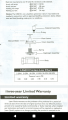
-- oops I did say 12v AC but I just looked at the specs sheet- see attached - and it's 18v AC ("minimum"). sorry
-- The current drawn by the selenoid valve is less than half an amp. Attached spec says 0.48A
Since this is not in an office environment, do the relays need to be sealed or at least enclosed, or can they be open frame?
-- no there's no need for them to be sealed. they will be safely tucked away with the other components in an all weather enclosure. I envisaged components will just sit in an open frame inside the enclosure
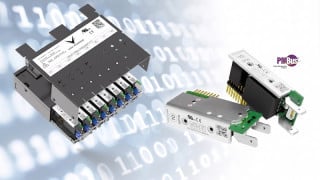
If the current required by the solenoid valves is low enough, a PhotoMOS device might handle it. Depending on who you ask, this is either a high power opto coupler or a low power solid state relay.
-- Are these SS options still ok for the load?
How many of these circuits will you need to build?
-- only the one. it can stay breadboaded
Many thanks for your perseverance
ak
Using the resistance method for DC solenoids is valid, but of no use for AC type as the current is limited by the Inductive Reluctance.Relays: The PDF attached entitled Relay.pdf shows the specs. I bought one and did some measurements and testing:
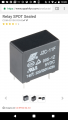
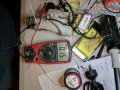
Firstly the relay coil: The coil is rated at 5v DC. I couldn’t find the current rating in the specs. I tested it and it draws 83mA at 5v (holding). Just for practice, I used ohms law to see if I could predict its current. (This was my first foray into ohms law.) The coil resistance measured 57 ohms. Substituting these two variables into the RHS of the equation, I = V/R, yielded a quotient value for the current of 88 mA. Seems legit.
Secondly the relay contact switch: the contact switch is rated at 5A at 250v AC, which is within the requirements of the switching load (see above). It is NO and when I applied the power to the coil I could hear the armature click closed, reducing the measured resistance to zero ohms.
Something is very wrong about the voltage specifications.Firstly the relay coil: The coil is rated at 5v DC.
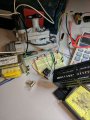
There is something very wrong about this measurement.The solenoids... I bought one and tested it with my newly purchased multi meter. It draws 140mA at 24v AC.
For a person who is having difficulty with the difference between a 5V relay and a 12V relay?Have you considered an Arduino?
And #12, it has been my experience that people do not need to really understand the difference between 5V and 12V to learn to program.
OK. Present your circuit, your code, and your Bill of Materials, just to give the Thread Starter what we were going to do in 2 chips and a few triacs. Be sure your Arduino can operate on 5 volts or 12 volts to demonstrate that one need not know the difference.I am not trying to hijack this forum in any way but truly feel the Arduino is the best solution to this project.
Did you see these that the TS said in the first post:It does seen many people on this forum are quite against Arduinos and that is a shame.
Please don't feel sad, when you join the forum more and more and the links related with the topic then the links will be stand.I'm sorry if you are all offended by my posting. It was not my intention to be a spammer but was TRULY trying to help.
I'll leave it alone now.
hi #12 thanks for your reply.Relay: 12VDC, 320 ohms, 37.5 ma
Contacts: 5 A
Min load = 10 ma.
Something is very wrong about the voltage specifications.
Post #12 says 230 volt mains and 12 VAC to be provided.
This suggests that Melissa is in England with 50 Hz power.
The valves want 24 VAC 50 Hz. 444 ma start surge, 250 ma run.
There is something very wrong about this measurement.
@Mellisa_K
The valves want 24 VAC. Your idea for a 12 volt transformer will not work.
You seem confused about a 5 volt relay coil while posting the specs for a 12 Volt (DC) relay.
Your measurements seem wrong for the solenoid current.
Time to back up and sort things out.
The logic section is easily adapted to whatever voltage and current the solenoids need. The relays can be replaced by triacs if the solenoids want AC, or transistors if they want DC. Right now, we need to nail down the specifications. As much as you have tried, you don't have solid answers yet.
hello dendad,I'm sorry if you are all offended by my posting. It was not my intention to be a spammer but was TRULY trying to help.
I'll leave it alone now.
Thankyou analogue kidIt sounds like you're doing very well on your own. This weekend is a bit busy, but I'll get back into this thread by Monday. Where are you located?
ak