Problems, Replacing Incandescent with LED, Automotive Lighting

Thread Starter

MB107

Joined Jul 24, 2016
400
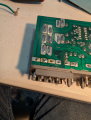
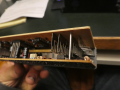
That (1st pic not blue) module has a bunch of flat current-sense resistors that I can see. It must be looking at current drain for all the lamps. Wow. I would look at the PCB sandwich, most common is fractured solder joints. If we can see pics, the IC numbers used, you could thwart the detection threshold or lower it maybe. Maybe look at the IC numbers.
Yes people have been calling those shunt resistors. The biggest failure mode is fractured soldered joints. Unfortunately I do not have the skill to get the sandwich un-sandwiched to look at the IC's
 

Thread Starter

MB107

Joined Jul 24, 2016
400
So all is not well. At least not as well as I thought.

It turns out that the replacement N7 module while it works better still has the same problem but not as bad. The old module would glow extremely dim with the parking lights on and than at about 50% with the headlights on. New one is extremely dim with headlight on but then gets to about 50%when you step on the brake. it seams that as more light circuits are active the more of a problem this becomes.

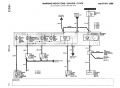
In looking at how this thing works, there is 12V present at pin 4 on the warning indicator. When that pin is grounded the exterior lamp failure indicator illuminates. That pin gets grounded via pin 10 on the N7 Exterior Lamp Failure Monitor. what is happening is pin 10 on N7 is not fully grounding and only pulling voltage down to about 5V which consequently allows the light to glow.

I tried putting a 12V zenor diode in place between pins 4 and 10 hoping that I could force the light to only illuminate when voltage was above the 12V. That didn't work but I really don't understand much about zenor diodes. I think something like that can be done.

1774658421410.png
 
If you add a zener diode to the N7 lamp fail output, it will stop it from lighting up dim- but also it will never light up full brightness either.
Example, add a 5V zener so that any N7 output (pin 10) above that, the indicator lamp stays off. But with the N7 lamp fail output on (activated) down to 1V, you only get 6V to the lamp so it's half-on dim.
The indicator lamp connects to 12V power so the N7 is pulling the lamp other end to GND is what turns it on. Called a "low side switch".

The right way is to conquer the N7 box- take apart the sandwhich and post pictures of the PC boards top and bottom and I can draw a schematic. Reverse-engineering like this I do all the time, like a the Sunday crossword puzzle. But it looks hard to take apart with the connector and pins between boards. It's wired to so many lamps in the car, center of the universe from what I can see.

Otherwise, I think you would have to make a voltage switch connected inline to pin 10, that ignores everything below say 6V (adjustable) yet turns on the lamp full brightness outside of that.
But the original problem of the LED's messing up the N7 trigger threshold still remains I thought?
 

Dirus

Joined Jan 9, 2016
22
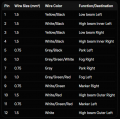
Pin 4 & 10 on the 1075420132's X3 connector are the High Beam wires. Pin 9 (White/Green wire) is for the Right Marker Light, while Pin 11 (White/Green/Red wire) is for the Left Marker Light.

The solder joints on the 1075420132 along the one side where all the pins connect are prone to cracking due to age and vibration on these cars. Try reflowing all those joints to make sure they're solid.

Typically a 6ohm 50w or an 8-10ohm 25-50w wire wound load resistor is all thats needed to fix the warning indicators from turning on when switching to LEDS as the module is looking for a 4-5w draw the original marking lights pull. As an alternative, some people just wire up the old incadescent light as well and hide it somewhere.

Also, the various circuits share grounds and rails etc, you could have a partial short somewhere on one of your light circuits thats causing the issue.

1775271194815.png
 

Thread Starter

MB107

Joined Jul 24, 2016
400
If you add a zener diode to the N7 lamp fail output, it will stop it from lighting up dim- but also it will never light up full brightness either.
Example, add a 5V zener so that any N7 output (pin 10) above that, the indicator lamp stays off. But with the N7 lamp fail output on (activated) down to 1V, you only get 6V to the lamp so it's half-on dim.
The indicator lamp connects to 12V power so the N7 is pulling the lamp other end to GND is what turns it on. Called a "low side switch".

The right way is to conquer the N7 box- take apart the sandwhich and post pictures of the PC boards top and bottom and I can draw a schematic. Reverse-engineering like this I do all the time, like a the Sunday crossword puzzle. But it looks hard to take apart with the connector and pins between boards. It's wired to so many lamps in the car, center of the universe from what I can see.

Otherwise, I think you would have to make a voltage switch connected inline to pin 10, that ignores everything below say 6V (adjustable) yet turns on the lamp full brightness outside of that.
But the original problem of the LED's messing up the N7 trigger threshold still remains I thought?
Interesting I already tried this with a 12V zener. Normally its running above 13V, so I figured clipping anything below 12 is fine but a 6V output should be good enough but if I could get it up to 8 that would be better. I forgot what happened with the 12V zener but but it didn't work. It looks like I need to get the voltage down below 2V to not see it. The N7 module is the center of the universe as far as the lighting is concerned. As far as taking it apart my skill set is just not there yet. Ive been practicing with solder suckers and vacuum pumps but no luck. There are some electrolytic caps in there. I cant tell what size or if they are good or bad but they are over 40 years old in both modules. I do have multiple sizes of zeners in the 5 to 12V range. I will give those a try. Buy the way which end does the stripe on the diode go toward the N7 module. I just tried the 12V in both directions.

Thanks
John
 

Thread Starter

MB107

Joined Jul 24, 2016
400
Pin 4 & 10 on the 1075420132's X3 connector are the High Beam wires. Pin 9 (White/Green wire) is for the Right Marker Light, while Pin 11 (White/Green/Red wire) is for the Left Marker Light.

The solder joints on the 1075420132 along the one side where all the pins connect are prone to cracking due to age and vibration on these cars. Try reflowing all those joints to make sure they're solid.

Typically a 6ohm 50w or an 8-10ohm 25-50w wire wound load resistor is all thats needed to fix the warning indicators from turning on when switching to LEDS as the module is looking for a 4-5w draw the original marking lights pull. As an alternative, some people just wire up the old incadescent light as well and hide it somewhere.

Also, the various circuits share grounds and rails etc, you could have a partial short somewhere on one of your light circuits thats causing the issue.

View attachment 365576
This is originally a 4 head light system using 35W low beams along with 35W and 50W high beams. The high beams have been taken out of the picture by bypassing the input and output of the high beam circuit so they no longer run through the N7 module. I have no issues with the high beams. The low beam LED replacements run at 30W so I did nothing as far as resistors for those as they were close enough to 35W. There does not appear to be any problem with those as they work fine if I remove the LED parking light an install the stock 4W incandescent parking light. I measured the current on the LED parking lights and calculated the power it came out to ~ 3.2W. I though it was going to be close enough but I found that I needed a 100 ohm 10W resistor. If I recall the calculation came out to ~ 90 Ohms when in parallel with the LED.

I did re flow one of the pins as shown in the picture below but that needed to be done because it wouldn't work with the stock incandescent system. Now both the modules do work properly when I use them with the stock lighting, but both have similar issues with LED. I was hesitant to re flow all of them as my soldering skills do suck especially with these heavy duty pins. If I do re flow all of them is it necessary to suck off all the old solder. I did suck off as much as I could on the pin repaired below. But If I could just remelt whats there, I could do that very easily.

Thanks
John

1775308391850.png
 

Dirus

Joined Jan 9, 2016
22
I mentioned Pin 4 & 10 as that was what was being discussed in relation to the issues you're having with the marker lights. Pin 4 is the 12v supply to the warning light, Pin 10 is the Ground for the warning light.

What happens is the module monitors Pin 9 & 11 (left & right marker light circuits) of the X3 connector, it's looking at the current draw numbers.

If it detects a value it doesn't like (too high = short / too low = blown bulb) it grounds pin 10 which illuminates the warning light.

The dim light issue you have is either the module itself needs repair as pin 10 is partially grounded, or you have a high resistance issue on the right side circuit most likely.

If you don't care about the warning light you could just cut the Pin 10 wire.

Other then that, the module needs to be disassembled to track down what component may be going bad.

That said, the heart of the module is an obsolete ULN2455A lamp monitor IC.
 

Thread Starter

MB107

Joined Jul 24, 2016
400
I mentioned Pin 4 & 10 as that was what was being discussed in relation to the issues you're having with the marker lights. Pin 4 is the 12v supply to the warning light, Pin 10 is the Ground for the warning light.

What happens is the module monitors Pin 9 & 11 (left & right marker light circuits) of the X3 connector, it's looking at the current draw numbers.

If it detects a value it doesn't like (too high = short / too low = blown bulb) it grounds pin 10 which illuminates the warning light.

The dim light issue you have is either the module itself needs repair as pin 10 is partially grounded, or you have a high resistance issue on the right side circuit most likely.

If you don't care about the warning light you could just cut the Pin 10 wire.

Other then that, the module needs to be disassembled to track down what component may be going bad.

That said, the heart of the module is an obsolete ULN2455A lamp monitor IC.
Thanks

What about those electrolytic capacitors. Those two on the edge I believe I could replace without taking it apart. Could they be causing this issue. They are 40 years old. I do have a guy in New Zealand willing to take this apart for me an reverse engineer it. But I'm considering trying those two caps just because they are 40 years old and all the other caps in the car seem to fail long before that. Of course there might be more than just those two.

1775354966363.png
 

Dirus

Joined Jan 9, 2016
22
There is various posts on Mercedes Benz related forums that show pictures of these modules disassembled.

Whether or not swapping those 2 caps would work I could not tell you as I have no clue what circuit they're involved in. A full re-cap of the board sure would not hurt tho.

In some cases it's bad solder joints for the IC it's self that causes the issues.
 

MisterBill2

Joined Jan 23, 2018
27,611
If you have the module out, and have a good soldering tool, re-hitting ALL of those solder connections will take less than two minutes and remove the possibility of a failed solder joint. A really cheap and really easy diagnostic tool!
 

Thread Starter

MB107

Joined Jul 24, 2016
400
If you have the module out, and have a good soldering tool, re-hitting ALL of those solder connections will take less than two minutes and remove the possibility of a failed solder joint. A really cheap and really easy diagnostic tool!
Is it necessary to clean off old solder or can I just remelt whats in place. In post 26 I removed all the old solder first on one pin that was giving me trouble and then re soldered it. If I can just remelt it, I feel a bit more confident doing that because trying to suck it all off makes me feel I'm overheating it.
 

Thread Starter

MB107

Joined Jul 24, 2016
400
There is various posts on Mercedes Benz related forums that show pictures of these modules disassembled.

Whether or not swapping those 2 caps would work I could not tell you as I have no clue what circuit they're involved in. A full re-cap of the board sure would not hurt tho.

In some cases it's bad solder joints for the IC it's self that causes the issues.
I have seen several MB posts but the ones I have seen address issues with the OE lighting. Both of my modules work fine with the OE lighting. But both have this issue once the right side parking lamp is replaced with the LED halo. No problems with the left side??? I have fixed one solder joint already that was required to get one of the modules to work with OE lighting. I'm going to reinstall the right side OE parking light to verify the problem does go away. You never know what has happened over the time I have been screwing around with this.
 

MisterBill2

Joined Jan 23, 2018
27,611
Is it necessary to clean off old solder or can I just remelt whats in place. In post 26 I removed all the old solder first on one pin that was giving me trouble and then re soldered it. If I can just remelt it, I feel a bit more confident doing that because trying to suck it all off makes me feel I'm overheating it.
I have done the remelt route, WITH adding a bit of "HIGH FLUX" solder at the same time. Not much, but enough to add flux when there may not have been adequate solder wetting. AND these were always done with a solid tipped soldering pen, rather then the temperature controlled types. So there was always enough reserve heat energy to not suffer any temperature drop. The temperature does need to be high enough so that most points take almost one second or less. So it would be a very fast process.
 

Thread Starter

MB107

Joined Jul 24, 2016
400
I have done the remelt route, WITH adding a bit of "HIGH FLUX" solder at the same time. Not much, but enough to add flux when there may not have been adequate solder wetting. AND these were always done with a solid tipped soldering pen, rather then the temperature controlled types. So there was always enough reserve heat energy to not suffer any temperature drop. The temperature does need to be high enough so that most points take almost one second or less. So it would be a very fast process.
I have a Hakko FX888D soldering station. On those big terminals like the ones shown in post 26, I found I had to increase temperature to about 420F. I even had to put a little fresh solder on to get the old solder to melt. I'm not sure if I have high flux solder but I do paint the area with flux past before I begin. Certainly not a 1 second operation at last for that terminal. I do have a solder pen type, if I recall its 30W but I haven't tried it.
 

Thread Starter

MB107

Joined Jul 24, 2016
400
Something new I need to look into. I did find that the Dapper Halos are made by a company called Diode Dynamics. I went to the Diode Dynamics web sight and was able to find a data sheet for these. It turns out that the 120mm halos in the amber parking mode operates at 1A, 13.5 W which is way more than the ~300ma I measured. So I need to remeasure that and see whats what. I'm also not sure how they measure it. When the amber mode is operating I still have another 300ma going into the white channel. So I'm not sure if they are counting the 13.5W as a combination of both the white and amber channels or the amber separately. Yet the amber mode will operate directly without current going into the white channel and that is exactly how I measured ~ 300ma.

That being said if it really is 1A, the resister I put in parallel is not correct or even close. In fact I should be putting in a current limiting resistor in series to bring this bulb down to the 5W range. The halo is certainly bright enough to reduce the output for the parking light mode but I'm not sure how much I can reduce it. While I have a very easy way to test all this, I wont be able to fully try it out for a while as I sent one headlight back to Dapper to exchange for another style. Of course none of this explains why this works on the left side of the car but not the right.

So I think I will get to the bottom of this in time. Diode Dynamics Switchback Halo Specifications.JPG
 
Top