Facebook
 Google
 GitHub
 Linkedin

Hi guys! Sorry for my english wrote  .
.
I don't understand why the value of the Opamp's Vout is too different from the calculate value.
Vout = (R7/R5) * (Vpos - Vneg), where Vpos=Vneg=2.5V. I know that, in the really case, there isn't the complete rejection of common mode, but i see that the different between ideal and really result is important. There's a Vout about of 2.40 mV, it's impossible!
Can you help me, please?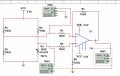
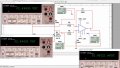
. I don't understand why the value of the Opamp's Vout is too different from the calculate value.
Vout = (R7/R5) * (Vpos - Vneg), where Vpos=Vneg=2.5V. I know that, in the really case, there isn't the complete rejection of common mode, but i see that the different between ideal and really result is important. There's a Vout about of 2.40 mV, it's impossible!
Can you help me, please?