Pre amplifier for Knowles Electret Microphone

Thread Starter

PrashantNayakALLD

Joined Jan 14, 2025
1
Hello everyone,

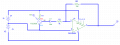
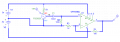
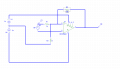
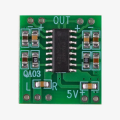
It has been months since I have been trying to develop a preamplifier for the Knowles FG23629 electret microphone. In one of my acoustic project I am using knowles elctret microphone for its shape and size that fits my application. I have earlier used the same mic for other applications and they tend to perform well. However in this project the signal output from the microphone needs to have a gain of 20dB, I have tried PAM8403 audio amplifier but it is unable to amplify the microphone signal. I tried a basic op based circuit of 20dB gain that too did not work,
1736851038199.png 1736851271245.png1736851373571.png


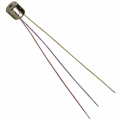
Knowles FG23629 is a 3 pin microphone with VCC 1.3V-3V and GND and signal pin. without the pre-amp circuit i am able to aquire the signal by just powering up the micropphone >1.5V and using NI daq. but not with the pre amp circuit gain. I believe there is something wrong that i am doing tha the amplifier do not workwith the microphone.

Kindly if anyone can recommend me a circuit that works to get 20dB gain from this microphone do healp if any commercailly availble amplifier exist i can buy that too.
 

KeithWalker

Joined Jul 10, 2017
3,603
In your diagram, you do not show the negative connection of the microphone. The circuit will not work as shown because you have positive feedback from pin 1 to pin 6.
 

Ian0

Joined Aug 7, 2020
13,097
Hello everyone,

It has been months since I have been trying to develop a preamplifier for the Knowles FG23629 electret microphone. In one of my acoustic project I am using knowles elctret microphone for its shape and size that fits my application. I have earlier used the same mic for other applications and they tend to perform well. However in this project the signal output from the microphone needs to have a gain of 20dB, I have tried PAM8403 audio amplifier but it is unable to amplify the microphone signal. I tried a basic op based circuit of 20dB gain that too did not work,
View attachment 340341 View attachment 340342View attachment 340343


Knowles FG23629 is a 3 pin microphone with VCC 1.3V-3V and GND and signal pin. without the pre-amp circuit i am able to aquire the signal by just powering up the micropphone >1.5V and using NI daq. but not with the pre amp circuit gain. I believe there is something wrong that i am doing tha the amplifier do not workwith the microphone.

Kindly if anyone can recommend me a circuit that works to get 20dB gain from this microphone do healp if any commercailly availble amplifier exist i can buy that too.
Is V3 the microphone? If so, you will need a capacitor to remove the DC offset.
 

sghioto

Joined Dec 31, 2017
8,633
Kindly if anyone can recommend me a circuit that works to get 20dB gain from this microphone
Try this circuit. Select R1 value to get appx 1.5 volts across the mic element.
Couldn't find a pinout on the OPA3582 so assuming those pin numbers are correct.
Pay attention to the polarity of the 5 volt supplies.
1736876740354.png
 
Last edited:

MisterBill2

Joined Jan 23, 2018
27,180
I think that "S" may have solved the problem.
The circuit shown originally was missing a microphone connection, evidently the common return. That is rather important.
 

Bordodynov

Joined May 20, 2015
3,430
Try this circuit. Select R1 value to get appx 1.5 volts across the mic element.
Couldn't find a pinout on the OPA3582 so assuming those pin numbers are correct.
Pay attention to the polarity of the 5 volt supplies.
View attachment 340362
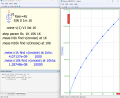
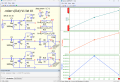
The input impedance of the amplifier is 1 kOhm low. It will excessively shunt the microphone, reducing the microphone's output signal. In this case, it is better to use a non-inverting activation of the operational amplifier.
1736916750971.png
 

Attachments

Bordodynov

Joined May 20, 2015
3,430
By simply converting an inverting amplifier (with 1 kOhm and 10 kOhm resistors) to a non-inverting one, you would get less noise! 1 kOhm makes three times less noise than 10 kOhm.
 

Ian0

Joined Aug 7, 2020
13,097
By simply converting an inverting amplifier (with 1 kOhm and 10 kOhm resistors) to a non-inverting one, you would get less noise! 1 kOhm makes three times less noise than 10 kOhm.
But the 1k resistor is still connected to the inverting input, where it is contributing noise.

The mic in question gives -53dBV @ 0.1Pa, which is an odd way of quoting the output. It is equivalent to -33dBV/Pa which is the conventional way of quoting it.
Its self noise is 28dBA, which would produce -99dBV at the output.
The Johnson noise of a 1k resistor is 405nV or -128dBV, and a 10k resistor would be -118dBV, both of which would be insignificant compared to the microphone’s self-noise.
(The self noise is quoted A-weighted whereas everything else is assumed to be flat to 10kHz or C-weighted, so there will be some descrepancy)
 

Bordodynov

Joined May 20, 2015
3,430
You have calculated the noise in the 10kHz band in microvolts. No noise density (nV/√Hz).
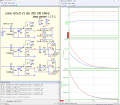
Here is an example of calculating noise density (nV/√Hz). See the noise input for the microphone itself, the inverting amplifier, and the non-inverting amplifier.
1736944974309.png

1736946173065.png
 
Last edited:

Ian0

Joined Aug 7, 2020
13,097
You have calculated the noise in the 10kHz band in microvolts. No noise density (nV/√Hz).
Here is an example of calculating noise density (nV/√Hz). See the noise input for the microphone itself, the inverting amplifier, and the non-inverting amplifier.
View attachment 340412

View attachment 340413
Is that meant to show the 1/f noise?
The spec says that the microphone self noise is equivalent to 28dBA.
Its output at 94dBA is -33dBV.
so its self-noise electrical output is -99dBV, or 11μV.
If that is white noise on a 10kHz bandwidth, then it is 112nV/√Hz.
As it is quoted in dBA when a flat frequency response should be dBC, then the real figure would be higher.
 

MisterBill2

Joined Jan 23, 2018
27,180
Separate from the discussion of noise, how adequate is the microphone ouitput with the amplifier circuit for a gain of ten X (20dB)???
The TS original concern was not enough output.
 

bertus

Joined Apr 5, 2008
22,885
Hello,

I have seen that R1 is split into 2 resistors and the middle connection is decoupled with a capacitor.

Bertus
 
Top