Power MOSFET blowing at higher Amps

Thread Starter

pcbenthusiast

Joined Mar 24, 2017
62
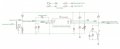
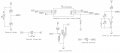
overtemp_underVolt.JPG UVLO&overtemp.JPG UVLO&overtemp.JPG Hi Guys,

I am designing a circuit with dual comparator which outputs to a power N-MOSFET (part# CSD18503 TI part) which will drive a starter motor. The circuit works fine when the load is 20A (i'm using a benchtop DC load to simulate the starter motor curves) but when the current goes upto ~50A, the mosfet blows. No other component is compromised. also, i bolted the FET with a huge hunk of metal with thermal grease. i'm not sure why it cannot sustain this high current. the part is rated for 100A continuous drain current. Am i missing any protection? i'm not too experienced with driving MOSFET and what it takes. Once i replace the FET, the circuit works back to normal. since it can handle 20A, it sounds like its a power dissipation issue?UVLO&overtemp.JPG
 
Last edited:

crutschow

Joined Mar 14, 2008
38,563
What gate-source voltage are you using to turn it on?

Here's the ON resistance of the MOSFET:
upload_2018-3-26_19-19-56.png

At 50A it will be dissipating around 12W (I²R), so it needs to be on a good heatsink.
What is the supply voltage going to the drain?

Note that if you connect this to a motor, you must add a large diode across the motor (cathode to plus) to suppress inductive transients when turned off.
 

Thread Starter

pcbenthusiast

Joined Mar 24, 2017
62
Thanks for the quick reply !
What gate-source voltage are you using to turn it on?
So the supply B+ Varies from 20v to 10v (lithium’s battery 5s1p) and the gate of the FET is pulled up with a 10kohm resistor to B+ so it is essentially the supply voltage. Correct?


Here's the ON resistance of the MOSFET:
View attachment 149172

At 50A it will be dissipating around 12W (I²R), so it needs to be on a good heatsink.
What is the supply voltage going to the drain?

the supply B+ Varies from 20v to 10v (lithium’s battery 5s1p)

Note that if you connect this to a motor, you must add a large diode across the motor (cathode to plus) to suppress inductive transients when turned off.
I actually do have one on the physical board!
 

crutschow

Joined Mar 14, 2008
38,563
So the supply B+ Varies from 20v to 10v (lithium’s battery 5s1p) and the gate of the FET is pulled up with a 10 kohm resistor to B+ so it is essentially the supply voltage. Correct?

Correct.
 

Alec_t

Joined Sep 17, 2013
15,125
The absolute max Vgs rating for your FET is 20V, so if an inductive spike brought the drain voltage above that then, with the gate pulled up to the drain voltage, the gate would be over-volted.
 

Thread Starter

pcbenthusiast

Joined Mar 24, 2017
62
The absolute max Vgs rating for your FET is 20V, so if an inductive spike brought the drain voltage above that then, with the gate pulled up to the drain voltage, the gate would be over-volted.
Alec Oupd it help to add a small zener diode (12v) from gate to source?
 

Thread Starter

pcbenthusiast

Joined Mar 24, 2017
62
What gate-source voltage are you using to turn it on?

Here's the ON resistance of the MOSFET:
View attachment 149172

At 50A it will be dissipating around 12W (I²R), so it needs to be on a good heatsink.
What is the supply voltage going to the drain?

Note that if you connect this to a motor, you must add a large diode across the motor (cathode to plus) to suppress inductive transients when turned off.
Do you have any suggestion for the fly back diode? Should I look for a shottky with atleast 100A peak surge current and a 40v reverse voltage? Any other parameter to look at?
 

crutschow

Joined Mar 14, 2008
38,563
Do you have any suggestion for the fly back diode? Should I look for a shottky with atleast 100A peak surge current and a 40v reverse voltage? Any other parameter to look at?
The voltage and current values are okay, but you don't need a Schottky.
Any diode will do since they all turn on very fast, which is what you want.
Their turn-off is slower than a Schottky, but that parameter is not of concern for surpressing this flyback voltage.
 

kubeek

Joined Sep 20, 2005
5,796
The comparator has open collector output, so the charging of the gate is very slow with that 10k resistor. I am not sure if i understand the purpose of comparator number 1, but it seems to be a very bad move to use half of the supply votage without any decoupling as a threshold. The way I see it, you could very easily end up in a situation where you get voltage dips on that reference (with no filtering whatsoever!), the comparator shuts down the mosfet and enables it again in a rapid succession through that high value resistor, essentially leaving the mosfet in the linear region for a few miliseconds, and that just overheats the die before the heat has any chance to get to the heatsink.

Also, why is the schematic not connected together, so that we could see what goes where without scanning the whole thing for that label? And where does the other end of the motor go to, and what is the realtion between the motor supply and b+ and b-?
 

kubeek

Joined Sep 20, 2005
5,796
... also, i bolted the FET with a huge hunk of metal with thermal grease ...
Eh? Could you please tell me how do you bolt an SO-8 package with power pad to a huge hunk of metal? The thermal grease goes where excatly :eek:?
Also note that the mosfet can do 100A only if you by some borderline magic manage to keep the power pad of the package at 25°C, which is definitely not going to happen on a pcb unless you are using a liquid nitrogen bath. Maybe if you soldered it to a square protrusion on a solid piece of copper that you then connect to a large heatsink with thermal grease. Then, maybe. In any reasonable situation I would expect about 25A to be about the limit.

At 75°C junction temperature which might be manageable and 10V Vgs you have about 4.7ohm Rdson, which at 25A is close to 3W. That package has 50K/W when mounted on a 25*25 pcb of 2oz copper, and it still would get junction temperature of 175°C at 3W and 25°C ambient, and 175°C is 25°C over the maximum junction temperature. Rdson rises with junction temperature, so then heat dissipation rises some more, you get the point where this is going...
So even my guesstimate of 25A continous is not going to work.
 

Thread Starter

pcbenthusiast

Joined Mar 24, 2017
62
The comparator has open collector output, so the charging of the gate is very slow with that 10k resistor. I am not sure if i understand the purpose of comparator number 1, but it seems to be a very bad move to use half of the supply votage without any decoupling as a threshold. The way I see it, you could very easily end up in a situation where you get voltage dips on that reference (with no filtering whatsoever!), the comparator shuts down the mosfet and enables it again in a rapid succession through that high value resistor, essentially leaving the mosfet in the linear region for a few miliseconds, and that just overheats the die before the heat has any chance to get to the heatsink.

Also, why is the schematic not connected together, so that we could see what goes where without scanning the whole thing for that label? And where does the other end of the motor go to, and what is the realtion between the motor supply and b+ and b-?
Sorry for not explaining the schematic better. M- is the negative of the motor. Motor’s positive is connected directly to B+. B- is the supply negative and B+ supply positive which is a lithium battery that varies from 20v down to 10v.

Comparator 1 does the over temperature. Vref1 will vary between 10v - 5v. The Vth is the voltage divider value from a thermistor inside the battery pack. Vth measures the voltage change as the resistance in the thermistor changes.

What did you mean by “but it seems to be a very bad move to use half of the supply votage without any decoupling as a threshold”? What sort of decoupling and where ?

I had the same feeling that the gage is not getting turned on fast enough so I decreased the resistance to 2.2kohm but there wasn’t any change and the FET blew instantly as usual.
The way schematic is represented is just my personal way of capture..
 

Thread Starter

pcbenthusiast

Joined Mar 24, 2017
62
Eh? Could you please tell me how do you bolt an SO-8 package with power pad to a huge hunk of metal? The thermal grease goes where excatly :eek:?
Also note that the mosfet can do 100A only if you by some borderline magic manage to keep the power pad of the package at 25°C, which is definitely not going to happen on a pcb unless you are using a liquid nitrogen bath. Maybe if you soldered it to a square protrusion on a solid piece of copper that you then connect to a large heatsink with thermal grease. Then, maybe. In any reasonable situation I would expect about 25A to be about the limit.

At 75°C junction temperature which might be manageable and 10V Vgs you have about 4.7ohm Rdson, which at 25A is close to 3W. That package has 50K/W when mounted on a 25*25 pcb of 2oz copper, and it still would get junction temperature of 175°C at 3W and 25°C ambient, and 175°C is 25°C over the maximum junction temperature. Rdson rises with junction temperature, so then heat dissipation rises some more, you get the point where this is going...
So even my guesstimate of 25A continous is not going to work.
IM sorry I should have mentioned on the prototype board, I used a TO-220 package but for the actual PCB layout I’m going to use the SO-8.

Well the circuit only needs 85A for 10 seconds or so. The starter motor has inrush current of 85A and then 20A. Based on your calculation, Is it worth looking into a lower RDson FET? What would be good way to drive this motor otherwise?
Thanks for all your advise so far!
 

ebp

Joined Feb 8, 2018
2,332
I started looking at the circuit but simply abandoned it. The schematic is just too perverse. I have a passionate hatred for rectangles that represent packages for things that have very well established symbols. Same goes for connections with net names instead of drawn connections, except in rare cases or where signals go off-sheet (which is what those little flags are intended for). It is a very simple circuit and the schematic makes it very difficult to follow.
 

Thread Starter

pcbenthusiast

Joined Mar 24, 2017
62
I started looking at the circuit but simply abandoned it. The schematic is just too perverse. I have a passionate hatred for rectangles that represent packages for things that have very well established symbols. Same goes for connections with net names instead of drawn connections, except in rare cases or where signals go off-sheet (which is what those little flags are intended for). It is a very simple circuit and the schematic makes it very difficult to follow.
Ebp, I re drew the circuit without using as many labels as possible & also wrote some explanation on what the pins do. Let me know what issue you see with the FET not being able to handle the higher current (~50A). it is able to handle 20A for a few seconds but is it simply the case of needing a bigger heatsink? I have ordered zener diode per other suggestions on this post from FET's gate to source to see if it helps with voltage transients.
 

kubeek

Joined Sep 20, 2005
5,796
You can simply check what part of the circuit is the problem. Disconnect both comparators from the gate and let the motor run at your 50A. Assuming your motor has proper protection diode across it and the FET is not being overvolted, then if the fet survives then the issue is with the comparator. And that will most likely be the undervoltage comparator periodically discharging the gate, making the transistor spend a lot of time in linear region and frying it through power dissipation.
 

ebp

Joined Feb 8, 2018
2,332
It is still a horrible schematic that makes it hard to see what is going on.

However:
R3, 28, 29 and 30 all talk to each other. When the output of the comparator shifts, everything shifts, including VREF1.
The output of the comparator is loaded by the gate capacitance of the FET, meaning that even if the rest of the circuit didn't make a mess of things the rise would be slow making it unsuitable for generating clean positive feedback for hysteresis.

I'm with kubeek. I think the gate is being subjected to bad levels and/or repetitive transitions.
 

Thread Starter

pcbenthusiast

Joined Mar 24, 2017
62
It is still a horrible schematic that makes it hard to see what is going on.

However:
R3, 28, 29 and 30 all talk to each other. When the output of the comparator shifts, everything shifts, including VREF1.
The output of the comparator is loaded by the gate capacitance of the FET, meaning that even if the rest of the circuit didn't make a mess of things the rise would be slow making it unsuitable for generating clean positive feedback for hysteresis.

I'm with kubeek. I think the gate is being subjected to bad levels and/or repetitive transitions.
OK. i didnt have much time to redraw the symbol for the comparative this morning.
Um, so how do i solve this issue?do i need a gate driver? do you have any reference design for driving a FET with comparatior output or any suggestion please? At the end of the day, i'm looking for a solution. i got a few ideas from other suggestions on this post and would like to hear yours as well.
 

Thread Starter

pcbenthusiast

Joined Mar 24, 2017
62
When, choosing a flyback diode, since i have an inrush ~ 85A and the cranking current of 20A (~for almost 20s) for the starter motor, I understand that the PIV should be a little over the supply voltage (say 40V which is over the 20V max), peak forward surge current (> 85A), what about the parameter "average rectified forward current" ? i looking into this part (ROHM-RBR5LAM40A) as another option in place of 1N1418 or 1N4007.

https://www.mouser.com/ds/2/348/rbr5lam40atr-e-1138981.pdf
 
Top