looking at the diagram i just did, correct me if i'm wrong, if i put the probes between gate and catode of SCR i should get voltage? because there is no voltage there
also if i put the probes in base-emitter and base-collector i get voltage, so the next thing is that pulse transformer, so the problem might be that pulse transformer?
i did a little more. lower part of pic, you can see output of transformer, two red, two black 24V, after that, string of two zener 4.7 and a rectifier.
there is 16V coming out of the Vreg.
i'm getting 16V at the cd4068, that's the one driving the npn transistor.
there is between 20 and 40mV swinging, 170Hz at the transistor base,
i'm concentrating in the output side, because i think that's where the problem is, but i may be completely wrong.
Maybe make the text yellow and bold so it stands out more, with an arrow pointing to the test point you are calling out? That would allow you to put the voltages a bit away from the traces, reducing clutter, plus red on copper is nearly invisible. Sorry about that recommendation, I'm used to green masked PCBs.
Maybe make the text yellow and bold so it stands out more, with an arrow pointing to the test point you are calling out? That would allow you to put the voltages a bit away from the traces, reducing clutter, plus red on copper is nearly invisible. Sorry about that recommendation, I'm used to green masked PCBs.
All pins of transistors
All pins of regulator
All pins of SCR
Basically, all the "Active" components that aren't resistors, capacitors, etc.
Voltage on all components in the path to the choke and pulse transformer, as well as show which of the 4 pins are connected to which other for each pair, and the voltages on each.
Have you measured the resistance of the coils on the transformer with the power off to ensure there isn't an open/broken wire in it?
There are many "electrical medical therapy" devices sold today. Sold by Quacks.
No proof that they do anything good except make profit for the liars that sell them.
Most of these things are just heaters.
But for some injuries heat is bad, instead cold is good to reduce swelling and reduce inflammation.
Voltage on all components in the path to the choke and pulse transformer, as well as show which of the 4 pins are connected to which other for each pair, and the voltages on each.
i'm sorry but i dont know what you mean there i know there is a ground going directly to the pulse transformer, other comes from the collector and the other from Vreg, and left corner up goes to gate, what should i measure there?
i assume that the transformer is fine, because the machine works, there is voltage (16V)on all the chips, timers, Vreg... i imagine that if there was a broken or open wire there, the machine would not work at all
There are many "electrical medical therapy" devices sold today. Sold by Quacks.
No proof that they do anything good except make profit for the liars that sell them.
Most of these things are just heaters.
But for some injuries heat is bad, instead cold is good to reduce swelling and reduce inflammation.
I'm wondering which pins are connected to coil 1 (primary or secondary) and which pins are connected to coil 2 (primary or secondary), unsure which is which at the moment, just knowing there is continuity between two pairs of pins shows the transformer hasn't failed miserably.
I'm wondering which pins are connected to coil 1 (primary or secondary) and which pins are connected to coil 2 (primary or secondary), unsure which is which at the moment, just knowing there is continuity between two pairs of pins shows the transformer hasn't failed miserably.
all right, i just burned the Vreg probe slipped... i have to wait for replacement...
anyway, somebody just told me that the transistor is not turning on with that little voltage... any idea why is getting just 40mV????
Hi Guys,
now another problem... after i burned the Vreg checking voltages the other day, i ordered a new one, i just got it today, and it looks this one like it has blown too! i tested voltages and i'm getting 24 volts in and and 2 volts out
what can be causing that?
i'm been working on the diagram this past days.
Thank you View attachment pemf.pdf
With the power off, check continuity to ensure the solder joint was good. Make sure the ground pin is 0Ω to the ground PCB traces, same for Vout, and Vin.
Test as much as possible using continuity and diode check without the power on when working up the schematic.
Only power it on when you are ready to trace signals, and then probe very, very carefully. A few good shocks (or burnt components) teaches you that lesson very quickly if you slip.
At this point, the state of the entire circuit is "unknown", as I have no idea if anything was shorted or not. The best bet would be to verify the regulator works out of circuit (if you have a breadboard and bench supply). Verify the input voltage is the same, then essentially, work from there again.
A great help would be to have a known working unit next to it, or a picture of a functioning unit with voltages at key points called out. Failing that, it's trial and error with intuitive guessing (SWAG). Especially when I actually have no clue what the output should be, other than "not zero" from what you've stated.
With the power off, check continuity to ensure the solder joint was good. Make sure the ground pin is 0Ω to the ground PCB traces, same for Vout, and Vin.
Test as much as possible using continuity and diode check without the power on when working up the schematic.
Only power it on when you are ready to trace signals, and then probe very, very carefully. A few good shocks (or burnt components) teaches you that lesson very quickly if you slip.
At this point, the state of the entire circuit is "unknown", as I have no idea if anything was shorted or not. The best bet would be to verify the regulator works out of circuit (if you have a breadboard and bench supply). Verify the input voltage is the same, then essentially, work from there again.
A great help would be to have a known working unit next to it, or a picture of a functioning unit with voltages at key points called out. Failing that, it's trial and error with intuitive guessing (SWAG). Especially when I actually have no clue what the output should be, other than "not zero" from what you've stated.
i'm going to try to test the Vreg to see if it's working fine.
do you think a short not close to the vreg can make the vreg not putting the output that is supposed to?
Keep in mind that physical proximity (or distance) has nothing to do with electrical proximity (or distance) in the circuit. They generally follow each other, but sometimes components next to each other on a board are parts of two entirely different sub-circuits.
Other components shorted could make the output of the regulator appear lower, due to it being overloaded and unable to maintain regulation. If this is happening, the regulator will get physically hot rather quickly.

 Facebook
 Google
 GitHub
 Linkedin



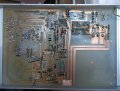
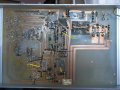

 i know there is a ground going directly to the pulse transformer, other comes from the collector and the other from Vreg, and left corner up goes to gate, what should i measure there?