hi Ross,
You need a transistor driver capable of supplying approx 1.5A at start up or if the motor is loaded to a stalled condition.
Once running with a light load on the motor, it requires approx 150mA.
A 9V battery will be VERY inefficient as you will need to drop 6 Volts before the motor, which is rated at 3V
They freewheel at 120mA they can hit a 1.5 A if you lock the rotor.
Plus they run from about any voltage 3.3 to 12 never tried that just 5 volt and the 3.3 volt.
This from the arduino kit it comes with a motor just that and pir just like the video
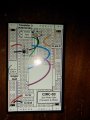
this is a card they had in the kit.
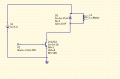
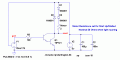
The PIR needs a Darlington Transistor the pir did not have enough drive
For a single npn so I used two 2n2222 it runs fine as long as you don't stall the motor.
150mA at on. Lock rotor it it hit 1.5 amps This is at 5 volts.
Yes it wouldn't last long I was just playing with it I use a uC to read the PIR.
I Use them with lighting they have little drive current. I would wounder if his still works if the TS tried to run a motor with it.
Hi Ross.
A word of caution, when powered up the PIR it will always behave erratically.
ie: the output switching between +3V and 0V, for about 2 minutes.
It will then stabilise and then you can Set the Time and Sensitivity.
So whatever the motor shaft is driving will also driven erratically during that settling period.
Yo don't need to do it off the breadboard, but you do need to verify that the supply voltage is reaching the points that it is intended to be reaching. That was supposed to be my point that I was trying to make.
There is a fundamental flaw in all of the arduino projects that I have ever seen, which is that they don't teach any electrical theory, such as completing a circuit. They only teach following a map and adjusting a program listing. The result is not understanding the circuits or what they are actually doing.
Now for the PIR (Passive Infra Red) sensor device, the very first step would be to see what the actual voltages in the circuit are. The first step then would be to check the power supply voltage at the red and green wires of the PIR module. That will allow seeing if the supply is within what the specified limits are. If that voltage is OK, then the second step would be to connect the voltmeter between the power supply negative, the green wire, and the PIR yellow wire. Then you can see if the thing is working or not. If the voltage on the yellow wire, (the output) does not change when the sensor module is activated then the module has a problem. This test does not need anything except the module, the power source, and a meter. Even a cheap digital multimeter would be quite good enough. Another benefit is that this will allow you to see if the PIR device will sense the drawer sliding out, which I don't think it will sense it at all.

 Facebook
 Google
 GitHub
 Linkedin