Facebook
 Google
 GitHub
 Linkedin

I’m working on a personal project, and I could really use some help. I’m not an electrical engineer, so I apologize in advance if this is a basic question, but I’m a bit stuck.
I paid someone to design a personal alarm PCB board for me. It’s similar to those cheap $10 alarms you find on Amazon, but this one operates via a button instead of a pull pin. Everything seemed to be going well until I tried to order the PCB through PCBWay.
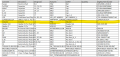
The issue I’m facing is that one of the items in the Bill of Materials (BOM) is missing a DigiKey Part Number, and PCBWay needs this to complete my order. The part that’s missing the Part Number is an inductor (L1), which is located close to the Piezo Buzzer on the board.
Unfortunately, the person I paid for the design has stopped responding, and I’m struggling to figure out what specific inductor I need. I’ve done my best to research and understand it on my own, but I’m feeling out of my depth here.
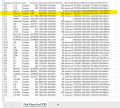
This project is important to me because I’m making this device for my grandma, and I want to get it right. I’ve attached images of the BOM, schematics, pick and place files, 3D render of the PCB board, and anything else that might be relevant. I also attached a zip file of the fabrication files (gerber/drill).
If anyone can help me identify the correct inductor or guide me on what to do next, I would greatly appreciate it!
Thank you so much in advance for your help!
I paid someone to design a personal alarm PCB board for me. It’s similar to those cheap $10 alarms you find on Amazon, but this one operates via a button instead of a pull pin. Everything seemed to be going well until I tried to order the PCB through PCBWay.
The issue I’m facing is that one of the items in the Bill of Materials (BOM) is missing a DigiKey Part Number, and PCBWay needs this to complete my order. The part that’s missing the Part Number is an inductor (L1), which is located close to the Piezo Buzzer on the board.
Unfortunately, the person I paid for the design has stopped responding, and I’m struggling to figure out what specific inductor I need. I’ve done my best to research and understand it on my own, but I’m feeling out of my depth here.
This project is important to me because I’m making this device for my grandma, and I want to get it right. I’ve attached images of the BOM, schematics, pick and place files, 3D render of the PCB board, and anything else that might be relevant. I also attached a zip file of the fabrication files (gerber/drill).
If anyone can help me identify the correct inductor or guide me on what to do next, I would greatly appreciate it!
Thank you so much in advance for your help!
Attachments
-
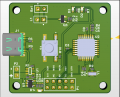 224.2 KB Views: 19
 -
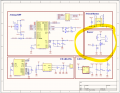 169.9 KB Views: 20
 -
 99.3 KB Views: 18
 -
 60.8 KB Views: 15
 -
2.7 MB Views: 5