PCB Heater (Inner Layer)

Thread Starter

Exlusier

Joined Aug 1, 2024
8
Hello,


I need to create a new design, and the design I am creating needs to work at -60 degrees, but since I am not making a military product, the products I have chosen have a working temperature of -40 degrees. From what I have researched on the internet, a heating path is placed on the inner layers of the PCB. This path short-circuits VCC and GND, and since this path has a certain resistance, it actually behaves like a normal resistor. The beginning and end of the path are connected to an N-channel MOSFET and switched. However, I still have some questions. (VCC = 28VDC)


1- Will the circuit structure I mentioned above cause any problems?


2- If I use a regulator that provides 5V 1A, would it make sense to apply 5V voltage to this heating path?
 

rsjsouza

Joined Apr 21, 2014
424
I imagine you will create a ratsnest on one of the layers, so you could have a distributed resistor that heats up the board, is that so? If so, use one of the PCB track calculators available online. Saturn PCB has a nice utility, but Kicad also has built-in calculation tools.
1- Not in principle, but pay close attention to the track width, its current capacity (before melting) and evaluate if this solution will not cause warped PCBs or other issues such as coupling/crosstalk between signals that shouldn't interfere with each other.
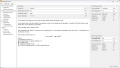
2 - That is highly dependent on the resistivity of the track and the board size you have available to create the ratsnest. A back of the envelope calculation using Kicad and a very thin track width on an inner layer is shown below. However, pay also attention to the fusing current, so you don't melt the tracks, especially at that dimension.

2025-08-08_06h10_55.png
 

Thread Starter

Exlusier

Joined Aug 1, 2024
8
I imagine you will create a ratsnest on one of the layers, so you could have a distributed resistor that heats up the board, is that so? If so, use one of the PCB track calculators available online. Saturn PCB has a nice utility, but Kicad also has built-in calculation tools.
1- Not in principle, but pay close attention to the track width, its current capacity (before melting) and evaluate if this solution will not cause warped PCBs or other issues such as coupling/crosstalk between signals that shouldn't interfere with each other.
2 - That is highly dependent on the resistivity of the track and the board size you have available to create the ratsnest. A back of the envelope calculation using Kicad and a very thin track width on an inner layer is shown below. However, pay also attention to the fusing current, so you don't melt the tracks, especially at that dimension.

View attachment 353848
First of all, thank you very much for taking the time to respond. If you like, I can show you an example of the design I want to make. (https://www.hackster.io/news/a-pcb-...elf-and-then-self-propagates-66b1edffc10d?f=1) I want to create a project similar to the design in the link. I am thinking of a structure that opens and closes with a MOSFET in the inner layer of the card. I want it to draw a maximum current of 0.2 at 28VDC, for which the copper track's resistance must be 140 ohms. However, another method came to mind: I could use a regulator that provides 5V 1A to significantly reduce the copper's resistance, setting it to 5 ohms, and by making the trace thickness 1mm, I could increase the maximum current it can carry to 1.6A. What do you think about this?
 

schmitt trigger

Joined Jul 12, 2010
2,027
Since the regulator itself will dissipate lots of heat, utilize it to heat some portions of the board. The heat sink tab on the regulator is usually ground, take this heat and distribute it with the ground plane.

Heat distribution may require some finite element analysis to verify that you have spread the heat evenly around the board.
 

rsjsouza

Joined Apr 21, 2014
424
First of all, thank you very much for taking the time to respond. If you like, I can show you an example of the design I want to make. (https://www.hackster.io/news/a-pcb-...elf-and-then-self-propagates-66b1edffc10d?f=1) I want to create a project similar to the design in the link. I am thinking of a structure that opens and closes with a MOSFET in the inner layer of the card. I want it to draw a maximum current of 0.2 at 28VDC, for which the copper track's resistance must be 140 ohms. However, another method came to mind: I could use a regulator that provides 5V 1A to significantly reduce the copper's resistance, setting it to 5 ohms, and by making the trace thickness 1mm, I could increase the maximum current it can carry to 1.6A. What do you think about this?
Glad to help.
For both cases (0.2A @ 28V and 5V @ 1.6A), the length of the track becomes quite large (about 10m) and therefore impractical unless you have a very large board.

As suggested, you can indeed use the heat dissipation of some parts and reduce the demands for the power supply.

You could also perform some calculations and experiments and strategically distribute thick film resistors (link) evenly around the board, which with careful planning you can have a lot of control over the heat distribution.
 

drjohsmith

Joined Dec 13, 2021
1,553
heating circuits to work in cold is not un common.

a few things to remember.

your heater circuit needs to start and work reliably at the lowest temprature you have.

hot spots, if the board does not heat up evenly, one point could get to hot, and damage the board

you need thermal regulation, so the amount of heat you put into the board is dependent upon the boards temprature, see above for hot spots.

you need to hold your circuit powered down till the heater has warmed all parts up to the working temorature.

your probably going to need to insulate the box , else its very hard to get any reasonably sized board all up to temprature

your going to need a over temprature cut out on circuit and heater , else when box is in say sun, it could over heat,

be aware of emc/ emi. shorting a power supply can cause a few problems.

there are things called PTC resistors. as they get warmer, their resistance increases .. a fairly simple way to heat a board or as part of a controler.

if you dont want a fire at some point, dont forget the fuse !
 

WBahn

Joined Mar 31, 2012
32,706
I need to create a new design, and the design I am creating needs to work at -60 degrees, but since I am not making a military product, the products I have chosen have a working temperature of -40 degrees. From what I have researched on the internet, a heating path is placed on the inner layers of the PCB. This path short-circuits VCC and GND, and since this path has a certain resistance, it actually behaves like a normal resistor. The beginning and end of the path are connected to an N-channel MOSFET and switched. However, I still have some questions. (VCC = 28VDC)
-60 degrees what? Fahrenheit or Celsius?

It sounds like you are trying to cheap out on components instead of just using components rated for the temperature range you need your design to work over. Have you considered the true costs of such an approach? It's not just a matter of putting some traces on an inner layer to act as a heater and calling it a day. Have you done any kind of calculations to determine how much heat you need to get into each component to raise it's critical regions to its minimum operating temperature? And then done the analysis needed to determine how much heat you need to dissipate in your inner layer to make that happen? And how that heat needs to be distributed over the board? In worst case?

How much time and effort will likely be needed to do the needed analysis and testing to ensure that your product will actually work over the temperature range you are promising? Have you allowed for the likelihood that your first attempt (or several attempts) might not work adequately, requiring multiple design iterations? What is the risk exposure if you get it wrong and you have a failure of your board at the bottom of that range and you get sued because you used components that were not rated for the range specified? Are you confident that you will actually be able to convince a jury of non-technical people that it was a sound decision to take your approach just so that you could save a bit of money by using parts that were clearly not specified to operate over the designed range of your product? How much do you need to add to the NRE of the product to cover these costs and this exposure? What does that work out to on a per-item basis over the expected total number of units to be produced? Is that amount so much less than the incremental cost of just using properly rated components in the first place that it justifies it?
 

panic mode

Joined Oct 10, 2011
4,867
imagine power going out, and failing to supply heat. within minutes circuitry would fail.
btw. this guy not only heated PCB, he used it to solder itself
 
Top