Induction heater Dissipated power increasing frequency

Thread Starter

Stoyan.Nikolov.2Induction

Joined Nov 26, 2023
44
Hi .
Is it convenient to ask the following question :
-------------------------------------------------------------------------------
Image source :
https://www.mdpi.com/2227-9717/10/6/1151
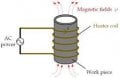
InductionHeaterCoil.jpg
-------------------------------------------------------------------------------
What will happen with

Generated heat/Dissipated power in/from the workpiece
(increase /decrease/stay the same)

if we keep increasing frequency while maintain (perhaps by adjusting input voltage)

Constant rms current through the primary coil/winding ?

Thank you.
 

panic mode

Joined Oct 10, 2011
4,864
if everything else is the same, heat is proportional to current.

and the keyword "inductive" should suggest something...
what happens with current in inductive load when frequency is increased?
 

Parkera

Joined May 3, 2016
124
Heating is actually created by eddy current losses in the part. Within limits, eddy current losses increase with frequency. As MrBill2 said, at some point a maximum heating efficiency will be achieved. Go above that and the amount of heat generated will be less.
 

Thread Starter

Stoyan.Nikolov.2Induction

Joined Nov 26, 2023
44
Thanks. So in brief increasing frequency , while keeping same rms input current (perhaps by adjusting input voltage) generates more heat/Eddy current losses.

Within certain frequency range.

How about if metal workpiece to be heated is from copper and frequency range is 100Hz ... 100kHz
 

Parkera

Joined May 3, 2016
124
Any specifics depends on the EXACT setup, coil size, part size, shape, material, alloy of material, etc. For that reason, only generalities can be answered on a forum such as this. In general, increasing current, increasing frequency, decreasing size/mass, more closely matching part size to coil size all will increase the amount of heat generated within the part. The effects of alloy and shape (within the coil) on heating have to be determined experimentally.

If you think of the system as being a constant current system (increased current increases heating), the input voltage will adjust itself as required; just make sure you have 'enough' voltage so that the system does not become voltage-limited. The voltage will likely change through the heating process because most materials will change resistance with temperature, and this can affect how the eddy currents flow through the part, which affect heating.
 

panic mode

Joined Oct 10, 2011
4,864
correct frequency is to be determined empirically or by doing detailed analysis. when frequency is increased inductors experience skin effect and impedance increases, current decreases. the same happens with workpiece. at higher frequencies workpiece will also experience skin effect. result is that low frequencies are good for larger workpieces and deep penetration. high frequencies are good for smaller workpieces and concentrating heat on the surface. 100kHz is relatively low. many systems go to 1MHz and some much higher.

https://simutechgroup.com/induction...ating industry,voltages need to be considered.
 
Top