Paddle shifter add on circuit

geekoftheweek

Joined Oct 6, 2013
1,429
I'm no automotive controls expert, but it seems odd to me that they would use analog voltage levels like that as control signals. We need someone from the automotive industry to chime in with some feedback. ;)
It's not real common, but some do here and there for strange reasons. I had a Ford once that the cruise switches on the steering wheel were set up this way... cheap and easy I'd imagine was the motivation.

This is probably something that if the right people got their hands on the car itself an answer could be found in short order...
 

strantor

Joined Oct 3, 2010
6,875
You said this in the first post. Why not take wires going to the manual part of the existing shifter and extend them to the paddle shifter?
The way they have designed the paddle shifter, they are using (what I assume is) a current loop to transmit 3 unique states over 2 conductors. I am betting the reason for having only 2 conductors is because of limited room in the "coil" which electrically connects the rotating steering wheel to the stationary body.

The shifter in the center console however is not limited in conductors by a rotating joint, and we see per his drawing in post #36, 5 wires are coming out of it. Therefore it is not guaranteed to be using the same sensing method as the paddle shifter, implementing a current loop over 2 conductors.

But let's say for a minute that the center console shifter sensing method was the exact same as the paddle shifters, 2 wire current loop. How would you suggest connecting the paddle shifters with the console shifter? In parallel? How do you connect 2 current loops in parallel? In series? I think things will "out of whack" immediately given the resistor values.

The simplest solution in my opinion would be to resolve what CANbus messages are produced by the shifter when it is actuated, and replicate those messages every time the paddle shifters are actuated.
 

shortbus

Joined Sep 30, 2009
10,050
The shifter in the center console however is not limited in conductors by a rotating joint, and we see per his drawing in post #36, 5 wires are coming out of it. Therefore it is not guaranteed to be using the same sensing method as the paddle shifter, implementing a current loop over 2 conductors.

But let's say for a minute that the center console shifter sensing method was the exact same as the paddle shifters, 2 wire current loop. How would you suggest connecting the paddle shifters with the console shifter? In parallel? How do you connect 2 current loops in parallel? In series? I think things will "out of whack" immediately given the resistor values.
Does the paddle shifter connect to the wheel? I don't have one but would bet it is just connected to the steering column like the turn signals are. Why would you want to 'chase' the paddles around with the wheel to shift? The ones I've seen in the car magazines seem to be column mounted.

Looking into how the floor shifter works would be the first place I'd look if doing this. If the module for the floor shifter control isn't the same as the one for a paddle type, then I don't think any of the circuits being thought up to make the paddles work has much of a chance of working. Again I don't know, but that is another thing to check, by looking for replacement parts at the dealer. To see if both type shifter use the same transmission control module. Pretty sure that a car that new it has both an ECM and a TCM.

As far as canbus goes, isn't that pretty much used for controller inter face and "fault" reporting? Wouldn't think it would be used in the shift mechanism itself. Just my guess. GM as a rule keeps their systems simpler than most other makes.
 
Happy Holidays !
Allaboutautos put up a link, did you look at that ? I will put up 2 links, follow them at your own risk..
https://www.powertraincontrolsolutions.com/Vehicle_Manufacturers/Catalog/PCS_OE_CATALOG_915.pdf
https://www.ebay.com/itm/USB-Logic-...723690&hash=item2ca15245bc:g:4IgAAOSw4CFYtr~B

The scope shots that you posted are at 0.1 second resolution, CAN BUS supports up to 1 Mbit/s
The PCS Paddle Shifter provides upshift and downshift commands to a PCS transmission controller, a PCS GSM push button shifter, or a GM mechatronic transmission such as the 6L80. The paddle shifter is available for either 5/6-bolt or 9-bolt steering columns. The paddle shifter communicates wirelessly to a receiver module that interfaces the CAN network.
 
Last edited:

Thread Starter

Ablues10

Joined Dec 5, 2017
19
Happy Holidays !
Allaboutautos put up a link, did you look at that ? I will put up 2 links, follow them at your own risk..
https://www.powertraincontrolsolutions.com/Vehicle_Manufacturers/Catalog/PCS_OE_CATALOG_915.pdf
https://www.ebay.com/itm/USB-Logic-...723690&hash=item2ca15245bc:g:4IgAAOSw4CFYtr~B

The scope shots that you posted are at 0.1 second resolution, CAN BUS supports up to 1 Mbit/s
The PCS Paddle Shifter provides upshift and downshift commands to a PCS transmission controller, a PCS GSM push button shifter, or a GM mechatronic transmission such as the 6L80. The paddle shifter is available for either 5/6-bolt or 9-bolt steering columns. The paddle shifter communicates wirelessly to a receiver module that interfaces the CAN network.
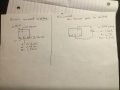
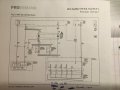
Ah ok I see. I did some more poking around, Took a trip to the dealership, and here’s what I came up with:
 

Attachments

Thread Starter

Ablues10

Joined Dec 5, 2017
19
Well I solved it! If I use the 6.7k as one resistor and I need to get to the other resistances I can shift it using pin 2 and pin 8. I used a 10ohm resistor for downshift and a 2.2k and 510ohm in series for upshift! Now I am about to solder them into the switches and then it’s just running wires up the column! I sincerely appreciate all the help you guys have given me.
 
Top