Oil well ignition module

Thread Starter

MarkySparky42

Joined Aug 28, 2022
204
All versions of the 555 should work for this project. Bipolar versions have an output voltage a Volt or so below the supply voltage, but CMOS versions should reach virtually the supply voltage unless the output pin is heavily loaded.
When you say 'model', are you referring to a simulation model or a real-world one? If real world, then I wonder if you've got a defective specimen?

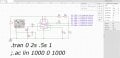
Im working on a simulation using EasyEDA (mostly because it is web-based, and I can use it at home as well as at work during my lunch break). so if my output signal is supposed to be 12 V plus or minus then I need to find a way to dampen that voltage down to a maximum of let’s say 4 V DC to simulate real world situations and also I need to find a way to space the triggers from approximately 1 to 10 per second.
 

shortbus

Joined Sep 30, 2009
10,050
This might be a vocabulary problem on my end.
Or a misunderstanding on how the 4 stroke cycle engine works. One cycle of the engine is 720 degrees of rotation. There are only two ways of getting a "bang" from each rotation of the flywheel, 1. the engine has 2 cylinders or 2. it is a two cycle engine. That is the physics of how engines work. https://courses.washington.edu/engr...ofWindsorManual/Four Stroke Cycle Engines.htm

If your measuring the RPM from the firing/bang of the engine and getting 450 the motor is actually rotating at 900RPM.

Earlier I asked about how your regulating RPM and you said it was by the throttle opening. That is how any gas ,not diesel, engine works. The ignition is just along for the ride, it can't control the RPM of the engines output.

That said, you and a couple of the others working on the ignition circuit are thinking wrong, in worrying about the number of pulses for ignition. Any RPM is only going to pulse once per revolution of the crankshaft, when the trigger is from the flywheel. One time it will be on the combustion stroke the next will be on the exhaust stroke. This is a very common way of ignition on single cylinder engines, it's called "waste spark" system. Read the heading , "single cylinder use" in this link - https://en.wikipedia.org/wiki/Wasted_spark_system
 

Alec_t

Joined Sep 17, 2013
15,119
That said, you and a couple of the others working on the ignition circuit are thinking wrong, in worrying about the number of pulses for ignition.
We're not worried, and accept that this could be a wasted-spark system.
I need to find a way to space the triggers from approximately 1 to 10 per second.
The last sim I posted handles ~1 pulse per 3 secs to >10 pulses per sec (<20rpm to >600rpm) I don't see why EasyEDA would do any differently or why the positive peak's amplitude is so much smaller than the negative peak's (if your scope shot shows EDA's simulation result).
 
Last edited:

Thread Starter

MarkySparky42

Joined Aug 28, 2022
204
That's what's bothering me too.
I was thinking about sharing access to this as a group project and perhaps you could find the error along with me.

If you want, send an email to <SNIP> and I will add you as a member (assuming of course you have a login account).

Moderators note : removed email address to avoid spam.
Personal details can be communicated through a PM.
 
Last edited by a moderator:

Alec_t

Joined Sep 17, 2013
15,119
Thanks, but I don't wish to subscribe to EasyEDA. I suggest you try simulating a bog-standard 555 astable multivibrator with a 5V supply and see what the square-wave output looks like? If it's also way too low then the Spice model is faulty and should be reported.
 

Alec_t

Joined Sep 17, 2013
15,119
What is the sim output voltage at pin 3 of the 555 now?
And what is it if R1=10k and/or C3 =1u? (I'm trying to assess if loading the output affects the pin voltage dramatically)
 
Last edited:

Thread Starter

MarkySparky42

Joined Aug 28, 2022
204
What is the sim output voltage at pin 3 of the 555 now?
And what is it if R1=10k and/or C3 =1u? (I'm trying to assess if loading the output affects the pin voltage dramatically)

I’ll have to pick this up a little later. I have to leave for home. I can’t seem to be able to trust these simulators. I’m going to try a different one when I get home.

very frustrating day so far.
 

shortbus

Joined Sep 30, 2009
10,050
We're not worried, and accept that this could be a wasted-spark system.
While I admit you are much smarter than me at circuit design, I think you and others don't understand ignition or CDI.

You keep thinking, from what I gather, that the trigger pulse time has something to do with the stored cap charge, but it doesn't. When the engine is starting, it's getting the original cap charge from the 12V battery and the step up device to get it up to ~400VDC. After it's running most of stored charge comes from the collapsing voltage of the ignition coil, ~400VDC. and it's this voltage that keeps things working.

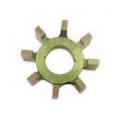
No electronic ignition I've ever seen or worked on had such a big magnet for a trigger or even needed one. Most distributor reluctor wheel points, not points like in the Kettering system, but the top area of the reluctor wheel that triggers the ignition firing. The reluctor wheel is a star shaped magnetic ring with one "point" for each cylinder of the engine, and each point is somewhere around 0.06 inches wide.

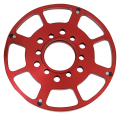
Then there is another type called a crank trigger. They have a button type magnet on a ring attached to the end of the crankshaft, there 1/2 the number of magnets than there are cylinders, since the crank is turning at twice the speed of cylinder firing. Those magnets are around 3/8 inch diameter.

This is a distributor reluctor wheel -
1664572691010.png

This is a crank trigger wheel for a 8 cylinder engine -
1664572918130.png

None of those things have anything to do with charging the ignition caps, they are strictly for triggering the ignition event. Which is how a CDI works. If your using the trigger magnet or the flywheel magnet to charge the ignition cap your making a magneto not a CDI.
 

Thread Starter

MarkySparky42

Joined Aug 28, 2022
204
While I admit you are much smarter than me at circuit design, I think you and others don't understand ignition or CDI.

You keep thinking, from what I gather, that the trigger pulse time has something to do with the stored cap charge, but it doesn't. When the engine is starting, it's getting the original cap charge from the 12V battery and the step up device to get it up to ~400VDC. After it's running most of stored charge comes from the collapsing voltage of the ignition coil, ~400VDC. and it's this voltage that keeps things working.

No electronic ignition I've ever seen or worked on had such a big magnet for a trigger or even needed one. Most distributor reluctor wheel points, not points like in the Kettering system, but the top area of the reluctor wheel that triggers the ignition firing. The reluctor wheel is a star shaped magnetic ring with one "point" for each cylinder of the engine, and each point is somewhere around 0.06 inches wide.

Then there is another type called a crank trigger. They have a button type magnet on a ring attached to the end of the crankshaft, there 1/2 the number of magnets than there are cylinders, since the crank is turning at twice the speed of cylinder firing. Those magnets are around 3/8 inch diameter.

This is a distributor reluctor wheel -
View attachment 277437

This is a crank trigger wheel for a 8 cylinder engine -
View attachment 277438

None of those things have anything to do with charging the ignition caps, they are strictly for triggering the ignition event. Which is how a CDI works. If your using the trigger magnet or the flywheel magnet to charge the ignition cap your making a magneto not a CDI.
We are not using the magnet on the large fly wheel to charge a capacitor. It is strictly used as a triggering mechanism. I don’t have a trigger coil and a magnet on a giant wheel in my garage, that I could easily spin around to simulate the well running. So we are making a circuit that simulates the wave form created when the magnet goes by the pick up coil.

The 12 V battery charge is the capacitor after a bunch of other stuff happens that we have are working on as a separate circuitThe 12 V battery charge is the capacitor after a bunch of other stuff happens that we have are working on as a separate circuit
 

Alec_t

Joined Sep 17, 2013
15,119
I can’t seem to be able to trust these simulators.
Well, I don't know what sim setup you had previously, but the latest pics in post #306 now show your sim doing exactly what my LTspice sim is doing and all seems good for those component values; so your 555 model is working as expected. I don't know why the + and - peaks were previously so mis-matched in amplitude.
To get a higher pulse voltage (albeit with narrower ±peaks) you could reduce cap C4 from 1u to, say, 330n, 220n, .... The separation between ±peaks can be reduced by reducing R3. A real-world trigger coil would naturally give higher amplitude pulses with narrower and closer ±peaks as rpm increased.
 

Thread Starter

MarkySparky42

Joined Aug 28, 2022
204
Well, I don't know what sim setup you had previously, but the latest pics in post #306 now show your sim doing exactly what my LTspice sim is doing and all seems good for those component values; so your 555 model is working as expected. I don't know why the + and - peaks were previously so mis-matched in amplitude.
To get a higher pulse voltage (albeit with narrower ±peaks) you could reduce cap C4 from 1u to, say, 330n, 220n, .... The separation between ±peaks can be reduced by reducing R3. A real-world trigger coil would naturally give higher amplitude pulses with narrower and closer ±peaks as rpm increased.
I was poking about with it and changed the voltage to 24VDC.

my end goal with this 555 circuit is to attach it to the input of the ignition coil circuit (pretending I have a trigger coil & magnet), then I can turn the knob on a pot from one extreme to the other extreme and simulate starting speed of 1 rpm all the way to 450-500 rpm.

but now that I think about it, it might be a fool‘s errand to make this… Mostly, because in a real world situation at low rpm, the triggering voltage will be low and the faster the engine gets the closer. The triggering voltage will be the 3 1/2 V. So this might be a cute thing to have on the bench but maybe I should really use a real world situation for triggering the circuit, because not only does the distance between the triggering pulses reduce the voltage also increases.
 

shortbus

Joined Sep 30, 2009
10,050
We are not using the magnet on the large fly wheel to charge a capacitor. It is strictly used as a triggering mechanism. I don’t have a trigger coil and a magnet on a giant wheel in my garage, that I could easily spin around to simulate the well running. So we are making a circuit that simulates the wave form created when the magnet goes by the pick up coil.
I understand that but yet again you miss the point. The trigger is only a small pulse, to turn on the SCR and discharge the cap into the coil. It doesn't need to be as big as your going for.

You seem to be fixated, like Alex on something that isn't needed. Another member one that knows more about engine ignitions than any one I've ever seen, Debe, was totally ignored. He gave some proven circuits that were just glassed over and mostly ignored. He though is much smarter than me, he is smart enough to not beat his head against a wall trying to enlighten you guys.

I don't for the life of me understand why you would even want a CDI for the application your doing. CDI's don't work well for low RPM engines, they don't have the spark time to fully ignite the mixture. Most CDI's that do get used in a low RPM engine use a system called "multi-strike" where they give many sparks on each compression stroke. CDI is used mostly in 2 stroke stuff now days, like cheap mopeds and off road bikes. It has been around for enough time that it's faults are known and it isn't used very much in 4 stroke engines. The one place it is used is race engines, because they run at higher than normal RPM, but again when idling or at low RPM they multi strike.
 

Thread Starter

MarkySparky42

Joined Aug 28, 2022
204
I understand that but yet again you miss the point. The trigger is only a small pulse, to turn on the SCR and discharge the cap into the coil. It doesn't need to be as big as your going for.

You seem to be fixated, like Alex on something that isn't needed. Another member one that knows more about engine ignitions than any one I've ever seen, Debe, was totally ignored. He gave some proven circuits that were just glassed over and mostly ignored. He though is much smarter than me, he is smart enough to not beat his head against a wall trying to enlighten you guys.

I don't for the life of me understand why you would even want a CDI for the application your doing. CDI's don't work well for low RPM engines, they don't have the spark time to fully ignite the mixture. Most CDI's that do get used in a low RPM engine use a system called "multi-strike" where they give many sparks on each compression stroke. CDI is used mostly in 2 stroke stuff now days, like cheap mopeds and off road bikes. It has been around for enough time that it's faults are known and it isn't used very much in 4 stroke engines. The one place it is used is race engines, because they run at higher than normal RPM, but again when idling or at low RPM they multi strike.
Currently (pun intended) the existing encapsulated CDI has a trigger input of 3.5v at max rpm. Maybe it is clipped at a lower voltage with a zenner or some other means, but in my ignorance I figured that a circuit equivalent of the physical magnet and coil should match the voltage at different speeds.

You are probably right that we don’t need that much for the trigger. If that is the case we need to compensate on the final circuit so that the trigger input from the magnet / coil does not fry the trigger.

maybe today if the family responsibilities are under control I will start breadboarding the circuit.
 

Alec_t

Joined Sep 17, 2013
15,119
Taking @shortbus's comments into account, and also this video (from about the 50 min point), it looks as though a single short spark with no automatic timing adjustment may be indequate for consistent ignition in your natural gas engine over a range of rpm and temperature.
I've tinkered with my cap discharge circuit design to provide a 3-strike spark arrangement if it's of interest?
This would effectively extend the spark duration, but without the use of a MCU I don't see how the circuit could be modified further to give rpm-dependent timing.
 

Thread Starter

MarkySparky42

Joined Aug 28, 2022
204
Taking @shortbus's comments into account, and also this video (from about the 50 min point), it looks as though a single short spark with no automatic timing adjustment may be indequate for consistent ignition in your natural gas engine over a range of rpm and temperature.
I've tinkered with my cap discharge circuit design to provide a 3-strike spark arrangement if it's of interest?
This would effectively extend the spark duration, but without the use of a MCU I don't see how the circuit could be modified further to give rpm-dependent timing.
It can’t hurt to look at what you came up with.

on Monday I’m going to modify the breadboard with pots and change the caps so that I have that waveform similar to the actual coil, but adjustable.

I hope to then attach it to the ignition circuit I posted previously.
 

debe

Joined Sep 21, 2010
1,419
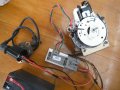
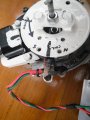
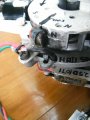
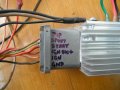
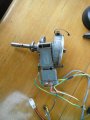
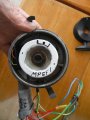
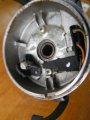
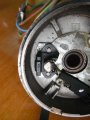
Personaly you are making this into an1.JPG2.JPG3.JPG4.JPG5.JPG6.JPG7.JPG8.JPG9.JPG overly complex set up. You could use a Ford 6 or 8 cylinder distributor TFI unit & its Hall sensor. I mounted the TFI unit on a heat sink (use heat sink compound). Cut & modified the HALL sensor as theres a magnet on it which is not needed, as you need a magnet on the flywheel to trigger the sensor. This system will fire reliably at Verry small RPM. I pick up the distributors for free from a scrap yard with a short piece of the wiring with the plug.
 

debe

Joined Sep 21, 2010
1,419
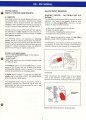
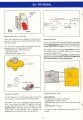
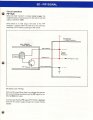
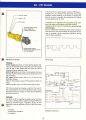
This is part of a Ford EFI course i did when working as a mechanic. This part is on the ignition & how it works.EB.4.jpgEB.5.jpgEB.6.jpgEB.7.jpgEB.8.jpgEB.9.jpg
 
Top