Oil well ignition module

Alec_t

Joined Sep 17, 2013
15,119
Personaly you are making this into an overly complex set up.
Very likely, @debe, but it's the result of trying to incorporate components already obtained into a non-standard set-up. :)
It can’t hurt to look at what you came up with.
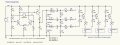
Here you go :-
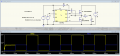
MultiTrigger2.jpg

The trim pots adjust the timing of pulses f,g,h for firing three SCRs in close sequence.

You are probably right that we don’t need that much for the trigger. If that is the case we need to compensate on the final circuit so that the trigger input from the magnet / coil does not fry the trigger.
No compensation necessary. In simulation, the above circuit handles trigger coil peaks of 0.2V to >12V with no problem and no noticeable effect on the gate pulse timing or amplitude.
It should work over the temperature range -60C to +60C with only a 0.5mS shift in the pulse timing.
 

shortbus

Joined Sep 30, 2009
10,050
If I'm understanding you guy's use of the flywheel magnet and "trigger coil", you seem to be using the start of the time it is generating an out put as the trigger. There is a problem with that and no ignition that I'm aware off does things that way.

The starting point of when that trigger coil produces a voltage would coincide to what in a Kettering system is called "dwell" when the points close and the coil primary charges. Cylinder timing, the point where the spark is given, coincides with the point opening and the collapse of the ignition coil primary. The same is true in a modern lawn mower engine pointless/electronic ignition. and any other ignition,that I'm aware of, spark happens when the "trigger" no longer is providing voltage.

This allows one set point, no matter speed or RPM to always be the same, a certain number of degrees before top dead center(BTDC). BTDC is the common way of showing when ignition takes place.

I know Marky is using this as a "learning experience" but isn't getting this engine running and running reliably another consideration? Making this CDI is great as long as the one making it will be around to fix it when it fails, but?

I have come up with another way of doing this, getting the engine running, with some easily found off the shelf products. and for other than the trigger, it would be all self contained on the spark plug. And any one working on this motor would be able to fix it.
 

Alec_t

Joined Sep 17, 2013
15,119
Cylinder timing, the point where the spark is given, coincides with the point opening and the collapse of the ignition coil primary.
True for a TCI (IDI) system, but for CDI surely the spark is triggered by the SCR firing and hence the cap discharging to charge up the ignition coil primary inductance negatively?
 

shortbus

Joined Sep 30, 2009
10,050
True for a TCI (IDI) system, but for CDI surely the spark is triggered by the SCR firing and hence the cap discharging to charge up the ignition coil primary inductance negatively?
I think you comparing apples and oranges. The dwell time in a CDI is the time where the pickup/trigger coil is conducting, charging the cap(s), When the magnet passes the trigger coil and voltage is no longer being produced, an inverter logic then triggers the discharge into the coil. Since the cap doesn't hold a lager charge it powers the ignition coil primary and then the primary collapses, causing the spark to the plug.

That small amount of charge/discharge of the cap is why there is very little energy in the spark. That small amount of energy is fine for a very small engine, actually works good. But the engine in this discussion is a large single cylinder and slow moving. The size of the cylinder bore alone means it takes much more spark energy to light the charge in it.

When I say this engine is larger than the common CDI engine of 50 to 100 CC, I mean it's huge in comparison- 208CU or3408CC. There is at least one company that sold CDI ignitions for these, but has since dropped them, I'm guessing because they were ineffective and didn't work.
 

Alec_t

Joined Sep 17, 2013
15,119
The dwell time in a CDI is the time where the pickup/trigger coil is conducting, charging the cap(s),
In Marky's sytem the conduction of the trigger coil has nothing to do with charging the cap. The cap charges, over a fixed period of about 100mS, from a constant high-voltage (350V) supply. The trigger coil is used merely to initiate the cap discharge.
When the magnet passes the trigger coil and voltage is no longer being produced
Disagree (unless you meant 'after the magnet has passed the trigger coil'). It is precisely while the magnet is passing the trigger coil that the coil produces a voltage. At any other time there is no trigger coil voltage.
When I say this engine is larger than the common CDI engine of 50 to 100 CC, I mean it's huge in comparison- 208CU or3408CC. There is at least one company that sold CDI ignitions for these, but has since dropped them, I'm guessing because they were ineffective and didn't work.
Interesting. Time will tell if Marky's system is effective.
 
Last edited:

shortbus

Joined Sep 30, 2009
10,050
In Marky's sytem the conduction of the trigger coil has nothing to do with charging the cap. The cap charges, over a fixed period of about 100mS, from a constant high-voltage (350V) supply. The trigger coil is used merely to initiate the cap discharge.

Disagree (unless you meant 'after the magnet has passed the trigger coil'). It is precisely while the magnet is passing the trigger coil that the coil produces a voltage. At any other time there is no trigger coil voltage.

You can believe what you want, but it doesn't make it so. I know the cap isn't being charged by the passing magnet, but any ignition system fires the spark when the primary collapses and in this case this happens after the magnet has passed the pick up.

To do it when the magnet is under the trigger coil will never give a consistent firing point or as it's known cylinder timing. Doing it when the magnet is under the trigger coil the timing will change with the flywheels velocity.

I'm sorry if you can't accept this, but that is how all of the single and multi cylinder spark engines work. This whole project was off the rails from the very first post. And because of things already done and failed there seems like there is no turning back to do it correctly.
 

Alec_t

Joined Sep 17, 2013
15,119
any ignition system fires the spark when the primary collapses
An ignition system can also fire when the primary current ramps up (as it does in a CDI system), but the induced voltage in the primary would have the opposite polarity. Its magnitude in either case is proportional to the rate of change of current (Faraday's Law).
Take a look at the simple CDI system in this article. Note that the primary is in series with the capacitor; hence once the capacitor has charged fully there is no current in it or in the primary.
 

Thread Starter

MarkySparky42

Joined Aug 28, 2022
204
Hi guys. What an interesting discussion.

A quick aside: can any of your programs model the output waveform of an IRS2104(S)PbF mosfet gate driver that is being fed a 50Hz square wave from a 555 timer? I don't know if I have a bad chip or my scope is off... but I would like to see the theoretical output of pins 5 & 7 (HO & LO).

Please and thank you.
 

Alec_t

Joined Sep 17, 2013
15,119
Not exactly the IRS2104(S)PbF model, but the IR2104 model I built is probably close. Here are the Ho and Lo waveforms.
1665077570709.png
 

Thread Starter

MarkySparky42

Joined Aug 28, 2022
204
Not exactly the IRS2104(S)PbF model, but the IR2104 model I built is probably close. Here are the Ho and Lo waveforms.
View attachment 277828
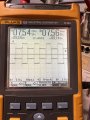
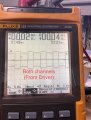
ok so it is a square wave In and out and one of them is a little lower than 50% of the other… thanks what I was hoping for… there are some alignment issues on this picture of mine, but basically both of my channels are the same magnitude. Hmmm
 

Attachments

Thread Starter

MarkySparky42

Joined Aug 28, 2022
204
They will be, if the high-side FET isn't pulling up the bootstrap cap voltage, e.g. because the gate is disconnected from HO.
So to act ideally, it has to have a load?

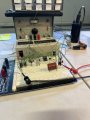
I OK last night I bread-boarded up the 2104

090F192A-4D0D-4AD0-9CDD-F1E138E56B8C.jpeg
Now I run this rough equivalent of a sine wave into Mosfets and then into a mini transformer that has a 1 to 125 ratio.

I’m waiting on my Mosfets to arrive from mouser. I was trying to model the 2104 both on Easy and DipTrace (before my trial expires) but to no avail. They have something that looks like an 8-pin chip with all the correct tags on the pins, but it is an empty graphic. It lacks the functionality and the 3D components. I looked up a Royer circuit similar to what you modeled minus the feedback bit, and I may model that myself this weekend just to do it.
 
Last edited:

Alec_t

Joined Sep 17, 2013
15,119
Is your IC from a reputable retailer, or some doubtful online source? There are many fakes/rejects around.
What is loading the output?
Which circuit are you using?
What value is Vcc (the output is at least 1.4V less than Vcc unless the 555 is a CMOS version)?
 

Thread Starter

MarkySparky42

Joined Aug 28, 2022
204
It’s a TI chip
I’ve tried different power sources
Different chips

my voltage divider going in is 10k (Ra) from 12v (vcc) to a 100k (Rb), C = 100pF, C2 (con) is through 0.1uF

4&8 connected, 2&6 connected… it’s a beautiful 50kHz out but exactly 50% of VCC.
I’ve tried:
LM555N
LM555CN
NE555P
And LM556

maddening

do I have to use the output of the 555 to drive a transistor to get a 12VDC square wave. It’s seems silly.
 

Thread Starter

MarkySparky42

Joined Aug 28, 2022
204
265681-42db2b5bc55416636c099f2208695e8d.jpg
Gentlemen - I have spark

12VDC source 1100 VDC as my primary, and knock you on your ass secondary voltage.

I’m working my way through polishing it them I’ll make a board.

555 (50KHz) to dual channel mosfet driver to step up transformer (1:125) to bridge to SCR and an opto-isolator thrown in to separate high and low voltage…

t even works off of a car battery.

I’m tired and going to bed.

I’ll check in later.


image.jpg

in the next few weeks I’ll hook it up to the engine
 

Attachments

Last edited:
Top