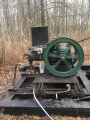
It's also not an old Fairbanks Morse motor. I don't know what brand that motor is but am willing to bet it has a crankcase holding oil. Doesn't your motor use drip cups on all of the bearings? Any hit and miss I've ever been around, and back in the late 1960's early 1970's my boss was a collector of hit and miss engines so I saw a lot of different types and sizes of them. And all of them had soft steel or cast iron cranks running in babbitt.
The engine in your video is a more modern electric start engine, one controlled by the well pressures. They have a modern crankcase and much better parts and bearings in them. If you want to ruin your engine by doing what your doing that's your business, but I'd never do it like you want. The old engines were never meant to be run like that.
The only thing that makes the video engine and yours the same is they were on an oil well.
It's also not an old Fairbanks Morse motor. I don't know what brand that motor is but am willing to bet it has a crankcase holding oil. Doesn't your motor use drip cups on all of the bearings? Any hit and miss I've ever been around, and back in the late 1960's early 1970's my boss was a collector of hit and miss engines so I saw a lot of different types and sizes of them. And all of them had soft steel or cast iron cranks running in babbitt.
The engine in your video is a more modern electric start engine, one controlled by the well pressures. They have a modern crankcase and much better parts and bearings in them. If you want to ruin your engine by doing what your doing that's your business, but I'd never do it like you want. The old engines were never meant to be run like that.
The only thing that makes the video engine and yours the same is they were on an oil well.
Does your DC-DC boost converter have an enable/disable pin? I can't see one in post #121.
If the converter is a conventinal design, the output voltage will probably equal just less than the input voltage (~12V minus a diode drop) even if the disable function (if present) is active. Can you confirm?
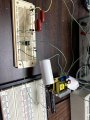
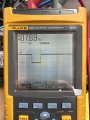
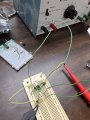
Here is what I gathered.
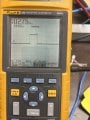
the cap takes too long to discharge (without the primary coil and a spark plug) that I can’t tell if the power supply is switching off.
Does your DC-DC boost converter have an enable/disable pin? I can't see one in post #121.
If the converter is a conventinal design, the output voltage will probably equal the input voltage (12V) even if the disable function (if present) is active. Can you confirm?
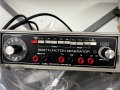
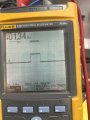
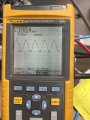
Ok. I’m headed home but I brought all the toys with me. I’m not exactly sure what to do next. I can replicate the square wave but I can’t get the second wave without a coil and a trigger - which I should pick up on Sunday.
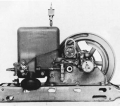
You totally missed my point. Starter isn't anything to worry about. It's the oiling of the working parts that are a problem, if you have one of the old Fairbanks engines. The ones I'm familiar with had a drip oiler on both crank main journals, the connecting rod to crank and the cylinder wall for the piston and wrist pin, like shown here-
The converter's fat output cap will need to be removed for your application (as I believe Irving mentioned). I reckon you need about 1uF in series with the ignition coil primary.
I wonder, too, if it might not be suitable for repetitive (near-)total discharge and re-charge. You need something with a very low ESR and ESL
Please be careful with your circuit: 350V is HAZARDOUS.

 Facebook
 Google
 GitHub
 Linkedin