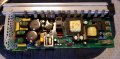
Non working 40 amp PSU, relay buzzes a lot

Thread Starter

sdowney717

Joined Jul 18, 2012
805
I also found a device jsc jp-01 80c, that is open when cold on the heat sink, and is it supposed to be NC?.It is a small thermal breaker
https://www.diytrade.com/china/pd/1...or_Bimetal_Temperature_Switch_Thermostat.html

The isolator diodes for the 3 banks, there are 6 are not shorted, seem ok.

Relay shows no arcing from the points. None of the LED's come in. There is an LED display for cn1 plug not plugged in for the moment. Its like half the board gets no power. I tried jumping the thermal switch, no change.
 
Last edited:

Thread Starter

sdowney717

Joined Jul 18, 2012
805
Found the main problem.
Inline rectifier is dead
GSIB 2560, has no dc output.
https://www.vishay.com/docs/88646/gsib25xx.pdf

If I replace that, will it work?
The output circuit trace does not appear shorted.
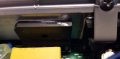
I am also not sure the relay is any good, back tracing the pcb shows no connection, seems the relay point in NC position have infinite ohms.
Why it buzzes like mad, I dont know either.
Looking through plastic case looks ok.
NC circuit side is not connected anyway, so this is just a switch on, but concerning NC side has infinite ohms, maybe it burnt inside where I cant see.
20190818_120318.jpg

20190818_114955.jpg
 

Thread Starter

sdowney717

Joined Jul 18, 2012
805
I have in a psu for a pc, kbu10j which is 10 amp rated. I could try it for free and see if this powers up.

Tried that, it has power again in places, but the C4060 npn power transistor, there are 2 of them ganged together to the right of the inline rectifier is not switching on and off. I pulled them and they test ok.

First C4060, the collector has 161vdc positive, but emmiter and base just under a vdc.
Seems to me nothing is turning it on. I suppose it is supposed to switch on and off, which then switches the second c4060 connected to it on and off..

Relay still occasionally buzzes, but does seem to have 161 dc volts on each side of the points now.
Anyhow it does not run, any idea on the switching circuit?
 
Last edited:

Thread Starter

sdowney717

Joined Jul 18, 2012
805
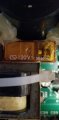
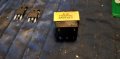
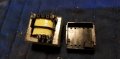
I think I found the problem in the switching circuit, this transformer is ruined, it is reading millions of ohms. You can see visible corrosions and broken wires.

Is it available ?
EI-35 transformer
This was in a boat, so salt air ate into this.
Mentions it here, but the one they show has many more connections?
Any hope of getting something reasonable?
https://www.digchip.com/datasheets/parts/datasheet/1080/EI-35-pdf.php

20190819_122735.jpg
20190819_123106.jpg
 

Thread Starter

sdowney717

Joined Jul 18, 2012
805
Reading description, I dont think that part would work, wrong input voltage

Dont fix things like this? I fix all sorts of AC equipment, AC motors, welders, I give a shot at fixing just about anything I have thats busted, and I also like to figure out what failed.

And I think I found the problem, but getting right part, who knows.
 

MisterBill2

Joined Jan 23, 2018
27,683
I AM indeed very good at fixing things, but switcher power supplies are :first, complex circuits, and second, full of highly stressed components whose values are critical. And third, they are tightly packed and thus difficult to service. Besides that there is very seldom an accurate circuit diagram available, and mostly, all of the inductive elements are custom devices. Besides that it is usually more effective to replace the whole package than replace failed parts, only to discover that there are more failed parts that caused the failure. So almost always the switching power supply gets replaced.
 

Tonyr1084

Joined Sep 24, 2015
9,744
Blown bridge rectifier. But what caused it to blow? Sometimes they just go on their own. I had one in a stereo amplifier go short on one of the four rectifiers.

The picture of the relay with the 120 AC, that refers to the contacts, not the operating coil. Likely the AC being passed through the diode may have also damaged other components. Cascading failure is what that is called. When one goes down it takes others with it. Resistors and fuses don't take stuff down when they fail, but rectifiers, transistors and capacitors are among the culprits for cascading failure. This has not been an exhaustive list of components that drag other things down with them. It's pretty good place to start though.

If you have a Bridge Rectifier (BR) and want to see what happens when you replace it - that's up to you. Just BE SURE TO UNPLUG the unit before working on it. And give it a day or two rest to make it reasonably confident the capacitors have discharged. But keep in mind that not all caps may discharge and can bring a healthy snap with them.
 

AlbertHall

Joined Jun 4, 2014
12,634
I used to repair SMPS for a living and then supervise a line repairing them. However we had a full schematic and product knowledge as it was for just two manufacturers. Even then they tend to blow up again when you think you've replaced all the damaged parts and throw bits of capacitors and semiconductors at you.
 

Thread Starter

sdowney717

Joined Jul 18, 2012
805
I am tempted to hack saw the weld laminations apart on the transformer and unrap the windings and see if I can repair the ends of the coils.
An EI35 is a 2watt transformer, this one seems to have only 2 coils, in and out. Maybe if I get less busy.

I did something similar on a transmission solenoid once, and also a small ac evaporator fan for a fridge.

I did put in a 10 amp bridge rectifier, and nothing blew up.
The switching drive circuit is disconnected when the transformer windings are open, so nothing will happen as it cant switch the C4060 power transistors.
I cant find anything else wrong when going over the board than this transformer. I am pretty certain its the problem.

Its possible the charger just failed when charging too many batteires some time ago, burnt out the bridge rectifier. Then it sat off a few more years in the bilge of that boat and the salt air ate up the ends of the little transformer coils.

This particular model has some similar complaints, likely the same lousy transformer failed on the others. It's the weakest link.Little tiny copper wires exposed to hot salty humid bilge air, if you like your battery chargers, do not stick them in the engine compartment.
 
Last edited:

Thread Starter

sdowney717

Joined Jul 18, 2012
805
https://www.ebay.com/itm/AC-220V-10-5V-5-Terminals-s-Ferrite-Core-EI-Power-Transformer-EI-35/332296567367?_trkparms=aid=111001&algo=REC.SEED&ao=1&asc=20160727114228&meid=238bc101189d46c78a3bc7e47ecd8d81&pid=100290&rk=1&rkt=4&mehot=lo&sd=332296567367&itm=332296567367&pg=2060778&_trksid=p2060778.c100290.m3507

For $3.60 I will find out if it works. Ebay has a $2 off coupon for me. I did look at the circuit, measured input side at 120vac going into the transformer.
It did have the same 5 pin arrangement. 2 in, and 3 out.
The gate of one of the transistors that the output is eventually connected to is rated for 4v, so its possible the transformer output should be half of 10.5v or
4.7v
https://datasheet4u.com/datasheet-pdf-file/828413/Toshiba/K941/1

There is 4 of these type transistors using power from the transformer, and it seems they send power to the IC, so amybe they are boosting the dc volts.

And maybe circuit designer used a common transformer like this.

There is a circular small rectifier fed off 2 output pins of transformer, a wo4g
https://www.vishay.com/docs/88769/woo5g.pdf
which feeds 4 transistors etc...
which sends power to this pwm ic chip
https://html.alldatasheet.com/html-pdf/29344/TI/UC3524AN/22/1/UC3524AN.html

that ic chip does have an undervoltage lockout of 8v, so who knows!

so maybe it would work, cheap to find out. I have not been able to find any other potential part to fit yet with 110v input. Lots of 220 vac I found that look like this.
 
Last edited:

MisterBill2

Joined Jan 23, 2018
27,683
I used to repair SMPS for a living and then supervise a line repairing them. However we had a full schematic and product knowledge as it was for just two manufacturers. Even then they tend to blow up again when you think you've replaced all the damaged parts and throw bits of capacitors and semiconductors at you.
Yes, with all of the needed tools, and that very valuable Product Knowledge, it is far more likely to be able to have a successful repair. In addition, my guess is that those supplies were not the small cheap ones like we see now. And the full schematic is an incredibly useful tool. The rest of us are rather out of luck.
 

Thread Starter

sdowney717

Joined Jul 18, 2012
805
This particular psu is an expensive to replace one. You pay for amps. If I can fix it for less than $10 then its worth the effort.
If it wont work after I put in the new transformer, then its just good for parts.

for example this one is $400
https://www.amazon.com/ProMariner-ProNautic-1240P-Battery-Charger/dp/B00MYSZL2I

To me this is not a commodity cheap item.
The one i have on the boat uses a huge transformer and has worked fine for 50 years, even being abused with heavy loads, was made by Raritan but is not ferroresonant charger, its a SCR switching type which regulates the voltage, but it does not do a modern charge profile (multi step charging). It has one bad feature, causes vhf radio interference when I broadcast. I bought a board that senses amp use to turn off the charger when I press the PTT microphone. (amp use jumps to 3 amps or more) This charger turns itself off if 12vdc is put on a wire, Raritan did that so if either engine starts, the AC charger is turned off, nice feature for 1970.

I dont know how modern battery chargers do that or if they do.
 
Last edited:

MisterBill2

Joined Jan 23, 2018
27,683
One more thought is that possibly it is just a relay circuit problem. What happens if you jumper bypass the relay contacts? I had not been thinking that it was a serious supply.
IS the only purpose to charge the battery/batteries? Or is it also intended to supply the 12 volt power from shore power? The application makes a difference here.
 

Thread Starter

sdowney717

Joined Jul 18, 2012
805
One more thought is that possibly it is just a relay circuit problem. What happens if you jumper bypass the relay contacts? I had not been thinking that it was a serious supply.
IS the only purpose to charge the battery/batteries? Or is it also intended to supply the 12 volt power from shore power? The application makes a difference here.
This charger does both, charges and provides DC power to DC appliances, up to 40 amps
I did jumper the relay but did not help.
With the transformer broken (open circuited) like it was, of course it cant provide power to the drive circuits of the PWM IC chip, and then the NPN power transistors.

I read the manual, this is a ProMariner 1240i 3 bank marine charger with what they call 4 stage charging. But their 4th stage it seems just reverts back to bulk charge mode when a certain time period elapses of DC appliance demands.

This 1240i is really just a 3 stage charger of bulk, adsorption, float modes.
Some charger do the final 4th stage as a 13.2vdc maintenance output.while this one is set to 13.5 vdc float.
 
Top