12DCV Relay module not working

Thread Starter

styno1992

Joined Sep 29, 2023
3
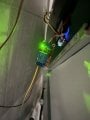
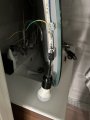
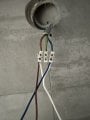
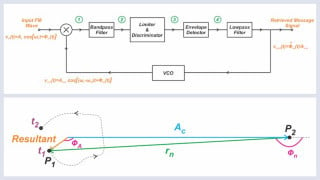
I added a 12 DCV relay to a simple circuit of my electrical mirror as in the picture. The green LED on the relay turns on and off when using the button on the electrical mirror, so the relay seems to work properly. However for some reason the light bulb does not turn on and off like it should... ? Anyone an idea?

PS I checked the lightbulb, it works :)
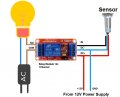
12V-Relay-Example-Sensor-Connection.jpeg

IMG_1308.jpeg
IMG_1309.jpeg
IMG_1310.jpeg
 

ElectricSpidey

Joined Dec 2, 2017
3,316
Next, I would check the continuity of the relay contacts.

Check for voltage at those terminal connections and make sure you don't have the insulation pinched.
 

Thread Starter

styno1992

Joined Sep 29, 2023
3
Hm I don't know. When I measure the resistance with a multimeter between the COM and NO contact there does not seem to happen anything when the green LED goes on and off. That is also weird and should make a connection, right?
 

Dodgydave

Joined Jun 22, 2012
11,395
Okay remove the bulb wires and put your multimeter on Ohms/diode test and check between Com and Nc ( short circuit) and Com No ( open circuit ), then power the relay and test again, the readings should reverse.
 

MisterBill2

Joined Jan 23, 2018
27,315
Hm I don't know. When I measure the resistance with a multimeter between the COM and NO contact there does not seem to happen anything when the green LED goes on and off. That is also weird and should make a connection, right?
That does indicate a problem. The next diagnostic step is to use the resistance function to check between the common and the Normally Closed terminals. It might be that the relay is not getting enough power to fully operate. I have come across that a couple of times. The cheap clip leads are notorious for that problem.
 

ThePanMan

Joined Mar 13, 2020
864
You should check for continuity between C and NC when the relay is not powered. You should get less than 1 ohm. I say less than 1 ohm because typical continuity meters never read zero ohms, there's always some minor resistance. You should then check to make sure there is no continuity between C and NO. Then activate the relay and re-test. The readings you got on the first two checks should now be opposite.

Oh, wait, someone already said to do that. Twice now. This makes three. Geez, guess I should read all the comments before I offer my pearls of wisdom.

"(
 

Reloadron

Joined Jan 15, 2015
7,870
Your relay board / module looks to be one of these. The board likely has two LED indicators, one for power applied to the board labeled PWR and another labeled LED 1 which should illuminate when the relay is active. The board also has a jumper allowing a choice of logic high or low as the trigger. The H and L are for High and Low. Now at this point I assume you have done resistance test on your relay contacts between Common and NO and NC with the relay active and inactive so we won't visit that again.

A link to your sensor's data sheet may help. I have no idea what the sensor output is doing or how much current it can source / sink or if the output is open collector or not? Again, the data sheet for your exact sensor?

Ron
 

MisterBill2

Joined Jan 23, 2018
27,315
Indeed! R makes a good point. I had guessed that the sensor was a switch, evidently not. There are a huge number of different sensor types. What kind is the one in the drawing?? That matters a lot.
 

Thread Starter

styno1992

Joined Sep 29, 2023
3
Okay everyone thanks for the help. I assumed the green LED was representing the switch but apparently it was just the power LED.

Now I also connected DC+ to the IN connector and then the sensor/relay worked properly! :)
 
Top