Hi Analog,If Q1 is a fast MOSFET, its Rdson will contribute much less error to the output voltage than a 3904's Vcesat.
ak
Hi Ai,
Thank you very much. The output will be connecting to the Gate of a MOS.
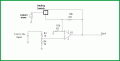
May I know how to implement this circuit using OPAMP. I prefer OPAMP one.
I tried some opamp circuits but when the I/P frequency becomes 1Mhz the output is not proper.
Regards
HARI

Hi,HI Ai,
Thank you .
Please see my circuit below .
The Opamp has
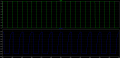
But still, my output is slewing.You have ant thoughts why is it so
- 400MHz Gain Bandwidth Product
- 2500V/μs Slew Rate
View attachment 239786
View attachment 239787
Regards
HAri
Hello,Hi Ai,
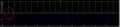
It is working after changing the resistor values. There is a delay between input and output. Please see the below pic.
May I know why high-speed amplifiers use very low impedance external parts
View attachment 239788
Regards
HAri
Hi Bob,The capacitance is not higher, but the capacitive impedance becomes lower as the frequency increases.
Bob
No, it doesn't.. The *impedance* of a capacitor, any capacitor, decreases as the frequency of the signal going through it increases.The capacitance decreases with an increase in frequency.
Hi,Hi Bob,
The capacitance decreases with an increase in frequency. That is applicable to all opamps input capacitance, correct me if I am wrong.
May I know the speciality of the input capacitance of high-speed opamps.
Regards
HARI
Hi Ai,Hi,
The design goal of a high speed op amp is to decrease the internal capacitances and of course external too when that is under manufacturing design control, but with ANY capacitance we get a delay in the charge and discharge times due to any series resistances, so in that sense the capacitance of high speed op amps will be less for those capacitances under control by the manufacturing process. The associated recommended application notes will specify typical external parts for given target design goals and that will mean low resistances for maximum performance.
So although we may see lower cap values for higher speed op amps, we also have to keep the external resistances as low as possible. There is a tradeoff though because we dont want to use up all of the available output current we need some left for the application load itself.
This is one of the nasty constraints for CPU's that have to run at very high speed (GHz ranges). As the speed increases we like to see lower capacitance values so we like to keep on die component dimensions small, but there are still resistances we have to deal with and they dissipate power which causes heat and getting rid of heat in a small area is not that easy so we reach a physical limit. We have to reduce die transistor size to keep losses down, but that does not eliminate the heat completely when we go down in size we just meet another road block, Although it may be farther down the road now it still shows up so we like to keep the resistances as low as possible.
With the op amp circuit design we dont have control over the op amp itself anymore but we do have some control over what external resistance values we can use and we keep them in line with the app notes and that almost always means lower values.
| Thread starter | Similar threads | Forum | Replies | Date |
|---|---|---|---|---|
|
|
Inverting summing amplifier help please? | Digital Design | 28 | |
|
|
Inverting summing amplifier help please? | General Electronics Chat | 16 | |
|
|
Ripples in square wave output of LM7171 high speed OpAmp. | Digital Design | 19 | |
| C | non-inverting summing amplifier | Analog & Mixed-Signal Design | 6 | |
| N | Non Inverting summing amplifier | Homework Help | 2 |