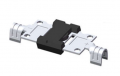
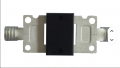
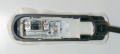
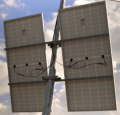
New for me diode housing/body...

Thread Starter

Externet

Joined Nov 29, 2005
2,626

Attachments

Last edited:

Ian0

Joined Aug 7, 2020
13,097
+ and - can be quite ambiguous for labelling diodes.
If you look at a bridge rectifier the two commoned cathodes are labelled +.
if you look at an LED the anode is labelled +.
 

MrAl

Joined Jun 17, 2014
13,667
+ and - can be quite ambiguous for labelling diodes.
If you look at a bridge rectifier the two commoned cathodes are labelled +.
if you look at an LED the anode is labelled +.
Usually when they do this it means the part is from an application specific device. In other words, the application would make it clear what to do with the part. For example, + goes to +Batt for charging. For discharging, they may label the anode with the plus sign + so that it is for discharging the battery when + is connected to +Batt.
I don't like it either :)
 

MisterBill2

Joined Jan 23, 2018
27,186
As I think about the markings, it certainly is a bit unclear. But at first glance it gives the impression of being obvious. And while making it a crimp-on is convenient for initial assembly, it assures that the diode is not to be re-used, nor disconnected for testing. CERTAINLY a "design for assembly used in a throw-away product.
 

MrAl

Joined Jun 17, 2014
13,667
As I think about the markings, it certainly is a bit unclear. But at first glance it gives the impression of being obvious. And while making it a crimp-on is convenient for initial assembly, it assures that the diode is not to be re-used, nor disconnected for testing. CERTAINLY a "design for assembly used in a throw-away product.
I would think that the reliability factor is so great that they probably don't worry about throwing anything away because it never gets to that point. Maybe once the panel gets old they just throw the whole thing out.
 

MisterBill2

Joined Jan 23, 2018
27,186
CERTAINLY, the manufacturers that use the "Design for Assembly" for their Not Worth Repairing products will not be concerned one bit!! No question about that.
The other consideration is that crimp connector. While a crimp connection made with the correct tool is usually quite adequate, not everybody has the specialized tools for every style of crimp. That may, or not, matter in every instance. Since this diode was intended as a bypass diode for a solar panel, that may not matter so very much. Maybe.
 

Ya’akov

Joined Jan 27, 2019
10,226
Given the application-specific nature of the device the ambiguity can only exist if you know too much for your own good (in this instance).

To the PV installer, is it dead obvious that you hook the + side to the + side of the source. They have no concern whether it is anode or cathode since it has only one purpose in their world.
 

Thread Starter

Externet

Joined Nov 29, 2005
2,626
To the PV installer, is it dead obvious that you hook the + side to the + side of the source.
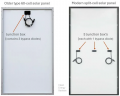
Hi. The PV installer never even sees the diodes; are factory soldered and buried under silicone sealant in a tight box. Less install or handle or crimp or solder on it.
1754399957364.png
1754400401322.png

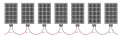
And installing panels in series is not 'dead obvious' as + marking is plugged to - marking and chained to the next + plugged to - and ...

1754400795831.png
 

Attachments

Ya’akov

Joined Jan 27, 2019
10,226
Hi. The PV installer never even sees the diodes; are factory soldered and buried under silicone sealant in a tight box. Less install or handle or crimp or solder on it.
View attachment 353645
View attachment 353647

And installing panels in series is not 'dead obvious' as + marking is plugged to - marking and chained to the next + plugged to - and ...

View attachment 353648
That only changes the limited skill worker who will need to know + goes with red and - with black to the manufacturer’s employee. Same idea, different target.
 

jiggermole

Joined Jul 29, 2016
185
That does look awfully handy for Billy Bob like me who got their panels on ebay and needs an inline proteciton diode I can crimp, heat shrink and forget about. I might have to pick some up and play with them.
 

Thread Starter

Externet

Joined Nov 29, 2005
2,626
Mike A : that diode came from a group of 24 cells (a third of a 400W panel)
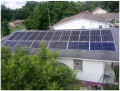
Panels come in many flavors. I have 18 on my roof, are all equal 400W - 40Volt - 10 Amperes, 2m2 (40"x80¨) each.

1754502778385.png
 
Last edited:

Thread Starter

Externet

Joined Nov 29, 2005
2,626
... needs an inline protection diode I can crimp, heat shrink and forget about...
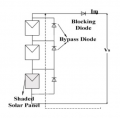
'Inline" diodes would be 'blocking' diodes. Perhaps the voltage for blocking diodes is greater than my 360 V Why do you think you need them to protect from what ?
1754504029629.png
 

MrAl

Joined Jun 17, 2014
13,667
'Inline" diodes would be 'blocking' diodes. Perhaps the voltage for blocking diodes is greater than my 360 V Why do you think you need them to protect from what ?
View attachment 353759
One reason I could think of is that if just one panel gets sunlight it will be able to output at least some power at lower voltage. In the drawing, if just the center panel gets sunlight the upper diode will conduct and the lower diode will conduct, and the blocking diode will conduct.
 
Top