Need help with shielding wires on a project.

Thread Starter

born2dive00

Joined Oct 24, 2016
285
Hello Everyone

I am trying to eliminate all interference on a conservation project I am working on. It is using RCAOP Remote Controlled Aerial Observation Platforms (drones) to help stop poachers for a conservation group.

The problem is when I tried asking the rc forums i keep getting told that what I am asking about "is beyond the experience of a weekend hobbyist" So I am coming to a place that hopefully can help.

I need help understanding exactly what to do in order to shield servo wires, A/V wires, antenna wires, power wires, and carrier wires.
First I am planning to use this 18gauge shielded wire,
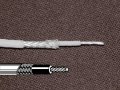
18ga shielded guitar wire.jpg

And this 26gauge wire each pair is individual strands, then twisted together, then each pair is shielded, then all four pairs are foil shielded and then braided in silver.
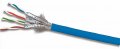
cat6sstp1.jpg


Challenge; to protect rc avionics from as much outside interference as possible to increase distances of flights.
Electrical setup; battery running avionics, electric motor and A/V transmitter, and receiver.
electrical circuit; Battery + and -, no chassis ground, Airframe is not metallic, it is of Styrofoam and balsa wood, ergo there is no earth either.

I need to know what needs to be (A) shielded, (B) ferrite rings, (C) filters, and (D) shunts. (E) twists

I know that the electric motors, batteries, autopilot, and the transmitters can cause noise worst being the motors, so how do you eliminate it?

1. Camera power wires
2. Camera signal wires
3. Audio video transmitter power cables
4. Audio video transmitter antenna cables
5. 433 antenna cables
6. 433 power cables
7. Auto pilot wires.
8. Servo wires and leads servo wire is 24-22ga
9. Wires to gps
10. Motor cables
11. ESC cables and wires
12. Battery cables

Please use the # and the letter to describe what is needed. Then tell me exactly what wire and where to put the items and how to do it.

Example 2, A,B Camera wires must be shielded individually, solder the center wire to the signal pin, + pin.... take the shield wire and solder together one end that plugs into the OSD.... a Ferrite coil should be added XXXX from the camera.....

Task 1 how do you shield servo wires
There seems some debate on how to shield the servo wires, some people say that each wire, the positive, negative, and the ppm signal wire should be 3 separate wires ran from the servo to the receiver, with each wire having its own individual braided shielding, with the shielding twisted and soldered together and grounded to the - of the receiver leaving the shielding un soldered on the servo end.

others say that you need only 2 wires, + at the center of one cable and the ppm at the center of the other cable, using the shielding as the ground, soldering the shield wire to the negative lead of the servo and to the negative pin of the receiver.

So what is the correct way to shield the items.
 

DNA Robotics

Joined Jun 13, 2014
670
I built a CNC plasma cutting table. It works fine with pen on paper but when the sparks fly, it gains or loses steps. So I need to shield, ground and bond things.
The best clues I found while researching are:
Enclose your electronics in a metallic box.
In your case, maybe aluminum foil over Styrofoam.
Use shielded wire on anything that can pick up static.
Terminate the shields to the outside of the box.
Any shields that come inside the box, bring interference inside the box with them.
 

Kermit2

Joined Feb 5, 2010
4,162
Any wire that powers a mechanical device can be used without the need for shielding.

The antenna is the thing you need to upgrade for increased range on your flights. The use of a directional type of antenna at the transmitter end would also increase your range.

If you want to "harden" your drone against other persons who use jammers, then you are in need of serious help.

If the motor drive circuits are causing problems with the receiver then you need to look at your power supply layout and grounding placement of power and radio control wires.

Low pass filters on supply feeds may be of use as well.

We need MORE information to figure out what needs to be done.
 

Thread Starter

born2dive00

Joined Oct 24, 2016
285
Hello guys, Kermit actually you are partly correct my increasing the sensitivity of the antenna you CAN get longer ranges ONLY up to the point that the noise floor starts to decrease range because it is too sensitive. For example if you have a unprotected lead longer than a 12" this can act as an antenna. The longer the leads (in my case some up to 2meters) the more they act as antennas and can cause interference with the electronics. So by Shielding them they can not pickup the cross talk, stray em's, and RFI's. We HAVE to use 433mhz hopping for extended ranges on this project it is mandatory, so the system can possibly pickup 433mhz signals from the local population using 433 walki talkies.

This is why we need the shielding on the Observation Platforms. On this system I am already using a 3w 433 transmitter, with a 16.5db Yagi on the sending side, and a 16.5db yagi on the 1.2ghz receiver. On the airframe, the system is using a 6w transmitter for the A/V and the antennas are tuned to a specific frequency.

As far as Hardening the system against jammers, it would require that the system can sort out your signal with low power against a device with up to 100+ watts of power across the entire system. I.e. overloading the observation system with so much power on that frequency that your signal can not be heard. In order do this would require military grade computer scanning software over multiple spectroral frequencies. which is way beyond what is needed or feasible for this project.
 

Thread Starter

born2dive00

Joined Oct 24, 2016
285
So this goes back to the question how do you properly shield the wires? From what I have read,
1. All shielding should be connected to the negative battery terminal, is this correct?
2. On an airframe that does not have a conductive skin this is done by creating grounding posts at different parts of the air frame. is this correct?
3. Running the shield wire to those grounding posts.is this correct?
4. leaving the other end of the wire loose, not connecting it to the electronic ground. I.e. receiver to servo, receiver end of the shielding grounded to the negative terminal, and the servo end hang loose. Is this correct?
5. the signal wires get shielded
6. the power + wire get shielded. Is this correct???

Please let me know if I am wrong so I don't fry the system.

Thanks Brad.
 

Kermit2

Joined Feb 5, 2010
4,162
Your grounding should tie all POWER leads at one point with a short single connection point to the battery.

Your low power control section power supply leads should avoid the high power wires in layout and connection points. Ground for this section should only have a single common point with the power ground @ the battery negative.

Control section power leads should have low pass filter chokes. (Ferrite beads) and local decoupling caps at the po we r pins of active devices.

You really need low pass filters. The shielding will act like an antenna if the RF only sees copper conductors and a battery. Something has to present a resistance to that high freq. AC.
 

Thread Starter

born2dive00

Joined Oct 24, 2016
285
Your grounding should tie all POWER leads at one point with a short single connection point to the battery.

Do all 3 wires going to a servo get shielded? i.e. signal wire shielded, DC Positive wire Shielded, DC Negative shielded?

The only voltages on board are going to be 12-18v for the dc outrunner motors and camera, and 6v run thru a BEC Battery Electronic Control,

There won't be any "high voltage" voltage over 18v, unless the difference between the 18v for the motors camera, and the 6v for the equipment is classified as high voltage...

Please inform
 

#12

Joined Nov 30, 2010
18,224
Warning, this is only a partial answer in a general sort of way.
Post #2 seems entirely true.
Post #3 seems right except for the excursion into intentional jamming.
Is there any intentional jamming to protect against?
servo get shielded?
That couldn't hurt. Is the servo noisy, like a DC motor with carbon brushes?
In that case, shielding the power wires would decrease radiated energy of a broadband nature.
If, "servo" means "load" that means the power wires are a low impedance circuit which does not specifically create 433 MHz.
Two capacitors would be good at the servo end of the wire. One of several microfarads and one in parallel with the microfarads, ceramic capacitor in the range of 1 nf to 0.1 nf because of their high frequency effectiveness.

The phrase, "signal wire" seems wrong because the signal should use two wires to avoid using the power wire as a ground.
A twisted, shielded pair seems appropriate for the signal and some unshielded wires bring power.
Is the current for the servos and camera low enough that a twisted, shielded pair of small gauge would be sufficient?
I mean, I don't think you can buy 10 gauge shielded wire for a 40 amp motor. What range of current are you working in?

You are free to ignore this whole post if I'm just wandering off behind the little lambs.
 

Thread Starter

born2dive00

Joined Oct 24, 2016
285
Hello #12
This is the complete setup,
Wingspan 3meters length 4meters
Body of airframe Wood, Styrofoam, carbon fiber stiffeners, fiberglass skin.
Batteries Lipo, 3s, 15,000mah
Main propulsion motors, 2-4 brushless outrunner motors
18 Servos standard brushed servo motors in the servos.
landing gear brushed servo retracts
12v Led lights
SLR main camera
Sony HAD 600 flight cameras
Flir system
Pixhawk type auto pilot,
433mhz receiver, BLOS (beyond line of sight.
1.2ghz av transmitter
72mhz LOS

on the gas electric hybread it uses a gas engine coupled to a outrunner motor (brushless) to start the engines, and to charge the batteries. this is yet another source of noise I am going to have to deal with soon.

We have not encountered any "intentional jamming" by the poachers, but seeing that the base station is on the side of a mountain overlooking a small town with cell towers, Bluetooth, wifi, and that once the areal platform reaches the park, the park rangers are on 433 band radios for communications to other rangers, and back to base camp, there is some interference on the 433m
hz the 1.2ghz and 2.4ghz ( 2.4ghz is rarely used on the base station for controlling, it is a backup for the 72mhz when landing the system manually.)

So you can see the work is cut out for me, to eliminate the interference as best as possible.


Warning, this is only a partial answer in a general sort of way.
Post #2 seems entirely true.
Post #3 seems right except for the excursion into intentional jamming.
Is there any intentional jamming to protect against?

That couldn't hurt. Is the servo noisy, like a DC motor with carbon brushes?
In that case, shielding the power wires would decrease radiated energy of a broadband nature.
If, "servo" means "load" that means the power wires are a low impedance circuit which does not specifically create 433 MHz.
Two capacitors would be good at the servo end of the wire. One of several microfarads and one in parallel with the microfarads, ceramic capacitor in the range of 1 nf to 0.1 nf because of their high frequency effectiveness.

The phrase, "signal wire" seems wrong because the signal should use two wires to avoid using the power wire as a ground.
A twisted, shielded pair seems appropriate for the signal and some unshielded wires bring power.
Is the current for the servos and camera low enough that a twisted, shielded pair of small gauge would be sufficient?
I mean, I don't think you can buy 10 gauge shielded wire for a 40 amp motor. What range of current are you working in?

You are free to ignore this whole post if I'm just wandering off behind the little lambs.
 

Thread Starter

born2dive00

Joined Oct 24, 2016
285
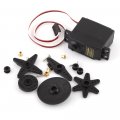
This is the type of servo I am using

s3003-standard-servo-for-rc-futaba-car-boat.jpg

The red wire is DC positive to power the motor, (Brushed motor)
the black wire is the DC negative
and the white wire is the signal wire( sending pwm/ppm code to the chip in the servo to tell it which way to turn)
the wires are between 26-20 gauge wires, up to 18ga for the high torque high speed servos. servos at idle run about 100mah each, at full load up to 2amps per hour, using 4.8-6v

Concerning the interference I agree and have purchased saw low pass filters on the antennas for the 1.2ghz and for the 433. to help remove the third, 6th, 9th, harmonics to help prevent interference with the 1.2ghz system.

Concerning the twisted shielded pair of wires, (I assume in this case you mean foil shielded,) foil shielded will work well for low frequencies like the stuff in the hertz and megahertz, but when you get to the higher frequencies in the in the ghz you need to use braided shielded wires.

so since I need to protect the gear from everything from 72, 75, 433 spectrum, 1.2, 2.4 and possibly 5.8ghz it needs to be a foil and braid wire.


Warning, this is only a partial answer in a general sort of way.
QUOTE]
 

Thread Starter

born2dive00

Joined Oct 24, 2016
285
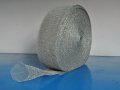
Because I can not use a metal box to encase the components, would something like this work??

17_7-tinned-copper-braided-sleeving_1.jpg

I was thinking of just sliding the components, inside this copper mesh, then attach the shielding wire to the mesh, running the shielded wires to the connections inside. This would allow air to move over the components, and should still supply the "metal box/ faraday cage" wouldn't it

What do you think
 

#12

Joined Nov 30, 2010
18,224
A flexible Faraday cage? Somewhere on the continuum between a shielded cable and the front window on a microwave oven. Yes, I think that mesh would be rather good for this job. I seem to remember something about electric fields vs magnetic fields, and one of them doesn't work this way. Please await answers from people who know this better than I do...or experiment a bit.
 

Kermit2

Joined Feb 5, 2010
4,162
The braided mesh shielding will work just fine.

It's the magnetic flux that would not be blocked. Electric fields would hit a wall. :)
 

Thread Starter

born2dive00

Joined Oct 24, 2016
285
The braided mesh shielding will work just fine.
A flexible Faraday cage?


Hello Guys

Ok so this is what I was thinking.

If I understand this correctly, the size of the holes in the faraday cage dictate what frequency will be blocked. On this system I would need to block frequencies of 35mhz up to 5.8ghz from getting to the avionics and interfering with the signals EXCEPT for the frequencies I am using.

If I understand this correctly 5.8ghz has a wave length of 51.7241mm, the recommendation is to have holes in the cage of a minimum 1/10 of the wave length. So if I did the math correctly 51.7241/10 = 5.17241mm, so the holes should be a minimum of 5.17241mm apart.

The designers say that ideally for the best protection it should be1/20th of the wave length 5.17241/20 or 2.58mm apart.

So this brings me to my next thought of using copper window screen, the holes are .8mm apart or 1/64th the wave length of 5.8ghz. Or said another way, it would protect the avionics up to 18ghz.

Question 1. I understand that the screen would protect against Radio frequencies up to 18ghz, BUT Would using a copper screen with .8mm holes protect against Electro magnetic interference?

My thought of how to do this, I was thinking of using a piece of non conductive foam tape on the ends of the equipment, the screen would rest on top of the foam tape. (to allow the air cushion, keeping the electronics from touching the sides. Then take the copper screen and make a box soldering the ends together, and sliding the electronic inside.

I would then take the existing 3 wires (signal, power + power -)to each servo, cameras…. and replace them with 3 shielded wires. I would take the center of the wire and connect them to their correct pins, then peel back the shielding and solder the shielding on to the copper screen.

I would then take a piece grounding strap and run it from the negative lead of the battery to each of the copper screens holding the avionics pieces. (transmitter, receiver, auto pilot, battery) soldering the grounding strap to the screens

The side of the shielded wire that connects to the servos, camera, retracts,….. I would take the center wire and connect them to their correct pin, running the shielding up to (butting up against the plugs but not connected to anything) the plugs.

Would this work????

To remove internal noise I was planning on using .1uf capacitors connected right up against the servos, cameras, transmitters, receivers….. soldering it from the + of the lead to the – of the leads.

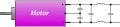
Concerning the motors brushless motors from what I understand do not put out much rf interference as much as EMI. I was planning on using 3 capacitors and 2 toroidal coils, ferrite rings, on each of the motors like this (insert picture here)


figure4.jpg


For the battery leads I was going to use rg 213 coaxial cable, it has a center wire of 12 gauge or CA400 coax which has a inner core of 10gauge, both are shielded wire.

To eliminate amp noise to the system from the battery, I was going to take this coax and run it 4-8 times thru a ferrite ring, BUT I don’t know if that will work to eliminate amp spikes because it is shielded.

I know running a standard wire thru a ferrite ring helps eliminate noise caused by amperage spikes, but where should I put this? Near the battery, and does it work if the wire is shielded?

The AV transmitter is 2 meters from the center fuselage, out on the wing. The 433mhz receiver is 2m out on the other wing. The GPS sits right over the center of gravity on the center of the fuselage, the 72mhz antenna runs down the spine of the airframe. The motors are out on each wing 1m from the center of the fuselage, the batteries sit in the nose, the autopilot sits right on the center line of the fuselage and the center of gravity of the wings. LEDs out on wing tips, retracts in the wings, cameras out on the wings, nose, Main camera in a bomb bay attachment.

Please let me know if I missed anything. Coils, rings, filters…

Where should I put the filters, are they needed?
 
Last edited:

Thread Starter

born2dive00

Joined Oct 24, 2016
285
Hello Guys

Ok so this is what I was thinking.

If I understand this correctly, the size of the holes in the faraday cage dictate what frequency will be blocked. On this system I would need to block frequencies of 35mhz up to 5.8ghz from getting to the avionics and interfering with the signals EXCEPT for the frequencies I am using.

If I understand this correctly 5.8ghz has a wave length of 51.7241mm, the recommendation is to have holes in the cage of a minimum 1/10 of the wave length. So if I did the math correctly 51.7241/10 = 5.17241mm, so the holes should be a minimum of 5.17241mm apart.

The designers say that ideally for the best protection it should be1/20th of the wave length 5.17241/20 or 2.58mm apart.

So this brings me to my next thought of using copper window screen, the holes are .8mm apart or 1/64th the wave length of 5.8ghz. Or said another way, it would protect the avionics up to 18ghz.

Question 1. I understand that the screen would protect against Radio frequencies up to 18ghz, BUT Would using a copper screen with .8mm holes protect against Electro magnetic interference?

My thought of how to do this, I was thinking of using a piece of non conductive foam tape on the ends of the equipment, the screen would rest on top of the foam tape. (to allow the air cushion, keeping the electronics from touching the sides. Then take the copper screen and make a box soldering the ends together, and sliding the electronic inside.

I would then take the existing 3 wires (signal, power + power -)to each servo, cameras…. and replace them with 3 shielded wires. I would take the center of the wire and connect them to their correct pins, then peel back the shielding and solder the shielding on to the copper screen.

I would then take a piece grounding strap and run it from the negative lead of the battery to each of the copper screens holding the avionics pieces. (transmitter, receiver, auto pilot, battery) soldering the grounding strap to the screens

The side of the shielded wire that connects to the servos, camera, retracts,….. I would take the center wire and connect them to their correct pin, running the shielding up to (butting up against the plugs but not connected to anything) the plugs.

Would this work????

To remove internal noise I was planning on using .1uf capacitors connected right up against the servos, cameras, transmitters, receivers….. soldering it from the + of the lead to the – of the leads.

Concerning the motors brushless motors from what I understand do not put out much rf interference as much as EMI. I was planning on using 3 capacitors and 2 toroidal coils, ferrite rings, on each of the motors like this (insert picture here)


For the battery leads I was going to use rg 213 coaxial cable, it has a center wire of 12 gauge or CA400 coax which has a inner core of 10gauge, both are shielded wire.

To eliminate amp noise to the system from the battery, I was going to take this coax and run it 4-8 times thru a ferrite ring, BUT I don’t know if that will work to eliminate amp spikes because it is shielded.

I know running a standard wire thru a ferrite ring helps eliminate noise caused by amperage spikes, but where should I put this? Near the battery, and does it work if the wire is shielded?

The AV transmitter is 2 meters from the center fuselage, out on the wing. The 433mhz receiver is 2m out on the other wing. The GPS sits right over the center of gravity on the center of the fuselage, the 72mhz antenna runs down the spine of the airframe. The motors are out on each wing 1m from the center of the fuselage, the batteries sit in the nose, the autopilot sits right on the center line of the fuselage and the center of gravity of the wings. LEDs out on wing tips, retracts in the wings, cameras out on the wings, nose, Main camera in a bomb bay attachment.

Please let me know if I missed anything. Coils, rings, filters…

Where should I put the filters, are they needed?
 
Top