Usually, when a load is connect to a PSU, the voltage goes down, not up.
Since this is a switched mode power supply, SMPS, anything can happen.
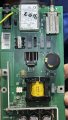
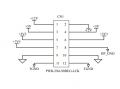
We need to go back and look at the voltages coming from the PSU board.
Now that I think about it, here is my synopsis as to what happened.
I said chip capacitors don't usually fail.
The PSU is outputting ±20V. The chip capacitor got 40V across it and failed short circuited.
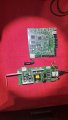
Remove the PSU.
You will have to trouble shoot the PSU separately with dummy loads.
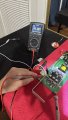
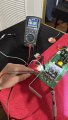
How did the chip cap get 40V? I measured voltage into Audio IO and max was 19v after I connected the monitor PCB.
Without the monitor PCB the voltage into audio io is 15v.
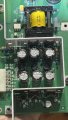
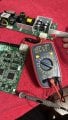
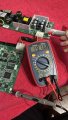
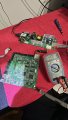
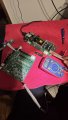
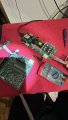
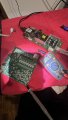
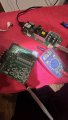
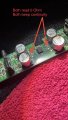
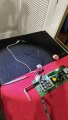
I did one more test. I tested all the monitor PCB components for continuity and found both of these SMD caps reading 0 Ohm, and beep when tested for continuity.
You cannot meter components in-circuit if you don't know what else is connected to said components.
The only correct way is to remove the component from the circuit and then measure while out of circuit.
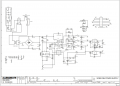
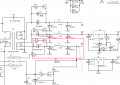
PSU schematics indicate +12V and -12V as nominal voltages. They must have a reason for specifying these values and not +15V and -15V.
There is no voltage regulation on the +12V and -12V supply rails except via the +5V rail.
You need to load the +5V rail with external dummy loads and see how the +12V and -12V rails respond.
Possible suspects are U2 TL431CD, U5 4N35, U4 TOP-246-Y.

 Facebook
 Google
 GitHub
 Linkedin

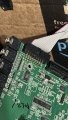 2.2 MB Views: 8
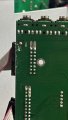 1.5 MB Views: 9
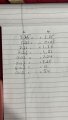 1.9 MB Views: 7