Facebook
 Google
 GitHub
 Linkedin

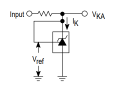
In general, you want to have a stable reference voltage over time and temperature if you're measuring a wheatstone bridge. A resistor divider will drift a lot with time and temperature.@BobTPH I actually tried the voltage divider way earlier, and it works. In fact I tried a higher reference also, that works too (only the baseline Vout shifts to a higher voltage, which is not a problem in my application). The max current drawn by the sensor is 100uA. I was just curious that if getting a reference is as easy as a voltage divider, why do things like the ICs mentioned above by other contributors exist? Do they have some added benefit which I don't know? (There's actually a lot I don't know, I'm Jon Snow after all). Should I expect any problems with the voltage divider way or the higher reference way if ambient temperature changes between summers and winters (change of maybe 30 degrees Celsius)? Or some other hidden pitfalls?
View attachment 301462
Things you have to ask yourself when determining your reference voltage.
- What is the reference voltage of my ADC?
- What is half the reference voltage of my ADC?
- How much gain does my Amplifier Circuit need to get the best signal to noise ratio?
- What is the maximum deflection I expect on the bridge.
- Is a gain of 10 in the amplifier adequate?
This assumes that your 'Amplifier Circuit Unit' is a single device and not discrete resistors - because then you'll have the same problem with those resistors. Note also that the values of R1, R2, and R3 will change with temperature too (as will the bridge resistors itself!). Something else you might need to account for as you learn more.
Getting the circuit to 'basically' work is a lot different than getting it working in a safety critical application. A good analog engineer might take a few weeks to design this circuit for safety critical application going over hundreds of spec sheets and optimizing each little neuance of the circuit.
All that to say - what are your specs?
I'm a fan of building things and learning what the specs need to be at a rapid rate too. Just build it and see if works for you. I'm not seeing any obvious design flaws in the circuit.