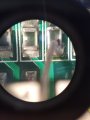
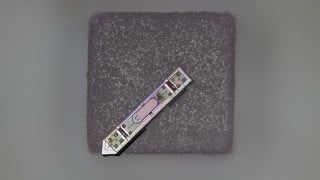
If there's a specific detail you're looking for I can try to take another photo (you did click the thumbnail for the full-size right?). There are 2 1/2 well-focused examples in the image, and you can tell by the 0.6mm solder that they're about 1.2 mm wide...doesn't exactly follow the rule of thirds for good composure but I wouldn't think there's more to be gleaned from a slightly larger photo or a little more magnification. Im a little handicapped without access to a digital scope. The best I can do is try to get my camera phone in the sweet spot of the eyepiece.Probably a precision trimmed resistor - just a guess, given the poor quality of your photo.
Well, the quality of the photo isn't terribly bad, but the composition of the photo was pretty bad. The photo has no context with the rest of the circuitry. The scale of the parts isn't discernable, since the piece of solder is mostly out-of-focus.If there's a specific detail you're looking for I can try to take another photo (you did click the thumbnail for the full-size right?). There are 2 1/2 well-focused examples in the image, and you can tell by the 0.6mm solder that they're about 1.2 mm wide...doesn't exactly follow the rule of thirds for good composure but I wouldn't think there's more to be gleaned from a slightly larger photo or a little more magnification. Im a little handicapped without access to a digital scope. The best I can do is try to get my camera phone in the sweet spot of the eyepiece.
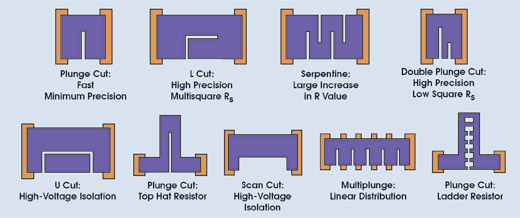
Who's Robert? And when did high voltage enter into this discussion? As I suggested, they are a precision, trimmed SMT resistors.These appear to me to be clearly surface mount resistors trimmed as Robert suggested for high voltage isolation.

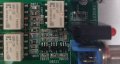
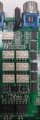
Thus the reason for the need for precision resistors.You're looking at the better part of the circuitry for one channel of a 4 channel potentiostat used for electrochemistry...