Facebook
 Google
 GitHub
 Linkedin

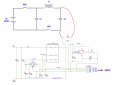
the question is the susceptibility of loosing stability on "overdrive" of the particular amplifierTo address your first comment in post 32, how do I connect the cap being measured to the op amp, in particular the negative side?
. . .
https://www.eevblog.com/forum/projects/opamps-die-pictures/msg6126579/#msg6126579
i don't remember using cmos deavices in practice . . . so i'm as clueless as you in this
however the protection clamps may have signifficant capacitance that may provide some low pass ~ but tieing positive (non-inverting) input to ground capacitively - may cause instability
on the other hand - i rarely use CMOS coz thay need strong drive (which may be benefit at your case)
https://ww1.microchip.com/downloads...1U-2-4-1-MHz-Low-Power-Op-Amp-DS20001733L.pdf ←←the Fig.4-2 looks not suitable at non de-coupled connection . . .
. . . in one word ► you must know your Op Amp responce at various situations - to be able to make right decisions ~ on how to set it up for the given "environment" . . . (? a switched inductor ? . . . . . . and then it goes to ADC of MCU ← about sensor responce speed vs sampling rate versus analog input is valid ??? estimation of ←←← all this is a tough nut to crack through !!!)
you must - in advance - test the op amp for the best responce configuration
more :
considering only the potential input over- current/-voltage -- the https://www.ti.com/lit/ds/symlink/opa2206.pdf#page=14 --or-- https://www.analog.com/media/en/tec...ta-sheets/ada4177-1_4177-2_4177-4.pdf#page=17 . . . would be more justified ?
but you have 30V test circuit to be interfaced to 5V sensor one ←← which redefines the entire concept =
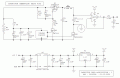
= a wild guess :: you have to extract your data with least interference ← suggests a j-Fet ?? driven into fixed voltage step above the input signal level ← that gives you an isolation ~ then translate it to MCU reference space ???
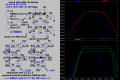
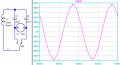
the circuit still sinks current from input up to 72uA at 30v
it sinks about 1uA from 3 to 11V input (optimal range)
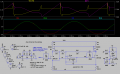
it's likely possible to drive the sources of the j-Fets abit above the input voltage (the 1 being measured)
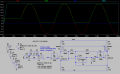

▀ ▼ ▀ is what i aimed -- the output range is limitted by the output range of the Op Amp and the DC offset for fet
Last edited: