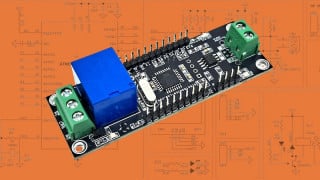
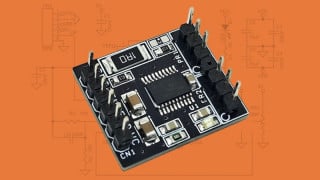
I expect it to give me much more control over the magnetic field. After that I expect to have a field day playing with it.... how is there not a incredibly easy layout with a chip. 9 volts in. 3ghz out. I can step the voltage up if I want with coils. But I need to start with the wave being the right size. Build from there.
Ok...hold on. A couple of problems. First, do you have a large garage or workshop? Hobbyist don't play with 5 GHz. They might play with modules, but not circuits. Not yet.
And when you explain what you are doing.....you'll be called nuts.
Everything that I have read or studied and all my experience tells me you're gonna be disappointed. But please keep going. This is exactly the kind of stuff we need to do.
But for you to do so.....you need to lower those frequencies. That means larger turns(circumference).
One haft wavelength at 30 MHz is 5 meters.
And you need equipment.
Are you expecting anything special from this spacial rotational symmetry?
Ok...hold on. A couple of problems. First, do you have a large garage or workshop? Hobbyist don't play with 5 GHz. They might play with modules, but not circuits. Not yet.
And when you explain what you are doing.....you'll be called nuts.
Everything that I have read or studied and all my experience tells me you're gonna be disappointed. But please keep going. This is exactly the kind of stuff we need to do.
But for you to do so.....you need to lower those frequencies. That means larger turns(circumference).
One haft wavelength at 30 MHz is 5 meters.
And you need equipment.
Are you expecting anything special from this spacial rotational symmetry?
It’s nothing crazy with high voltage. Just need a tone generator with enough wattage to buzz a speaker. And I need it above 1ghz. There’s got to be a way to build one that has that output. The 555 chip is clocked at 300mhz I think I read. We really can’t do 1.5 ghz pretty easily?
Electricity is 300,000,000 meters per second. So 300 million divided by 2.4 billion is how many meters? .12. 12 centimeters. 12 centimeters is 4.7 inches. Divided by pi gives me my radius.
Almost. The speed of light (not electricity) is 3 x 10^8 meters/second, and the wavelength of a 2 .4 GHz. RF signal is yes 0.125 meters which also happens to be 4.92 inches. You got me on that one. What makes you think that the wavelength of a signal has anything to do with the dimensions of a coil it might be going through. What are you going to use to "see" anything? Here is where things get expensive. The piece of equipment you need is called a vector network analyzer or VNA. It will allow you to see if a coil with a diameter or radius of 1.56 = 4.92/pi inches is actually a lumped inductor, or a capacitor, or some combination of the two at that frequency. Why is this happening? Because the turns of the coil have a good deal of capacitative reactance between the windings which is very noticeable at that frequency.
If I had to guess your coil will look pretty much like a low pass filter/attenuator to a 2.4 GHz. signal.
One other note: A 555 cannot produce anything like a sinewave.
One last suggestion is to use a simulator, like LTSpice, to simulate what you are trying to do. I promise it will be orders of magnitude cheaper.
Thanks bob. But I think your analogy is missing something. Technology. A proper one would be “hey guys I’m trying to build a go kart that does 100 mph” land speed record is 800 mph. Production cars are going 200. I should be able to build a go kart that does 100. If that were my question a mechanic might say “ put a 500 cc street bike engine in it”.
Again we broke 1 ghz on a chip 20 years ago. 20 years later I can’t get a chip that does 1.5?
Almost. The speed of light (not electricity) is 3 x 10^8 meters/second, and the wavelength of a 2 .4 GHz. RF signal is yes 0.125 meters which also happens to be 4.92 inches. You got me on that one. What makes you think that the wavelength of a signal has anything to do with the dimensions of a coil it might be going through. What are you going to use to "see" anything? Here is where things get expensive. The piece of equipment you need is called a vector network analyzer or VNA. It will allow you to see if a coil with a diameter or radius of 1.56 = 4.92/pi inches is actually a lumped inductor, or a capacitor, or some combination of the two at that frequency. Why is this happening? Because the turns of the coil have a good deal of capacitance between the windings which is very noticeable at that frequency.
One other note: A 555 cannot produce anything like a sinewave.[/QUOTE
Tell me what I need to do to build a tone generator above 1.2 ghz and below 4ghz and I’ll show you. I see transistors etc showing above 1ghz. But they don’t carry just crystal oscillators. So here I am saying I want to put 6 volts thru a 1.5 MHz crystal. I don’t have the small electronics knowledge so I was hoping someone here would be able to show me something or tell me what chip/capacitors I can switch on that toner package to get my output above 1 ghz
No worries. I’ll go ask somewhere else. We’re having a lack of communication. I’m asking for something different than normal. I want to put over a ghz to a circuit. I would like 10-40 watts. For some reason I thought that would be simple. I don’t want to do 1000 things at 64 bits. I just want the one frequency on a board to hook stuff up to it.
You're right. But the chips have changed thru the decades........a GHz oscillator is cheap and stable. At the output pin on chip. That's not the problem. The problem is containing the signal after the chip output pin.
Those frequencies interact with all the physical structures in the area. It takes special construction technics to contain and control the signal without loss and parasitic loads. It takes experience and skill. It's requires fine work.
Even with great design and construction care, these high frequency circuits can give surprising results.
You're right. But the chips have changed thru the decades........a GHz oscillator is cheap and stable. At the output pin on chip. That's not the problem. The problem is containing the signal after the chip output pin.
Those frequencies interact with all the physical structures in the area. It takes special construction technics to contain and control the signal without loss and parasitic loads. It takes experience and skill. It's requires fine work.
Even with great design and construction care, these high frequency circuits can give surprising results.
Ok. So I’ve got a frys by me. It sells nte parts. With that and the tone kit I’ve already supplied is there a somewhat simple setup that will give me that frequency so that I can hook it up and worry about what happens after the pins? None of the stuffs listed as oscillator at the store. Is there just a icb I can replace the 555 with?

 Facebook
 Google
 GitHub
 Linkedin