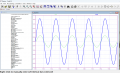
LTSPice simulation doesn't like the real circuit

Thread Starter

zainiii

Joined Jul 26, 2024
39
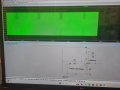
I built the function generator circuit on a breadboard. I applied a signal with an amplitude of 1.06Vpp and a frequency of 5MHz using the DDS 9851 and then sent it to the operational amplifier, AD 8001. After amplification, the signal increased to 4Vpp while maintaining the same 5MHz frequency. However, some distortion appeared in the signal after amplification. To address this, I connected a ferrite bead with a rating of 1kΩ in series with the signal. After using the ferrite bead, the signal became much cleaner with very little noise. This allowed me to remove the large laboratory function generator and apply the amplified signal directly to my sensor.

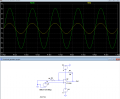
This is my first experience working with LTSpice software. I recreated the same circuit in LTSpice, using the same resistor values and one simulation with more resistors value. However, in the simulation, the signal amplitude did not increase as it did in my real circuit. The signal did not amplify after using the same operational amplifier in LTSpice. Do you think LTSpice should amplify the signal as much as the real circuit does when using a single operational amplifier?

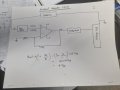
I have drawn a picture of my real circuit, which I will show to you along with the LTSpice circuit and its results. Additionally, I will show you the signal results that I measured with an oscilloscope. Could anyone please share your experience and tell me whether this significant difference in signal amplitude between the real circuit and the LTSpice simulation is common when using simulation software? Or could this discrepancy be due to a mistake on my part, given that there are differences between reality and software simulations? I f there is some mistake on my side, can someone highlight my mistake please
 

Attachments

crutschow

Joined Mar 14, 2008
38,321
I don't have the AD8001 model, and am unable to download it because of an administrator lockout, but using a similar current-mode op amp, it gave the expected gain:

1724177132437.png
 

Papabravo

Joined Feb 24, 2006
22,058
I built the function generator circuit on a breadboard. I applied a signal with an amplitude of 1.06Vpp and a frequency of 5MHz using the DDS 9851 and then sent it to the operational amplifier, AD 8001. After amplification, the signal increased to 4Vpp while maintaining the same 5MHz frequency. However, some distortion appeared in the signal after amplification. To address this, I connected a ferrite bead with a rating of 1kΩ in series with the signal. After using the ferrite bead, the signal became much cleaner with very little noise. This allowed me to remove the large laboratory function generator and apply the amplified signal directly to my sensor.

This is my first experience working with LTSpice software. I recreated the same circuit in LTSpice, using the same resistor values and one simulation with more resistors value. However, in the simulation, the signal amplitude did not increase as it did in my real circuit. The signal did not amplify after using the same operational amplifier in LTSpice. Do you think LTSpice should amplify the signal as much as the real circuit does when using a single operational amplifier?

I have drawn a picture of my real circuit, which I will show to you along with the LTSpice circuit and its results. Additionally, I will show you the signal results that I measured with an oscilloscope. Could anyone please share your experience and tell me whether this significant difference in signal amplitude between the real circuit and the LTSpice simulation is common when using simulation software? Or could this discrepancy be due to a mistake on my part, given that there are differences between reality and software simulations? I f there is some mistake on my side, can someone highlight my mistake please
Did you try zooming in on that very fast waveform. It kind of looks like it is beating up and down like you might expect. In addition, LTspice is using idealized components, so I would not expect you to be able to precisely duplicate an actual circuit. The purpose of simulation is understanding. It is manifestly not design verification. I might relax this attitude a bit for digital circuits.
 

MrAl

Joined Jun 17, 2014
13,667
I built the function generator circuit on a breadboard. I applied a signal with an amplitude of 1.06Vpp and a frequency of 5MHz using the DDS 9851 and then sent it to the operational amplifier, AD 8001. After amplification, the signal increased to 4Vpp while maintaining the same 5MHz frequency. However, some distortion appeared in the signal after amplification. To address this, I connected a ferrite bead with a rating of 1kΩ in series with the signal. After using the ferrite bead, the signal became much cleaner with very little noise. This allowed me to remove the large laboratory function generator and apply the amplified signal directly to my sensor.

This is my first experience working with LTSpice software. I recreated the same circuit in LTSpice, using the same resistor values and one simulation with more resistors value. However, in the simulation, the signal amplitude did not increase as it did in my real circuit. The signal did not amplify after using the same operational amplifier in LTSpice. Do you think LTSpice should amplify the signal as much as the real circuit does when using a single operational amplifier?

I have drawn a picture of my real circuit, which I will show to you along with the LTSpice circuit and its results. Additionally, I will show you the signal results that I measured with an oscilloscope. Could anyone please share your experience and tell me whether this significant difference in signal amplitude between the real circuit and the LTSpice simulation is common when using simulation software? Or could this discrepancy be due to a mistake on my part, given that there are differences between reality and software simulations? I f there is some mistake on my side, can someone highlight my mistake please
Hi,

The values for the resistors you are using with the AD8001 look a little higher than usual for a current feedback amplifier that could be part of why you are seeing some unusual artifacts in the output. These op amps are kind of old now, but nonetheless they are very fast. It's been a long while since I used one of those op amps though. I had purchased several in the early 1990's for use for the front end of a digital oscilloscope so I'm going by memory mostly.
 

Thread Starter

zainiii

Joined Jul 26, 2024
39
I don't have the AD8001 model, and am unable to download it because of an administrator lockout, but using a similar current-mode op amp, it gave the expected gain:

View attachment 329660
Dear Sir
Thanks for the reply.
First i make the symbol of AD 8001 using You tube video and then make the circuit and i successfully made the circuit and my simulation results are correct, thanks for your guidance and time, highly appreciated
 

Thread Starter

zainiii

Joined Jul 26, 2024
39
Hi,

The values for the resistors you are using with the AD8001 look a little higher than usual for a current feedback amplifier that could be part of why you are seeing some unusual artifacts in the output. These op amps are kind of old now, but nonetheless they are very fast. It's been a long while since I used one of those op amps though. I had purchased several in the early 1990's for use for the front end of a digital oscilloscope so I'm going by memory mostly.
They are old but it fulfill my need ,there is one limitation, that i used PDIP package which reduce most of the best opm for me, its bandwidth and slew rate is very high that's why i selected, if your recommend me some better Opm having PDIP package and suitable for my signal ( 5MHz with 1.06 Vpp), i would be highly appreciated
 

MrAl

Joined Jun 17, 2014
13,667
They are old but it fulfill my need ,there is one limitation, that i used PDIP package which reduce most of the best opm for me, its bandwidth and slew rate is very high that's why i selected, if your recommend me some better Opm having PDIP package and suitable for my signal ( 5MHz with 1.06 Vpp), i would be highly appreciated
Hi,

Oh I did not mean you could not use them, just wondered if the resistor values being used were too high in value. If you could lower them you may see a better operation, that's all.
 

Thread Starter

zainiii

Joined Jul 26, 2024
39
Hi,

Oh I did not mean you could not use them, just wondered if the resistor values being used were too high in value. If you could lower them you may see a better operation, that's all.
Dear Sir
Thanks alot for the reply.
I will use the lower R value for the feedback resistor, the reason to use the higher R value (K range) was that, it was said when i research that R value should be in K range because higher R value gives the stable result, moreover, k range gives Good balance between noise, speed, and power consumption for that reason i used the R value in K range, the result also mentioned smaller R value will give the higher current flow, consequently leading to significant power dissipation (P = I2RI^2RI2R).
I will do the experiment with smaller R value as per data sheet said
 

MrAl

Joined Jun 17, 2014
13,667
Dear Sir
Thanks alot for the reply.
I will use the lower R value for the feedback resistor, the reason to use the higher R value (K range) was that, it was said when i research that R value should be in K range because higher R value gives the stable result, moreover, k range gives Good balance between noise, speed, and power consumption for that reason i used the R value in K range, the result also mentioned smaller R value will give the higher current flow, consequently leading to significant power dissipation (P = I2RI^2RI2R).
I will do the experiment with smaller R value as per data sheet said
Hi,

Oh yes that's right, the smaller values are also mentioned on the data sheet. You might get away with the higher values though I just thought that if you had too much noise the lower values might help with that. If the power dissipation is a problem then maybe that's not a good idea.
If the power dissipation is a problem maybe there is a better op amp to use. This one is rather old and so probably not as good at conserving energy like a new one probably can do. Take a look on the Texas Instruments site they have a list of a lot of op amps. If you are going into some sort of production with this I would definitely not hesitate to do that first.
 

Bordodynov

Joined May 20, 2015
3,430
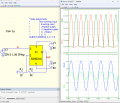
Here I took the netlist from Qspice and did the calculation in LTspice.
I was too lazy to add the model to LTspice. In Qspice it is quick and easy.
ad8001LT.png
 
Last edited:
Top