Low pass pi filter problem - check my work?

Thread Starter

Calabi-Yau

Joined Aug 27, 2024
3
Hello everyone. I have a problem regarding low pass pi filters. For context, I am a physics student and this is way, and I mean WAY outside of my purview. So much so, that I can't find this circuit, or anything like it in my textbooks. After some gruesome research, I found some formulas which I honestly can't explain, I have no idea where they come from, or if they are correct. My solution uses transfer functions which we haven't covered, but I truly can't think of anything else which accounts for voltage amplitudes.
So, the setup is the following:
Amplitude of U_out is 10 times smaller than the amplitude of U_in. [Sorry if that's not correct in the electronic lingo, English is not my first language]. If the capacitance is 10 micro-Farad, and the frequency is 100 Hz, find the inductance L.
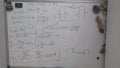
In the picture below is my work, I would be grateful if someone could check it for me.
As you can see, I got ~L=2.5H, which seems a bit high, given that in the lab, we've only worked with mili, or even micro Henries. Also, this doesn't account for 2 capacitors, instead only using one of them, instead of parallel connection or something. I really don't know.
 

Attachments

Thread Starter

Calabi-Yau

Joined Aug 27, 2024
3
Yes, it seems fine. Below I attach a pdf showing the analysis and simulation of this pi circuit
Wow!
That is very kind of you to go through all that trouble. Thank you very much. I will analyze your solution and try to break it down. Much appreciated! While I wasn't sure my answer would be correct, this has given it much more credibility.
 

Ian0

Joined Aug 7, 2020
13,097
There is a bit of a snag. . .
The SPICE voltage source has zero output impedance. Putting a capacitor directly across it has no effect.
If you remove C1 from the SPICE simulation it will make no difference. You have actually designed a 2nd order LC filter.
 

Thread Starter

Calabi-Yau

Joined Aug 27, 2024
3
There is a bit of a snag. . .
The SPICE voltage source has zero output impedance. Putting a capacitor directly across it has no effect.
If you remove C1 from the SPICE simulation it will make no difference. You have actually designed a 2nd order LC filter.
I am not sure if you are talking to me; however, I have no clue what SPICE is, or the effect of one of the capacitors on the circuit. Could you explain a bit further please? Is there something wrong with my, or Rodrigo's equations?
 

Ian0

Joined Aug 7, 2020
13,097
I am not sure if you are talking to me; however, I have no clue what SPICE is, or the effect of one of the capacitors on the circuit. Could you explain a bit further please? Is there something wrong with my, or Rodrigo's equations?
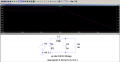
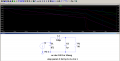
Figures 3 and 4 are screenshots of the SPICE output.
You have a capacitor that is directly in parallel with a Thévenin source which has zero output impedance.
If you delete the capacitor it will have no effect whatseover on the outcome.
So your equations actually describe a 2nd order L section filter.
 

Ylli

Joined Nov 13, 2015
1,092
If your C's are predefined, with a known knee frequency, you will need to know the input and output impedance to find L.
 

MrAl

Joined Jun 17, 2014
13,667
There is a bit of a snag. . .
The SPICE voltage source has zero output impedance. Putting a capacitor directly across it has no effect.
If you remove C1 from the SPICE simulation it will make no difference. You have actually designed a 2nd order LC filter.
Hi,

It would however change the input impedance of the network, which can have various effects, and suggests that this circuit problem is not defined properly for a number of reasons I will try to make clear in my next post.
 

MrAl

Joined Jun 17, 2014
13,667
Hello everyone. I have a problem regarding low pass pi filters. For context, I am a physics student and this is way, and I mean WAY outside of my purview. So much so, that I can't find this circuit, or anything like it in my textbooks. After some gruesome research, I found some formulas which I honestly can't explain, I have no idea where they come from, or if they are correct. My solution uses transfer functions which we haven't covered, but I truly can't think of anything else which accounts for voltage amplitudes.
So, the setup is the following:
Amplitude of U_out is 10 times smaller than the amplitude of U_in. [Sorry if that's not correct in the electronic lingo, English is not my first language]. If the capacitance is 10 micro-Farad, and the frequency is 100 Hz, find the inductance L.
In the picture below is my work, I would be grateful if someone could check it for me.
As you can see, I got ~L=2.5H, which seems a bit high, given that in the lab, we've only worked with mili, or even micro Henries. Also, this doesn't account for 2 capacitors, instead only using one of them, instead of parallel connection or something. I really don't know.
Hello,

It looks like this problem is not defined properly for a number of reasons.

First, a Pi network is not used with an input voltage source alone that has zero output impedance. A Pi network is usually inserted between two other networks where the first network has a given output impedance and the second network has a given input impedance. Typical values might be 50 Ohms for each of the two impedances, but they could be different with the Pi network being used to help match impedances. There is an exception for a power circuit, but you'd have to have been given more information for that also for that to be true.

Second, there is probably no solution to this problem without those impedances above. One reason for this is because a pure LC circuit (which this would be with an ideal input source) would have its own resonant frequency and that would add that frequency to the input frequency, which of course would result in a non-pure sinusoidal output. This would give some pretty strange results on the output. With resistors similar to the above though, we could get a sinusoidal output. What this means is that there is probably no inductor value that will work as expected. If we guessed the range to be 0.5H to 3H, none of those would work with the circuit as is.

The only thing I can think of at this point is you would have to go back to the source of this problem and find out what is missing. It's most likely that there is a given input and output impedance requirement to match up with the other two networks. They may be as simple as one resistor each, and of course the ideal input source. An example would be a 50 Ohm resistor in series with the input and a 50 Ohm resistor in parallel with the output capacitor.

It's unfortunate that in some books we can find problems like this. They expect a 'regular' type of calculation and yields a certain value, and the assumption is that the circuit works with that calculation even though it does not. If you do not use the calculation you could get the answer wrong, and that's unfortunate because the answer they have given would be wrong. If you get the calculation right, you would get the answer right, even though the answer was wrong all along.
When this happens, you have to do an independent analysis or else go back to the very first occurrence of the problem in some literature and see if something was left out.
 
Last edited:

Ian0

Joined Aug 7, 2020
13,097
Hi,

It would however change the input impedance of the network, which can have various effects, and suggests that this circuit problem is not defined properly for a number of reasons I will try to make clear in my next post.
How so? A dead short is still a dead short with a capacitor in parallel with it!
 

Ian0

Joined Aug 7, 2020
13,097
One reason for this is because a pure LC circuit (which this would be with an ideal input source) would have its own resonant frequency and that would add that frequency to the input frequency, which of course would result in a non-pure sinusoidal output.
How so? There are no non-linear elements in the circuit.
 

MrAl

Joined Jun 17, 2014
13,667
How so? A dead short is still a dead short with a capacitor in parallel with it!
Well let me see if I can explain this in a more clear way.

For one, if you are right, then why the capacitor on the front end? That would make no sense, so the question would be kind of unusual. In this view, why would anyone use a Pi network when the extra front-end capacitor does nothing.
Also, it's not a dead short it's an AC voltage source. An AC voltage source is a little different than a dead short. It has amplitude, phase, and can output a current that does not have to be in phase with the voltage, nor even linear for that matter.

I think more to the point however, is that if you disconnect the source and measure the input impedance to the Pi network, it's going to change with no capacitor on the front end. That means although the voltage levels will not change at the input, the CURRENT levels will. That would be a possibility for example in a power factor correction circuit, and we've seen this kind of application recently in another thread.
 

MrAl

Joined Jun 17, 2014
13,667
How so? There are no non-linear elements in the circuit.
Hello again,

There are ideal components in the circuit, and ideal inductor and an ideal capacitor. These two together have a resonant frequency all by themselves as I am sure you know: w=1/sqrt(L*C).
Once we get energy into the circuit these two are going to be exchanging energy back and forth and back and forth, and the only thing that can stop that is some energy eating component like a resistor(s). We have two cases I think: one where the input frequency is the same as the resonate frequency, and one where the input frequency is not the same as the resonate frequency. In the first case we won't be adding any additional frequencies, but we also will not be able to attenuate the input signal. In the second case, we may still not be able to get any attenuation (no resistances yet) but also we will probably introduce a new frequency due to the natural resonate frequency.
 

Ian0

Joined Aug 7, 2020
13,097
Well let me see if I can explain this in a more clear way.

For one, if you are right, then why the capacitor on the front end?
Because a π-section filter is intended to be used with a Norton source not a Thévenin.

A SPICE AC voltage source has zero output impedance. It is therefore equivalent to a dead short for an AC signal going towards it.
 

Ian0

Joined Aug 7, 2020
13,097
Hello again,

There are ideal components in the circuit, and ideal inductor and an ideal capacitor. These two together have a resonant frequency all by themselves as I am sure you know: w=1/sqrt(L*C).
Once we get energy into the circuit these two are going to be exchanging energy back and forth and back and forth, and the only thing that can stop that is some energy eating component like a resistor(s). We have two cases I think: one where the input frequency is the same as the resonate frequency, and one where the input frequency is not the same as the resonate frequency. In the first case we won't be adding any additional frequencies, but we also will not be able to attenuate the input signal. In the second case, we may still not be able to get any attenuation (no resistances yet) but also we will probably introduce a new frequency due to the natural resonate frequency.
If there are no non-linear components there is nothing that could produce this new frequency.
 

Ian0

Joined Aug 7, 2020
13,097
Well let me see if I can explain this in a more clear way.

For one, if you are right, then why the capacitor on the front end? That would make no sense, so the question would be kind of unusual. In this view, why would anyone use a Pi network when the extra front-end capacitor does nothing.
Also, it's not a dead short it's an AC voltage source. An AC voltage source is a little different than a dead short. It has amplitude, phase, and can output a current that does not have to be in phase with the voltage, nor even linear for that matter.

I think more to the point however, is that if you disconnect the source and measure the input impedance to the Pi network, it's going to change with no capacitor on the front end. That means although the voltage levels will not change at the input, the CURRENT levels will. That would be a possibility for example in a power factor correction circuit, and we've seen this kind of application recently in another thread.
Here's a SPICE simulation, which varies the input capacitor from 1pF to 1F and you can see that it makes absolutely no difference to the response of the filter. All the response lines are identical. You can see from the plot that it is a 12dB/octave second-order roll-off, not an 18dB/octave 3rd order roll-off.
Screenshot from 2024-08-31 19-40-37.pngScreenshot from 2024-08-31 19-42-48.pngHowever, with a current source, the situation a PI filter is designed for, the input capacitor does change the response.
 

MrAl

Joined Jun 17, 2014
13,667
Here's a SPICE simulation, which varies the input capacitor from 1pF to 1F and you can see that it makes absolutely no difference to the response of the filter. All the response lines are identical. You can see from the plot that it is a 12dB/octave second-order roll-off, not an 18dB/octave 3rd order roll-off.
View attachment 330639View attachment 330640However, with a current source, the situation a PI filter is designed for, the input capacitor does change the response.
Hi,

I am not sure what you are showing here. I know the input cap does not change the voltage response on the output I even said that myself. What it changes is the input impedance to the network which means it will draw a different current from the source. It can be a different level or phase or both.

What I did say was that there is probably no inductor that will satisfy the original problem which was to find an inductor L that allows the voltage on the input to be attenuated by a factor of 1/10 (one-tenth). That means if we put 1v peak AC into the network we want to get 0.1v peak AC on the output. That does not look possible but you could try if you like and post results here.
What does look possible is if we use it like a Pi filter would normally be used, and that is between two other networks (of some type) that have input and output impedances of their own. That would mean the input source would have some output impedance and the output would have some load impedance. For example, the source could have 50 Ohms and the output load 50 Ohms. We should be able to get an attenuation factor of 1/10 then. You can try without that though and that's using the original question statement. See what value of L you can find.

I also said that in power factor correction the input cap may make sense even with a voltage source on the input. That's mainly because the input current will change. If the input current changes, the power factor seen by the source changes.

But anyway, see what value you can find for L using the original problem statement which calls for an attenuation factor of 1/10. So if we had 1v on the input we would see 0.1v on the output, and if 2v on the input then 0.2v on the output, etc. At the moment I do not believe it is possible, but you could try.

One of the reasons I gave for believing the problem was not posed correctly was that there was in fact an input capacitor and that it does not appear to be a circuit that requires that input capacitor. Nobody would present a problem like that unless they were trying to be tricky maybe. Sometimes a circuit problem proliferates over periods of time even when the result is wrong or there are some definite assumptions associated with the circuit that are not written down with the diagram. We actually see this a lot like with heatsinks and power transistors, where there is no mention of the heatsink on the diagram.

It may be worthwhile to revisit the Thevenin theorem. I think it does not hold for power itself only for voltage and current. Haven't tested this idea yet though and at the moment can't remember offhand.
 
Last edited:

Ian0

Joined Aug 7, 2020
13,097
But anyway, see what value you can find for L using the original problem statement which calls for an attenuation factor of 1/10. So if we had 1v on the input we would see 0.1v on the output, and if 2v on the input then 0.2v on the output, etc. At the moment I do not believe it is possible, but you could try.
I can't solve it without knowing the source impedance, which is not specified.
 

Ian0

Joined Aug 7, 2020
13,097
Oh ok, then we agree on that :)

What if you leave out the first capacitor? I see it the same even like that though.
Then it's a second-order L-section filter, not a 3rd order PI-section filter.
At a rough approximation, it would give 20dB of attenuation about an octave and a half above the resonant frequency.
That would give a cutoff frequency of about 35Hz, and so L would be 1/(4π^2f^2C) = 2H
Of course, the load impedance would have an effect as well.
 
Top