Facebook
 Google
 GitHub
 Linkedin
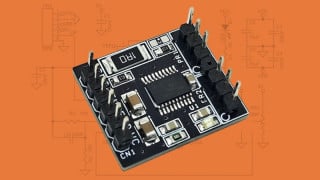
L298N Part:
https://www.amazon.com/TIMESETL-L29...n&qid=1552463514&s=gateway&sr=8-2-spons&psc=1
Explanation:
I have a Raspberry Pi controlling two motors from an L298N board. I want to power both the RPi & L298N from a Solar Panel Array that offers 10v @ 500mA.
When I run both motors I see Amp spikes up to around 600mA. I might be able to get away with that because I run through a buck converter and I suspect it will change volts to amps if needed, assuming good Sunlight. However, I want to limit the motors to only being able to draw a maximum of say 300mA.
After googling all I could figure out was throwing resisters at the problem, but I don't know if that actually limits the number of Amps drawn from the source, or if it just limits the number of Amps the load will receive.
The goal - don't draw so many amps with the motors that it steals needed power from the Pi.
https://www.amazon.com/TIMESETL-L29...n&qid=1552463514&s=gateway&sr=8-2-spons&psc=1
Explanation:
I have a Raspberry Pi controlling two motors from an L298N board. I want to power both the RPi & L298N from a Solar Panel Array that offers 10v @ 500mA.
When I run both motors I see Amp spikes up to around 600mA. I might be able to get away with that because I run through a buck converter and I suspect it will change volts to amps if needed, assuming good Sunlight. However, I want to limit the motors to only being able to draw a maximum of say 300mA.
After googling all I could figure out was throwing resisters at the problem, but I don't know if that actually limits the number of Amps drawn from the source, or if it just limits the number of Amps the load will receive.
The goal - don't draw so many amps with the motors that it steals needed power from the Pi.