Facebook
 Google
 GitHub
 Linkedin
Hello,
I am designing the first prototype of a power distribution and protection board for a four-wheel robot car. Before PCB routing, I would like feedback only on the motor-power architecture shown in the attached schematic sections. I am not asking whether the complete board is ready for fabrication.
Scope under review
The motor-power path is:
Battery input -> main fuse -> master switch -> reverse-polarity MOSFET stage -> VIN_PROTECTED -> motor-domain high-side switch -> VIN_MOTOR_SW -> left/right branch fuses -> two off-board MD220A motor-driver modules -> four MG310 motors
The other power rails, MCU supply, vision module, servo supply and overall PCB layout are outside the scope of this review.
Input boundary
The board will be explicitly limited to:
Motors
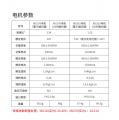
The robot currently uses four MG310 Hall-encoder DC gear motors. According to the vendor parameter table:
Two MD220A modules are intended to drive the four motors, with one module driving two motors. I have physically confirmed one board as TK-MD220A-V1.0 / TB6612FNG. The second module is intended to be the same model and will be confirmed before the complete design is frozen.
The MD220A module manual states:
Module schematic evidence
The module manufacturer also provides a schematic for the TK-TB6612-MD220A board. In that schematic, the external power input passes through the module's onboard power switch to a VIN rail, and that VIN rail is connected directly to the TB6612FNG motor-supply pins VM1, VM2 and VM3.
The TB6612 section of the module schematic shows local capacitors on that VIN rail:
Therefore, the module manual's stated 5.5-15 V input range appears to conflict directly with the TB6612FNG datasheet's VM operating-range limit, rather than being explained by an internal motor-supply regulation stage.
Voltage-margin concern
With my board input limited to 12.6 V, the direct-supply architecture is only 0.9 V below the TB6612FNG upper VM operating-range limit of 13.5 V.
It is 2.4 V below the 15 V absolute maximum rating, but I understand that the absolute maximum rating is not usable normal operating margin and must not be exceeded even during transient events.
Current PDB schematic state
On VIN_PROTECTED, the present PDB schematic includes:
There are currently no dedicated bulk or ceramic capacitors shown after the motor-domain switch or near either MD220A connector on the PDB.
Since each MD220A module already has local 220 uF and 100 nF capacitors at its TB6612FNG VIN/VM rail, I would like to know whether additional PDB-side capacitance is still required, especially because the cable length and wire gauge between the PDB and each driver module are not fixed yet.
TVS and fault-protection boundary
I do not assume that the current SMCJ18A TVS can keep the MD220A/TB6612FNG supply within the 13.5 V operating limit or below the 15 V absolute maximum rating. I currently regard it only as possible coarse transient suppression, not as a complete protection solution for the motor-driver voltage boundary.
I also understand that the main fuse and the two branch fuses should primarily protect wiring and PCB power paths against catastrophic faults, rather than act as the primary motor-stall protection method. I have not yet finalized or verified a stall-detection or current-sensing strategy.
Questions
Figures shown inline for convenience:
Fig. 1 - Input stage, reverse-polarity MOSFET stage and VIN_PROTECTED schematic section
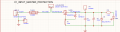
Fig. 2a - Motor-domain high-side switch schematic section. Only the Q_DRIVE_SW motor-domain branch is under review in this post.
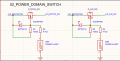
Fig. 2b - Fused outputs to the two off-board MD220A modules
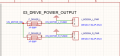
Fig. 3 - MG310 motor vendor parameter table. The relevant data used in this post are from the MG310 Hall-encoder motor column.
I am designing the first prototype of a power distribution and protection board for a four-wheel robot car. Before PCB routing, I would like feedback only on the motor-power architecture shown in the attached schematic sections. I am not asking whether the complete board is ready for fabrication.
Scope under review
The motor-power path is:
Battery input -> main fuse -> master switch -> reverse-polarity MOSFET stage -> VIN_PROTECTED -> motor-domain high-side switch -> VIN_MOTOR_SW -> left/right branch fuses -> two off-board MD220A motor-driver modules -> four MG310 motors
The other power rails, MCU supply, vision module, servo supply and overall PCB layout are outside the scope of this review.
Input boundary
The board will be explicitly limited to:
- VIN_MAX = 12.6 V
- 3S Li-ion only
- No 4S battery
- No 16.8 V battery
Motors
The robot currently uses four MG310 Hall-encoder DC gear motors. According to the vendor parameter table:
- Rated voltage: 7.4 V
- Recommended operating range: 7-13 V
- Rated current: <= 0.5 A per motor
- Stall current: <= 2.0 A per motor
- Continuous stall operation is not allowed
Two MD220A modules are intended to drive the four motors, with one module driving two motors. I have physically confirmed one board as TK-MD220A-V1.0 / TB6612FNG. The second module is intended to be the same model and will be confirmed before the complete design is frozen.
The MD220A module manual states:
- Power input range: 5.5-15 V
- Continuous drive current: 1.2 A per channel
- Maximum peak current: 3.2 A per channel
- VM operating range: 2.5-13.5 V
- VM absolute maximum rating: 15 V
Module schematic evidence
The module manufacturer also provides a schematic for the TK-TB6612-MD220A board. In that schematic, the external power input passes through the module's onboard power switch to a VIN rail, and that VIN rail is connected directly to the TB6612FNG motor-supply pins VM1, VM2 and VM3.
The TB6612 section of the module schematic shows local capacitors on that VIN rail:
- 220 uF electrolytic capacitor
- 100 nF ceramic capacitor
Therefore, the module manual's stated 5.5-15 V input range appears to conflict directly with the TB6612FNG datasheet's VM operating-range limit, rather than being explained by an internal motor-supply regulation stage.
Voltage-margin concern
With my board input limited to 12.6 V, the direct-supply architecture is only 0.9 V below the TB6612FNG upper VM operating-range limit of 13.5 V.
It is 2.4 V below the 15 V absolute maximum rating, but I understand that the absolute maximum rating is not usable normal operating margin and must not be exceeded even during transient events.
Current PDB schematic state
On VIN_PROTECTED, the present PDB schematic includes:
- C1 = 100 nF
- C2 = 470 uF
- D2 = SMCJ18A
- A power-indicator LED branch
There are currently no dedicated bulk or ceramic capacitors shown after the motor-domain switch or near either MD220A connector on the PDB.
Since each MD220A module already has local 220 uF and 100 nF capacitors at its TB6612FNG VIN/VM rail, I would like to know whether additional PDB-side capacitance is still required, especially because the cable length and wire gauge between the PDB and each driver module are not fixed yet.
TVS and fault-protection boundary
I do not assume that the current SMCJ18A TVS can keep the MD220A/TB6612FNG supply within the 13.5 V operating limit or below the 15 V absolute maximum rating. I currently regard it only as possible coarse transient suppression, not as a complete protection solution for the motor-driver voltage boundary.
I also understand that the main fuse and the two branch fuses should primarily protect wiring and PCB power paths against catastrophic faults, rather than act as the primary motor-stall protection method. I have not yet finalized or verified a stall-detection or current-sensing strategy.
Questions
- The published MD220A module schematic appears to route module VIN directly to the TB6612FNG VM pins, with local 220 uF and 100 nF capacitors but without a separately regulated motor rail or dedicated VM clamp. Given this, should I reject a 12.6 V direct-supply architecture because it is only 0.9 V below the TB6612FNG 13.5 V VM operating-range limit?
- Does the MD220A manufacturer's stated 5.5-15 V input range have any reasonable design interpretation when the onboard TB6612FNG is directly powered from VIN, or should the Toshiba IC datasheet take precedence for the motor-supply design boundary?
- In the absence of a convincing module-level justification, would a lower regulated motor rail or a driver solution with greater input-voltage margin be the more appropriate direction before PCB routing?
- If this direct-supply architecture is still acceptable for a first prototype, does the existing 220 uF plus 100 nF capacitance on each MD220A module sufficiently address the local input-capacitance requirement, provided the PDB-to-driver wiring is kept short? Should additional bulk and/or ceramic capacitance still be added on the PDB side after the motor-domain switch or at each fused output connector?
- What practical limits should I set for wire length and wire gauge between the PDB and each off-board MD220A module, especially for motor-current transients, braking, reversal events and input-voltage overshoot?
- Is it reasonable to retain SMCJ18A only as coarse transient suppression, while accepting that it cannot enforce either the 13.5 V operating-range limit or the 15 V absolute maximum limit of the TB6612FNG? What protection approach is normally used for regenerative bus-voltage rise in a small DC-motor robot?
- Please also flag any obvious issue in the reverse-polarity MOSFET stage or the motor-domain high-side switch shown in the attached PDB schematic figures.
- Each fused branch supplies two motors, with approximately <= 1.0 A combined rated current and up to <= 4.0 A combined stall current according to the motor table. Since the fuses are intended mainly for wiring, PCB-path and catastrophic-fault protection rather than primary stall protection, what fuse-selection approach and time-current characteristic would be appropriate?
- I currently have a multimeter and soldering tools, but no current-limited bench supply, oscilloscope or electronic load. I will not power a first prototype directly from a battery without a staged validation plan. What minimum test equipment or validation procedure would you consider necessary before connecting the motors?
- Fig. 1: Input stage, reverse-polarity MOSFET stage and VIN_PROTECTED schematic section
- Fig. 2a: Motor-domain high-side switch schematic section
- Fig. 2b: Fused outputs to the two off-board MD220A modules
- Toshiba TB6612FNG official datasheet showing VM absolute maximum rating, VM operating range, typical application diagram and back-EMF warning
- TK-TB6612-MD220A module schematic showing direct VIN connection to the TB6612FNG VM pins and the onboard 220 uF / 100 nF capacitors
- MD220A module manual showing the stated 5.5-15 V input range and module specifications
- MG310 motor vendor parameter-table screenshot
Figures shown inline for convenience:
Fig. 1 - Input stage, reverse-polarity MOSFET stage and VIN_PROTECTED schematic section
Fig. 2a - Motor-domain high-side switch schematic section. Only the Q_DRIVE_SW motor-domain branch is under review in this post.
Fig. 2b - Fused outputs to the two off-board MD220A modules
Fig. 3 - MG310 motor vendor parameter table. The relevant data used in this post are from the MG310 Hall-encoder motor column.
Attachments
-
669.7 KB Views: 1
-
608.9 KB Views: 1
-
355.8 KB Views: 0