LEDs - How do they really work?

Thread Starter

Rune2504

Joined Jun 18, 2017
12
Hey all.

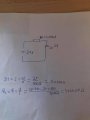
I have bought some LEDs to find out how they work. I have found out that depending of it's color, it uses a different amount of voltage. Like red uses 2 Volts. But what is the resistance? I have tried to make a very basic circuit as shown on the picutre where I used 300 Ohms as LED resistance, but how can I really know it? I couldn't messure it with my multimeter, the LED actually just brightened when I tried to messure the resistance.

"D1" is the diode of course. Ty!

Rune
 

Attachments

WBahn

Joined Mar 31, 2012
32,823
Hey all.

I have bought some LEDs to find out how they work. I have found out that depending of it's color, it uses a different amount of voltage. Like red uses 2 Volts. But what is the resistance? I have tried to make a very basic circuit as shown on the picutre where I used 300 Ohms as LED resistance, but how can I really know it? I couldn't messure it with my multimeter, the LED actually just brightened when I tried to messure the resistance.

"D1" is the diode of course. Ty!

Rune
"Resistance" is useful when the voltage is proportional to the current -- meaning when you double the voltage the current doubles. Materials for which this is a meaningfully useful model are known as "ohmic" materials because they, at least largely, obey Ohm's Law.

Diodes are HIGHLY non-ohmic devices, so talking about them in terms of their "resistance" is largely futile and misleading.

Diodes, including LEDs, are principally governed by an exponential voltage-vs-current relationship. You can read more about this here:

https://forum.allaboutcircuits.com/blog/fun-with-the-diode-equation.589/#comment-1283
 

Thread Starter

Rune2504

Joined Jun 18, 2017
12
But really before making a circuit I would need to know how much voltage the LED needs and amps it uses. What confuses me is that it is apperiently different from which color the diode is. How can I see how many amps and voltage the different colors of LED uses?
 

danadak

Joined Mar 10, 2018
4,057
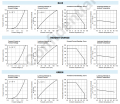
Actually LEDs are "crappy" diodes, exhibit high resistance, and look pretty
much like an R beyond their "threshold" voltage. The below is from a typical
datasheet.

upload_2018-9-24_15-12-52.png

As you can see they lose much of their exponential characteristics in I vs V
characteristics, in the immediate above case, Green, beyond 3V.

So just calc R = (Vsmin - Vledthreshmax) / Imin for an approximate value. Note
Vledthresh has a strong T dependence, and LED to LED vaiation. If you
are concerned with matching a constant current source better than Rlimit.


Regards, Dana.
 
Last edited:

Thread Starter

Rune2504

Joined Jun 18, 2017
12
So as I thought, different color of LED uses a different current and voltage. For making my circuit, with different colors of LEDs, I would have to convert the right voltage for the different colors of LEDs, right?
 

WBahn

Joined Mar 31, 2012
32,823
But really before making a circuit I would need to know how much voltage the LED needs and amps it uses. What confuses me is that it is apperiently different from which color the diode is. How can I see how many amps and voltage the different colors of LED uses?
From the datasheets for the devices.

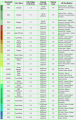
While the forward voltage at the nominal current is pretty strongly correlated with the color (because the color depends on the material's bandgap and the higher the bandgap the greater the energy in the photons emitted and the shorter the resulting wavelength), the nominal current is purely a function of the design of the diode and single LEDs with nominal currents ranging from a fraction of a milliamp to ten or more amps (i.e., more than three orders of magnitude) are readily available.
 

Tonyr1084

Joined Sep 24, 2015
9,744
I don't know about anyone else, but I got the impression you want to know how to light them properly. It's a rather simple matter. In your diagram you drew a 24 volt source (battery or whatever). To calculate the proper resistance you first have to know the forward voltage of the diode. In the case of a red LED, as you said, they're commonly (but not specifically - or always) two volts forward. Meaning they use 2 volts from the supply.

Starting with a 24 volt source and a red (2 volt forward) LED, you next need to make a decision. Partly based on the particular LED's spec sheet (if you have one). Speaking in general terms, 20 mA is commonly a pretty bright burning LED. So your resistor needs to pass 20 mA. So how do you know which resistor to choose? As I started to say, you have a 24 volt source and an LED that's dropping 2 volts. That leaves 22 volts. Using ohm's law, current is equal to voltage divided by resistance. And resistance is equal to voltage divided by current. Since you know you have 24 volts and are dropping 2 volts, you're left with 22 volts. 22 volts at 20 mA (0.020 Amps), 22 volts divided by 0.020 amps = 1100. That's 1100 Ω. That will give you a real close running current of 20 mA.

20 mA is on the high side, so 15 mA or even 10 mA should be plenty. Depending on how you're using it - you may need the higher current. But if it's in low light then you could go even as low as 5 mA. Switching out the LED for a different color means a different forward voltage drop. You've seen how the numbers work so it shouldn't be hard to know what resistor you want for the supply and the current you wish to run your LED at. Higher currents burn them up faster than the lower currents. Running an LED on 10 mA will last four times longer than running the same LED on 20 mA. It's an inverse square law. A one inch square has one square inch. A two inch square has FOUR square inches.

But generally speaking, you subtract the forward voltage from the supplied voltage then divide the voltage by the desired current to pick the resistor you need to operate the LED at that level.

Hope this helps.
 

k7elp60

Joined Nov 4, 2008
562
So as I thought, different color of LED uses a different current and voltage. For making my circuit, with different colors of LEDs, I would have to convert the right voltage for the different colors of LEDs, right?
Not necessary to do it that way. One method is to use one voltage and different value resistors for the different colors. Most of the LED's that have two leads sticking out of the case are rated at about 20 milliamps max. The longer lead is the anode and the shorter lead is the cathode. I have found that most of these two lead LED's will illuminate with about 2 millliamps or less. I have some blue and white ones that with 5 Ma of forward current they are extremely bright. A simple calculation is this to calculate the value of the resistor. Applied voltage- LED voltage= resistor voltage. Divide this value by LED current in Ma. Here is an example. Supply voltage= 9V Led Voltage = 2V. So 9v-2V= 7V 0r 7 volts.
Divide 7V by 5Ma, which is 0.005A or 7/.005= 1400 ohms. I hope this helps.
 

Audioguru

Joined Dec 20, 2007
11,248
Most of the LED's that have two leads sticking out of the case are rated at about 20 milliamps max.
No.
Most ordinary 5mm LEDs are spec'd at 20mA so it is assumed that is their typical operating current. Their maximum allowed continuous current is about 30mA to 40mA which is extremely bright.
 

cmartinez

Joined Jan 17, 2007
8,760
So as I thought, different color of LED uses a different current and voltage. For making my circuit, with different colors of LEDs, I would have to convert the right voltage for the different colors of LEDs, right?
Regarding LEDs, I suggest you stop thinking in terms of applied voltage, and rather in terms of appropriate current. That means that a properly powered LED will have a regulated current source, as opposed to a regulated voltage source that's normally used for most electronic circuits.

The properties of each LED vary according to their color, and can also vary from LED to LED that are of the same color and even from the same batch. Also, their electrical properties change as they age with normal use during their normal lifespan.

That is why there are specially designed circuits and chips out there whose sole function is to properly "drive" a LED.
 
Last edited:

k7elp60

Joined Nov 4, 2008
562
Regarding LEDs, I suggest you stop thinking in terms of applied voltage, and rather in terms of appropriate current. That means that a properly powered LED will have a regulated current source, as opposed to a regulated voltage source that's normally used for most electronic circuits.

The properties of each LED vary according to their color, and can also vary from LED to LED that are of the same color and even from the same batch. Also, their electrical properties change as they age with normal use during their normal lifespan.

That is why there are specially designed circuits and chips out there whose sole function is to properly "drive" a LED.
ok
 

carlcasta

Joined May 18, 2019
2
Hey all.

I have bought some LEDs to find out how they work. I have found out that depending of it's color, it uses a different amount of voltage. Like red uses 2 Volts. But what is the resistance? I have tried to make a very basic circuit as shown on the picutre where I used 300 Ohms as LED resistance, but how can I really know it? I couldn't messure it with my multimeter, the LED actually just brightened when I tried to messure the resistance.

"D1" is the diode of course. Ty!

Rune
Wow it's the first time I found out each color in a led display uses a different voltage. Goes to show I still have a lot to learn about tinkering with LED.

Moderators note : removed commercial link, posting it again may result in a ban.
 
Last edited by a moderator:

cmartinez

Joined Jan 17, 2007
8,760
Wow it's the first time I found out each color in a led display uses a different voltage. Goes to show I still have a lot to learn about tinkering with LED.
Nope... it's not about voltage... and although each color has a characteristic voltage drop, each color also requires a different amount of current. That's what's important. It's not too relevant when working with ordinary display LEDs, since an appropriate resistor can limit their current well within their operating specs and still shine bright enough to fulfill their intended purposes. But in a high power led it becomes relevant.

You see, every led has individual performance variations, even leds of the same color and manufactured from the same materials and on the same production batch. That's because the fabrication process is imperfect. So each led will have subtle differences in their conductivity and voltage drop. And those parameters will even change over time as the led ages. Their one defining characteristic is the amount of current flowing through them. That's why there are specialized ic's out there whose sole purpose is to properly drive a led; feeding it the proper amount of current to optimize their brightness.
 

carlcasta

Joined May 18, 2019
2
Nope... it's not about voltage... and although each color has a characteristic voltage drop, each color also requires a different amount of current. That's what's important. It's not too relevant when working with ordinary display LEDs, since an appropriate resistor can limit their current well within their operating specs and still shine bright enough to fulfill their intended purposes. But in a high power led it becomes relevant.

You see, every led has individual performance variations, even leds of the same color and manufactured from the same materials and on the same production batch. That's because the fabrication process is imperfect. So each led will have subtle differences in their conductivity and voltage drop. And those parameters will even change over time as the led ages. Their one defining characteristic is the amount of current flowing through them. That's why there are specialized ic's out there whose sole purpose is to properly drive a led; feeding it the proper amount of current to optimize their brightness.
That makes sense, or else it would be very hard to play with ordinary display LEDs if it isn't beginner-friendly if you know what I mean. Thank you so much for these valuable insights, cmartinez!
 

MrChips

Joined Oct 2, 2009
34,809
Actually the LED colour is related to the voltage.

The colour does not depend on the voltage applied but the other way around, i.e. the voltage depends on the desired colour. Sounds complicated? Read on.

The colour of the LED depends on the semiconductor materials used in fabricating the device. It is like bulding a brick wall. The taller the wall, the more energy is required to jump over the wall.

In solid-state physics, there is something call the band-gap. This is the energy required to move an electron in its locked state (valence band) to a free state (conduction band). This is what gives the LED its colour.

Red light has less energy than green light.
Red LEDs have lower band-gap than green LEDs.
Red LEDs require lower voltage than green LEDs.

Once the LED conducts, the voltage across the LED is relatively constant, same as a PN diode.
If you do not restrict the current you are in danger of blowing the LED.
Hence you control the current flowing through the LED, not the voltage. The LED itself determines the voltage, i.e. the voltage required to turn on the LED. The current will determine the brightness of the LED.

Reference: https://en.wikipedia.org/wiki/Band_gap
 

Audioguru

Joined Dec 20, 2007
11,248
I hope a NOOB does not read in this thread that the OP measured resistance in a circuit that was already powered.

When I saw an LED for the first time in the '60ies I joked that its junction was red hot!
I went to buy a newly introduced LM3915 audio level LED driver IC and instead I bought some modules also made by National Semi that were a pcb with a blob on board IC with 10 surface-mounted red LEDs.
 

MrChips

Joined Oct 2, 2009
34,809
If you want to determine the static resistance of the LED, simply measure the voltage across the LED and divide it by the current through the LED.

You can determine the current through the LED by measuring the voltage across the series resistor divided by its resistance.

Hence:

RLED = R x VLED / VR
 
Top