LED Bulb Lifetime

WBahn

Joined Mar 31, 2012
32,840
My experience has definitely been that they are no where near as reliable -- but that's probably because I didn't know which were reliable and which weren't when I made the transition. I bought "Ecosmart" brand bulbs from Home Depot a couple years ago when I decided to switch out all of the easily accessible bulbs; IIRC, the Cree bulbs were nearly four times as expensive, so I figured it was likely still better to go with the cheap ones even if they only lasted a few years. . That's about 36 bulbs, but about half of them are almost never turned on. Since then, I've had at least six bulbs fail and in the two three-bulb fixtures that get used the most (on for perhaps four hours a day in the winter and maybe two in the summer) all of them have had to be replaced once and at least two have been replaced twice. Of the incandescents that were in the house when I bought the place ten years ago (and they were probably in the house for many years before that), perhaps three had failed in those eight years.

Fortunately, the cost of good quality LED bulbs has come down considerably, so from now on I can start using them on an attrition basis.

I've seen very little change in my electrical usage since making the change, but the average is probably a bit lower.
 

Tesla23

Joined May 10, 2009
560
My experience for what it's worth - an old post:
https://forum.allaboutcircuits.com/threads/cfls-obsolete-already.116681/page-2#post-913392

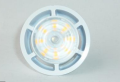
I'm now about 5.5 years into my trial of about 40 of these MR16 Philips downlights, I can report no failures and all are giving full output as far as I can tell. Many are on for about 10hrs/day. The link in the earlier post is broken, for those interested here is a picture of the bulb construction:
View attachment 202123View attachment 202124

Good LEDs are reliable, cheap drive electronics with poor thermal design isn't.

My recommendation, find a reputable manufacturer (GE, Philips etc..), buy bulbs with specified lifetimes (15,000 - 25,000 hrs are available), beware of using them with poor ventilation and you should get the specified performance. The typical lifetime of incandescents is 2000 hrs, and these LED bulbs are far, far better. Since changing to reputable CFLs and LEDs, I rarely have to change a bulb these days.

The main weakness of LED bulbs is in the replacement business where they have to conform to the shape of an incandescent bulb, where the drive electronics has to be squeezed into a bulb. Venting of fittings is essential. For new installations, use LED fittings with an external driver.
1651273142209.png1651273154302.png
Update on the progress of my LED bulbs - these are still going strong. It's been about 8 years since I installed about 40 of these, still no failures. The hardest working are the 7 in the kitchen are on at least 10 hours/day (probably more like 12-14), at 10hrs/day that makes over 29,000 hours.

Golden rule - buy from a reputable manufacturer (with a specified typical lifetime), not the cheapest supermarket models.
 

Ya’akov

Joined Jan 27, 2019
10,235
View attachment 266137View attachment 266138
Update on the progress of my LED bulbs - these are still going strong. It's been about 8 years since I installed about 40 of these, still no failures. The hardest working are the 7 in the kitchen are on at least 10 hours/day (probably more like 12-14), at 10hrs/day that makes over 29,000 hours.

Golden rule - buy from a reputable manufacturer (with a specified typical lifetime), not the cheapest supermarket models.
Many LED replacements for halogens and compact filament lamps are extremely unreliable because of a combination of heating and overdriving LEDs. It is good to know that Philips (who certainly do make some of the best LED lamps) has avoided both of these things.

I (had) an application for E12 base (candelabra) lamps to replace 30 40W filament versions. 1200W of lamps! I bought some 5W LED replacement lamps which provided a decent warm white light of about equal brightness reducing the consumption to 150W, 1050W less!

1651400129911.png
Unfortunately, they proved very spotty concerning reliability. As you can see there are a lot of chips packed into a very small space. The core is ceramic, but it just can’t dissipate the heat well enough leading to capacitor failure in the little switch mode supply inside. The frequency of this failure was highly dependent on the batch of lamps, and some lasted for several years while others would fail in months.

The seller on Amazon did make good on the failures, but it was a hassle, and some still failed after a time. I’d estimate a 20% failure rate. I think Philips warranties their lamps for some number of years, though I have never tried to take advantage of it and have no idea how hard it would be. At a 20% failure rate the difficulty would be important, at a <1% rate, it wouldn’t matter.
 

DickCappels

Joined Aug 21, 2008
10,661
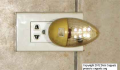
I have had two of these running in my house since early 2006. That's approximaltely 140,000 hours each without any failures. The only times they have been off is during power failures and when the mother-in law was staying here and turned off the hall light every morning to "save money". The LEDs are rated by the manufacturer for 20 ma and they are running at 35 ma RMS half-wave rectified. There florescent lamps that were originally in these plastic fixtures usually lasted about six months.

1651401889012.png

1651401901506.png

Perhaps the nightlight manufacturers were trying to outshine their competition at minimum cost without much regard to reliability or operating life.
 

Ian0

Joined Aug 7, 2020
13,132
I replaced all the lamps in mother's house 5 years ago with Philips LED lamps - result: only one failure so far.
I replaced all the lamps in my house 9 years ago with a home-made system using Osram LEDs, which kept the power supplies separate from the LEDs - result: No failures so far.
 

Tesla23

Joined May 10, 2009
560
I (had) an application for E12 base (candelabra) lamps to replace 30 40W filament versions. 1200W of lamps! I bought some 5W LED replacement lamps which provided a decent warm white light of about equal brightness reducing the consumption to 150W, 1050W less!

Unfortunately, they proved very spotty concerning reliability. As you can see there are a lot of chips packed into a very small space. The core is ceramic, but it just can’t dissipate the heat well enough leading to capacitor failure in the little switch mode supply inside. The frequency of this failure was highly dependent on the batch of lamps, and some lasted for several years while others would fail in months.
That's t he type of experience I had with unbranded bulbs from a 'green' lighting store. Nice people, nice idea, unreliable product.

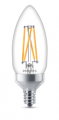
I'm not pushing Philips, but I can't be bothered to do a full market survey, but I was interested in what they quoted for reliability for their candelabras:

This style:
1651442341355.png
15,000 hours, see: spec sheet

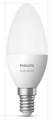
or this one:
1651442448902.png
25,000 hours (with bluetooth control) (specs) - hopefully there is a non-bluetooth version with similar lifetime
 

Ya’akov

Joined Jan 27, 2019
10,235
That's t he type of experience I had with unbranded bulbs from a 'green' lighting store. Nice people, nice idea, unreliable product.

I'm not pushing Philips, but I can't be bothered to do a full market survey, but I was interested in what they quoted for reliability for their candelabras:

This style:
View attachment 266272
15,000 hours, see: spec sheet

or this one:
View attachment 266273
25,000 hours (with bluetooth control) (specs) - hopefully there is a non-bluetooth version with similar lifetime
If you watch Big Clive‘s many videos on LED lamps you can get a good idea of why LED lamps last and why they don’t. He has spent a lot of tie forensically dissecting all sorts of lamps and working out how they fail. The bottom line seems to be heat. The LEDs in cheaper lamps are overdriven to reduce parts count and increase profit margin.

This leads to more heat which eats the LEDs alive and eventually one of the chips gets ”the black spot of death” which may or may not kill the lamp depending on design. Even if the first failure doesn’t kill it, eventually more will. He shows how to disassemble and modify lamps to reduce the power to the LEDs and greatly increase life.

The first result in the search above is about the “Dubai Lamp” form Philips which is fascinating. Anyway, if you aren’t familiar with Big Clive and his LED fixation it’s a rich vein to mine. Definitely recommended.
 

Ya’akov

Joined Jan 27, 2019
10,235
BTW, I can recommend these GE lamps highly. Well made, seem to have a good life, and importantly for some applications, the bulb itself is indistinguishable from a type A incandescent, not just in dimensional compatibility but with a fully glass envelope.

Not only do they fit everything but the dimability is excellent. The “retro” look is also comforting to those finding the initial experience with LED alternatives has invoked a little touch of approach avoidance. These won’t spook you.

1651482770491.jpeg
 

MrSalts

Joined Apr 2, 2020
2,767
GE sold theor Lighting business a two years ago, the brand name, GE, is licensed by Savant Systems, Inc.

I doubt many of the current products will survive as-is for very long. GE didn't know how to make cost-effective LEDs so they sold the business - even though the claimed to be the inventor of LEDs.
 

Tesla23

Joined May 10, 2009
560
If you watch Big Clive‘s many videos on LED lamps you can get a good idea of why LED lamps last and why they don’t. He has spent a lot of tie forensically dissecting all sorts of lamps and working out how they fail. The bottom line seems to be heat. The LEDs in cheaper lamps are overdriven to reduce parts count and increase profit margin.

This leads to more heat which eats the LEDs alive and eventually one of the chips gets ”the black spot of death” which may or may not kill the lamp depending on design. Even if the first failure doesn’t kill it, eventually more will. He shows how to disassemble and modify lamps to reduce the power to the LEDs and greatly increase life.

The first result in the search above is about the “Dubai Lamp” form Philips which is fascinating. Anyway, if you aren’t familiar with Big Clive and his LED fixation it’s a rich vein to mine. Definitely recommended.
It was before you arrived, but years ago I did post about the first MR16 LED bulbs I bought, (no-name but advertised as CREE LEDs that have 50,000 hours lifetime), and how it was the power supply that failed due to heat and now I have a box of (possibly) CREE high power LED modules that still work, but with the little power supplies in the MR16 bases cooked. That's the great engineering challenge in LED 'bulbs', engineering the LEDs and electronics into something the same form factor that was designed to simply hold a tungsten filament. If you buy a modern LED light fitting, the power supply can be adequately separated from the LED heat source and you can get much greater reliability.

I don't understand why knowledgeable folk who can understand the design challenges of squeezing LEDs and a power supply into a small bulb shaped container complain about the unreliability of LEDs because their cheap, no name bulbs fail. It's no different to buying a cheap AM/FM radio at the supermarket and being surprised when if fails after 6 months. I'd argue that the design challenges in small reasonably powered LED bulbs are much greater.

Years ago when LEDs were expensive I did try to repair some bulbs, but now that far better expertise than mine is available at an affordable price, I'm prepared to outsource the engineering to firms like Philips. I only posted about these bulbs initially to show their clever thermal design.
 

MikeA

Joined Jan 20, 2013
447
The bottom line seems to be heat.
Pretty much. Anything that outputs high lumens will either be very expensive or dead pretty soon.

That's why I rely on sub 10w bulbs in fixtures, but the workhorses that light up the rooms is all DIY.

Keeping the caps in the driver cool. An active heatsink with a fan running less than half rated voltage. All work fine for 10+ years being on for hours per day on average. In the winter they are on pretty much all day.


Attachments

Top